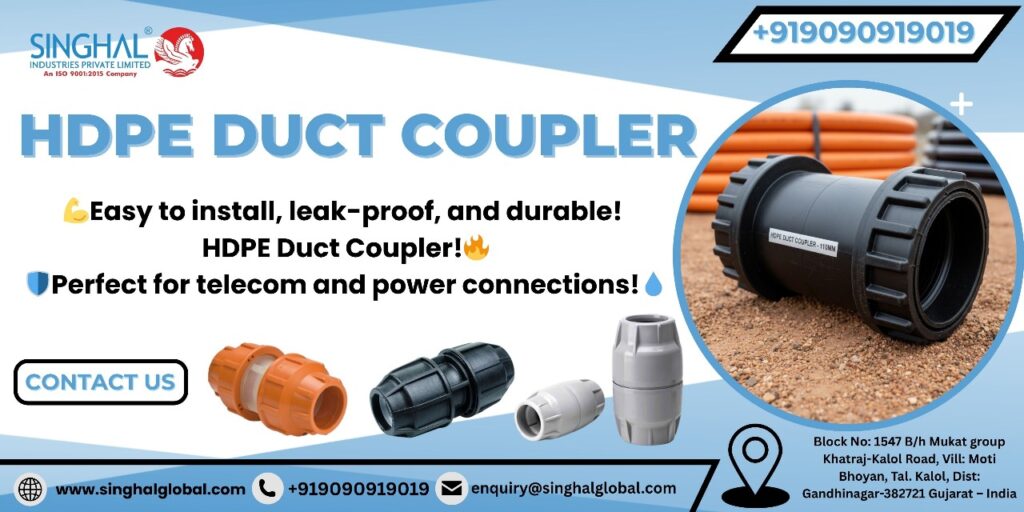
Have you ever looked at a huge underground cable network and wondered how they keep all the ducts linked and safe beneath the surface? The answer lies in the humble HDPE duct coupler. Although it’s small and straightforward, this little-known hero is quietly delivering reliability, efficiency, savings, and efficiency everywhere utility lines are located. Our infrastructure today depends on them greater than we are aware of, and the tales that explain their usage just make it more clear why smart buyers care about prices for duct couplers, reliable manufacturers of duct couplers, as well as HDPE and the latest duct coupler technology.
What Makes HDPE Duct Couplers Special?
Imagine HDPE (high-density polyethylene): flexible, tough, resistant to chemicals, and also resistant to UV radiation. HDPE duct coupler utilize these qualities to fulfill a vital task: securing duct sections to ensure telecom and power cables are able to continue to flow seamlessly through factories, cities, as well as rural landscapes. Their purpose? It’s simple on the surface: they are used for connecting, aligning, and securing conduits or pipes. However, the consequences are huge.
Imagine an electric contractor racing against time, fighting the weather, trying to cut costs. If ducts fall, break, or allow moisture to enter at the joints and the project is delayed, costly service calls will follow. If high-end HDPE duct couplers originate from a reputable manufacturer of duct couplers, the time to repair is reduced and confidence rises. These wins are what have made the market and consumers so enthusiastic (and often picky) regarding the source of couplers.
HDPE Duct Coupler Types and Features
The market is filled with a wide variety that are each designed for an individual task. There are:
- Push-fit couplers: Fast installation, no special tools. Ideal as telecom project connectors, regular cable pulling, or for basic water ducts.
- Electrofusion couplers: For extremely reliable and leak-proof bonds. They are typically employed in high-pressure areas as well as water mains. They require a fusion device, but the benefits are worth the cost.
- Screw couplers or threaded couplers: Offer extra grip on high-stress jobs or when vibration is a problem.
What is the significance of this? Each type of coupler affects the speed of installation, cost, maintenance, and the possibility of any future downtime. Experienced project managers are aware that selecting the wrong type of coupler can cause headaches later on, especially when working in difficult terrain.
Real-life Insights from the Field
The last monsoon, I was watching an entire telecom team swarm as unexpected rain hit their newly constructed trench. The ones with the conventional push-fit HDPE couplers finished the project in a timely manner, making sure the trench was firmly bonded before the water drained. Another team struggling with old connectors made of metal had to contend with damage to cables and expensive repairs. The lesson was clear and crystal clear: lighter, waterproof, and corrosion-resistant couplers can save time and hassle.
In a power plant, where downtime translates into loss of revenue, site engineers rely on the electrofusion couplers. A veteran in Ludhiana stated, “I’d rather pay twice the Duct coupler price for HDPE than spend a night fixing leaks.” In truth, this is how you sum the reason why the market keeps growing. The best Duct coupler manufacturers give you peace of mind.
The Big Issue—Duct Coupler Price
What does an Duct coupler price? Prices swing depending on:
- Size (from 32mm to huge sizes of up to 160mm),
- Type (basic push-fit or more complex electrofusion),
- Bulk order discounts,
- Quality/certification by leading duct coupler manufacturers.
In general, a standard telecom-sized push-fit HDPE duct coupler costs around Rs38 to Rs70. But some items that are special, like large couplers or parts that are certified, go up. Do you have to always buy cheap? Pros often disagree. Others warn that couplers of poor quality can cause service calls, business interruptions, or even cable problems that can cost thousands of dollars. The debate comes up frequently in forums for engineers. If you’re running cable only one time for 30 years, is a small increase in the cost of duct couplers really all that significant in the grand scheme of things?
Why HDPE Is the First Choice
HDPE is a popular material for the industry due to many reasons:
- It’s strong and flexible,
- It withstands harsh industrial environments with chemicals,
- It’s not corroding (bye-bye rust!),
- It is inert outside and is resistant to UV as well as rain.
This mix is incomparable. When you’re putting a new fiber-optic cable underneath Mumbai streets or installing an irrigation line within Rajasthan’s agricultural fields, HDPE duct couplers have become the preferred choice. The global engineering standards are based around HDPE’s characteristics, and manufacturers of duct couplers have responded with improved designs.
Contradictions, Opinions, and Industry Gossip
There are a few informal techniques for field teams that may polish edges to give a smoother pull, or even add special spacers in the event that the fit isn’t perfect. This is the kind of know-how that differentiates novices from professionals and demonstrates how adaptable HDPE can be.
Sometimes I ask myself if manufacturers are making enough progress. Are they putting too much focus on cutting costs? Some experts say that the cost of duct couplings isn’t everything, while others remind us that every penny is worth it.
Conclusion
HDPE duct couplers might appear trivial; however, their dependability, ease of use, and low cost make them indispensable for anyone who is building safe, stable, long-lasting utility networks. Engineers, installation crews, as well as budget officers are now aware of the massive impact that a well-chosen coupler can have on the overall quality of a network.
Frequently Asked Questions (FAQs)
Q1. What size do HDPE couplers for ducts come in?
There are sizes that range from 32mm to 160mm (even in excess of 160mm). Most duct coupler manufacturers offer custom solutions for unique projects. No matter if you’re in telecom, industrial gas, or water, there’s a size to suit your needs.
Q2. Can I make use of an HDPE duct coupler to connect electrical ducts and telecom?
Absolutely. It’s the bread they eat! Fiber optics from cities and underground lines for power, HDPE duct couplers connect conduits safely and securely.
Q3. Do I require any special equipment for coupling HDPE pipes?
Not always. The push-fit HDPE types of duct couplers need only two hands and an eye to align. Electrofusion couplers require a fusion machine; however, even that’s easier than many people think. Documentation on the product is helpful (and in truth, some groups come up with their own methods)!
Q4. Do HDPE couplers ensure the smoothness of the ducts inside?
Yes. Couplers of the highest quality sit flush, which means there’s no cable pulling or obstruction to fluids. The cheaper versions can leave a ridge or lip, something that experienced installers don’t like.
Q5. Who is the largest manufacturer of HDPE duct couplers?
Singhal Industries, Maayaar Engineers, and Shanti Enterprises are major Indian companies. There are many global names, but the Indian producers have been praised for their high quality, low cost, and speedy delivery.