
Acrylic Sheets Manufacturer in India | Acrylic Sheets Supplier & Exporter
High-Quality Acrylic Sheets for Industrial, Architectural & Engineering Applications
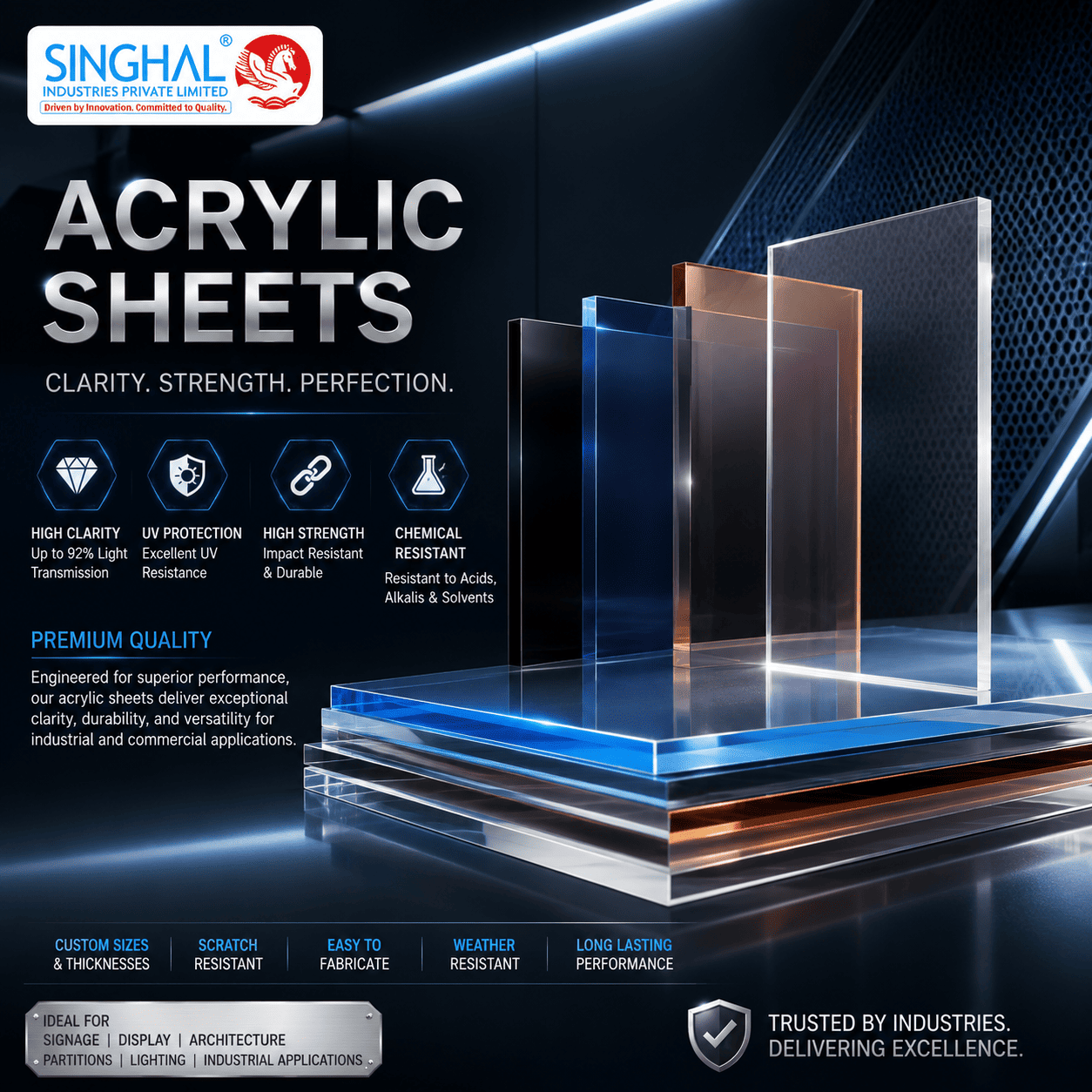
Singhal Industries Private Limited is a dependable Acrylic sheets Manufacturer, Supplier, and Exporter in India providing a variety of acrylic sheet options for commercial, industrial and retail, architectural and engineering applications.
Produced from polymethyl methacrylate often referred to as PMMA, acrylic sheets offer great optical clarity with the ability to fabricate them in a light and compact manner. They are often use as an alternative to traditional glass when weight reduction as well as the ability to design and shape, resistance to weather and safer handling are essential.
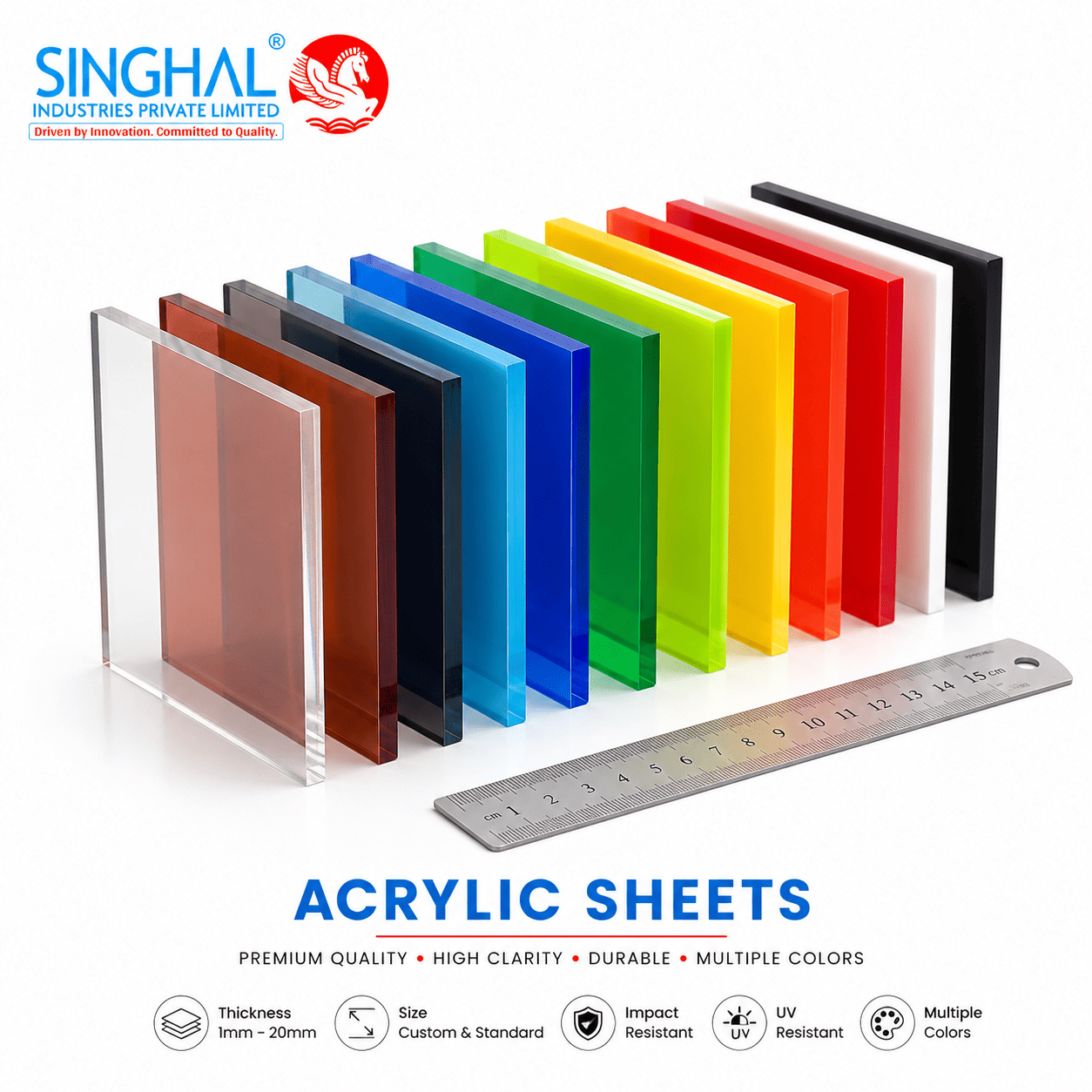
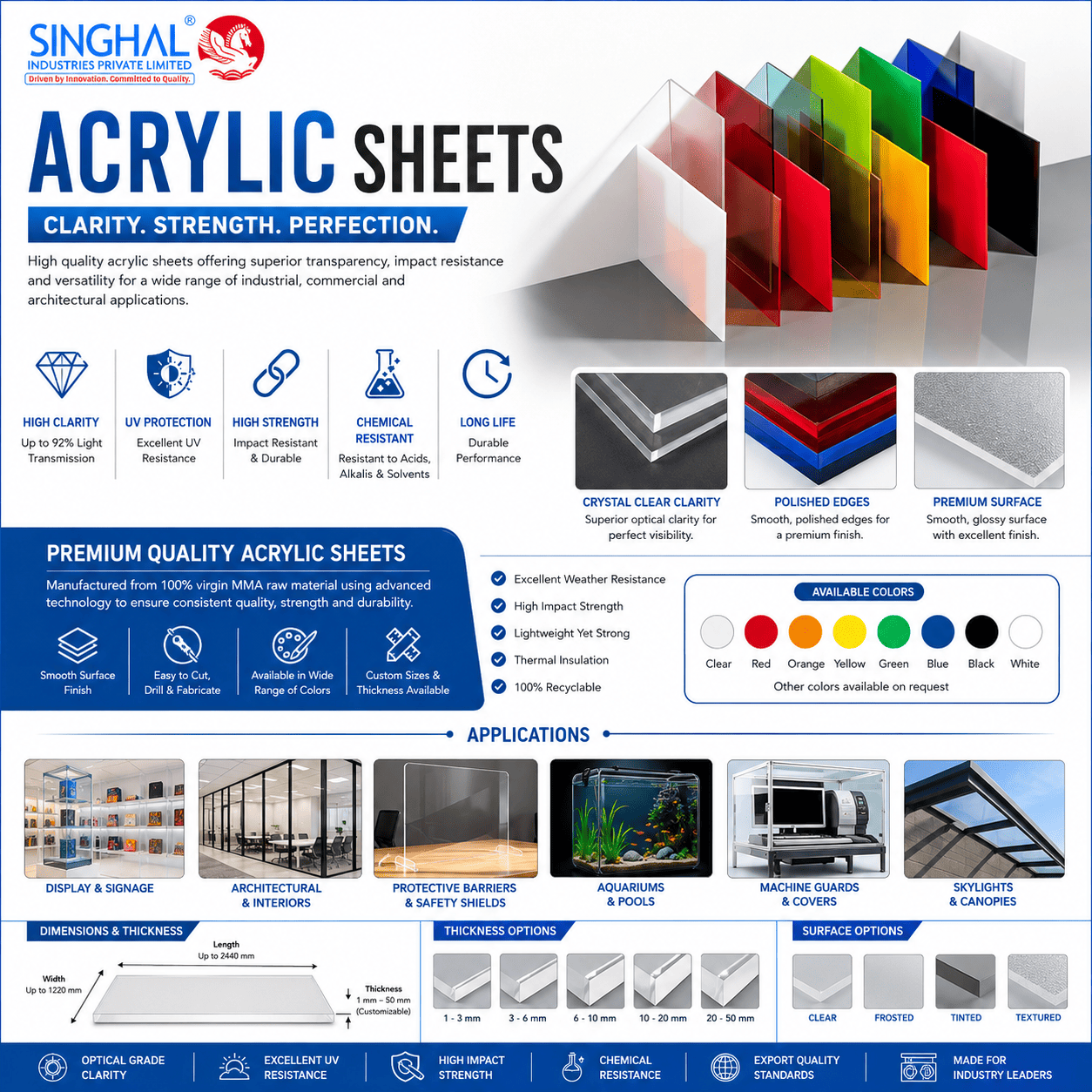
Available in transparent, coloured transparent, tinted transparent, frosted and textured and specialty-finish choices, acrylic sheets are available in various thicknesses and sizes to meet the specific requirements of a project.
Acrylic sheets are translucent or colored thermoplastic sheets made from PMMA resin. They are renowned for their glass-like look and high light transmission, easy-to-clean surface, and their suitability in cutting, engraving, polishing, bending and thermoforming.
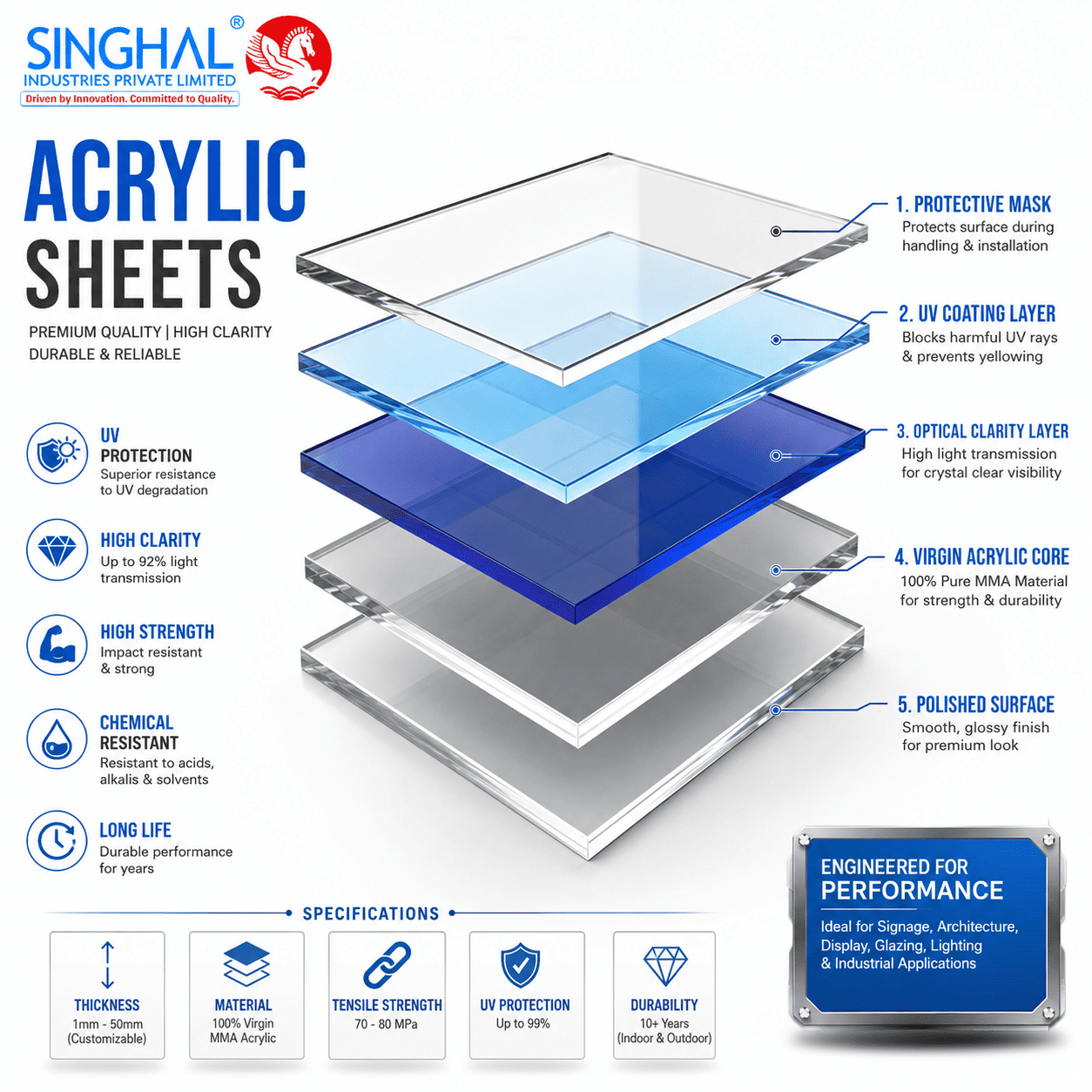
Clear acrylic sheets of standard size can emit up to 92 percent of visible light making them suitable for use where transparency and clarity are essential. Comparatively to normal crystal, clear acrylic sheets are significantly lighter and have a higher protection against accidental breaking.
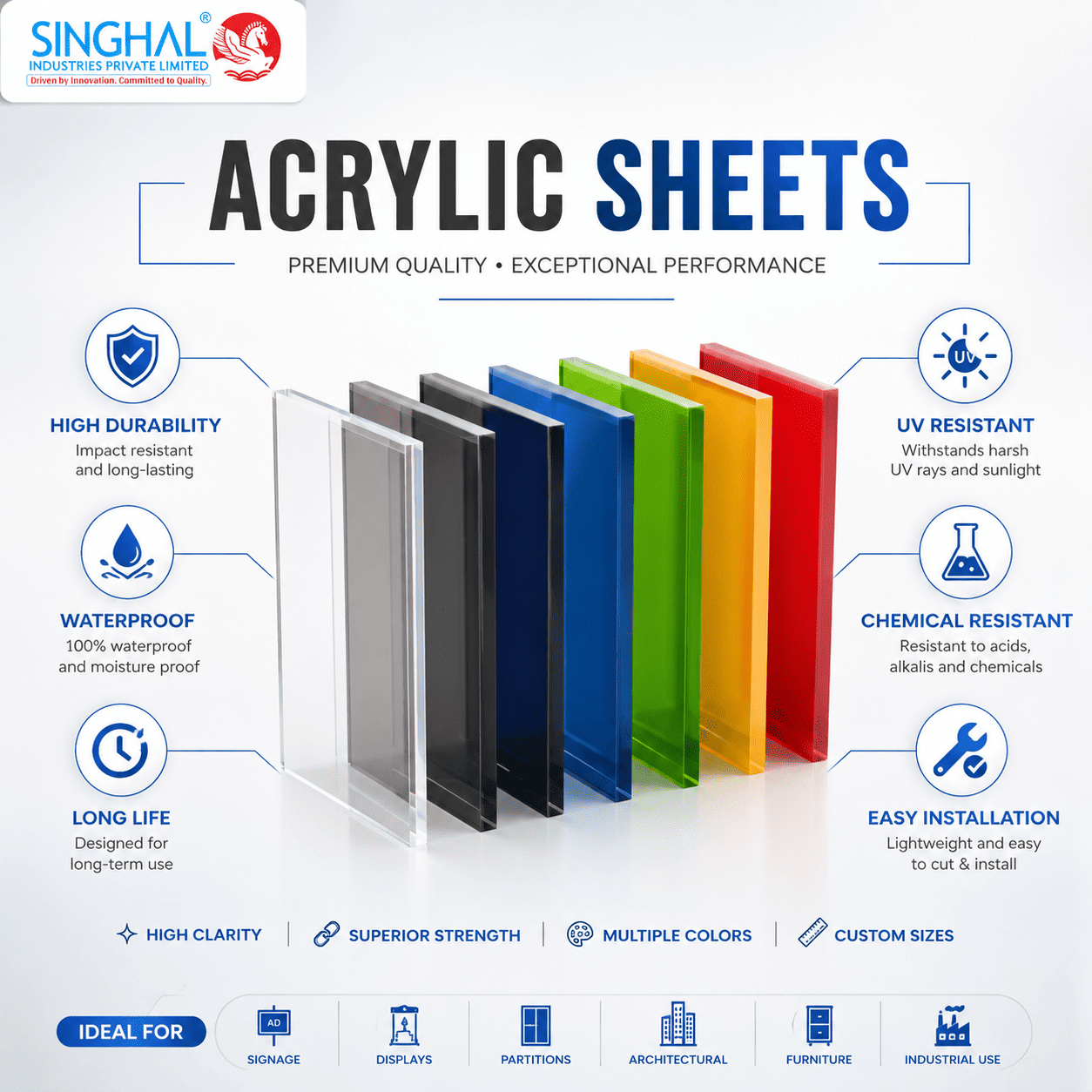
They are used extensively to make machine guards, displays, signage, skylights, partitions, furniture, control panel covers and window inspections, fixtures for retail and enclosures for protection.
Clear Acrylic Sheets
Transparent sheets for use as display panels, inspection windows cover, protection covers, glass fixtures for retail, and other applications.
Coloured Acrylic Sheets
Available in transparent or solid colours for branding, signage interiors, partitions and for decorative fabrication.
Frosted Acrylic Sheets
Offer diffused light transmission and increased privacy, all while maintaining a modern and uniform appearance.
Tinted Acrylic Sheets
It is used when reduced glare, controlled visibility color effects, or architectural styling are required.
Textured Acrylic Sheets
The patterns on the surfaces will improve the privacy of your home, diffuse light and provide visual depth to interior spaces.
Mirror and Specialty Acrylic Sheets
Produced using reflective light-diffusing, non-glare, or other specific finishes for display and designs.
Acrylic sheets are available in both standard and custom designs, such as:
The right thickness is determined by dimension of the panel, structure and wind exposure, as well as impact requirements, mounting technique and the purpose of application.
Acrylic sheets are made by controlled manufacturing procedures designed to guarantee uniform thickness and clarity, as well as surface quality and the stability of dimensional.
Step 1: Raw Material Selection
The most suitable PMMA raw material as well as the necessary color as well as performance components are chosen in accordance with the specifications of the product.
Step 2: Material Processing
The material made of acrylic is treated under controlled conditions with a suitable sheet-manufacturing process.
Step 3: Sheet Formation
The material is shaped into sheets uniformly while regulating the thickness, dimensions and finishing of the surface.
Step 4: Cooling and Stabilization
The sheets that are formed are then frozen and then stabilized to keep their flatness and maintain dimensional consistency.
Step 5: Surface Inspection
Sheets are examined for clarity, colour coherence scratches, visual defects as well as thickness variations and the quality of the surface.
Step 6: Protective Packaging and Dispatch
Masking protection is used when needed, and the sheets are secured so as to limit handling and damage.
Singhal Industries Private Limited supplies engineered sheet products to meet diverse construction, infrastructure, industrial retail, and commercial needs.
Our strengths are:
As a seasoned supplier of Acrylic Sheets as well as an experienced Exporter of Acrylic Sheets We focus on reliable quality of the product, customer-specific configurations as well as safe packaging and prompt order fulfillment.
Acrylic sheets are produced using polymethyl methacrylate. It is often known as PMMA.
They are used to create signage as well as displays, machine guards, partitions, furniture, skylights, cover-ups or inspection windows.
Clear acrylic sheets provide outstanding transparency and are able to transmit around 92 percent in visible light.
Yes. Acrylic sheets are much smaller than glass. This is which makes the transportation, handling and even installation much easier.
Yes. Acrylic grades that are suitable for outdoor use are suitable for outdoor use due to their excellent weather and sun resistance.
Yes. They are available in standard sizes or cut in accordance with customer specifications and drawings.
Yes. The acrylic sheets can be drilled and routed, engraved, sanded, and machined with the use of appropriate machinery and techniques.
Yes. Acrylic sheets can be made to bend with the help of heat.
Yes. Transparent, tinted, clear and opaque options, as well as frosted as well as solid colour options are also available.
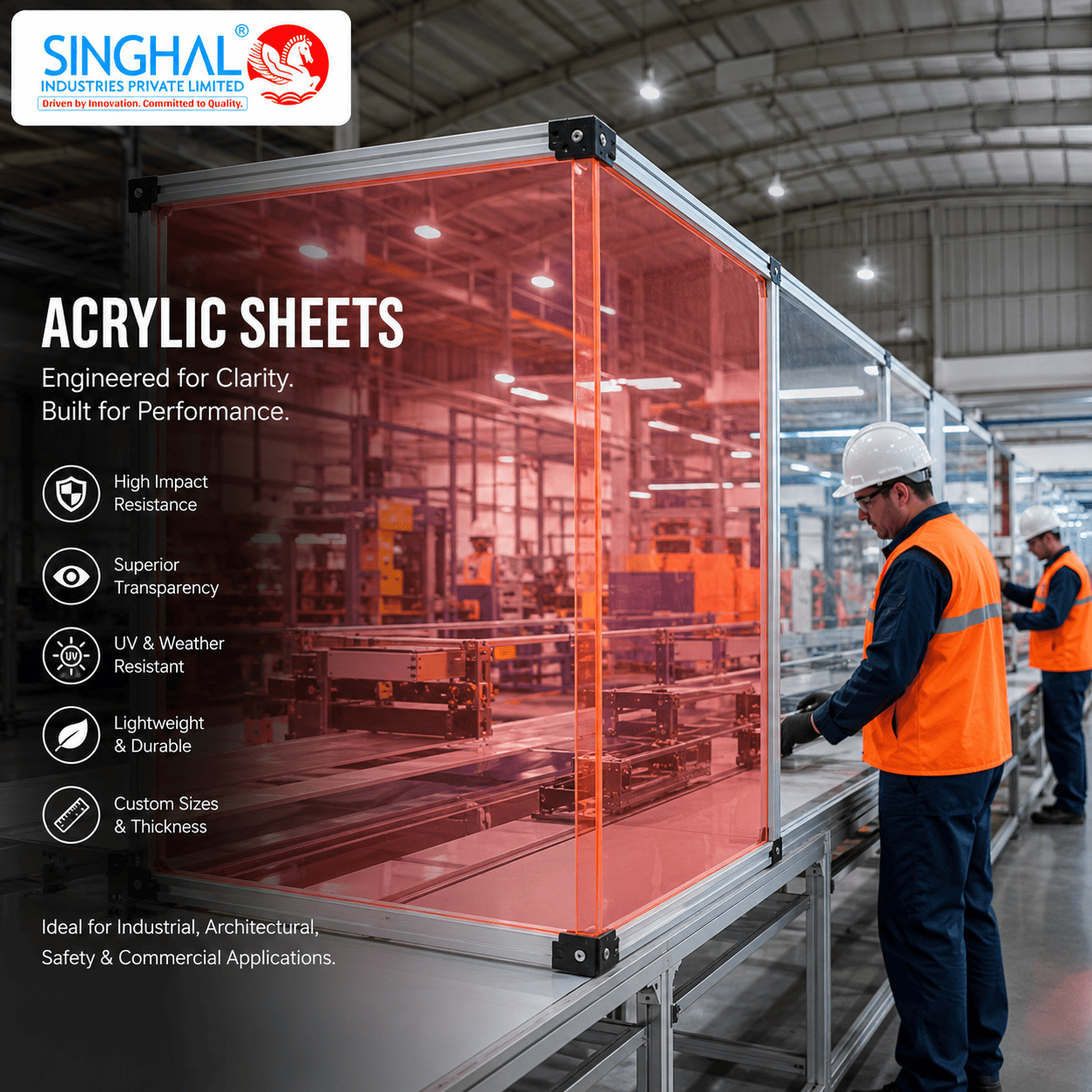
Yes. These are commonly used to provide protection to machine guards and covers for the equipment where visibility is critical.
Acrylic has properties of being resistant to water as well as certain diluted chemicals. But compatibility should be checked for concentrated solvents and chemicals.
Usually, the quality and transparency of the acrylic sheets are better while polycarbonate sheets are better in terms of impact resistance.
Wipe with a mixture of pure soap and water.
The selection is based on the sheet's dimensions and support spacing loads, wind exposure, risk of impact, the mounting method and the conditions of application.
Yes. The consumers have the freedom to make specific demands with regard to sizes, thickness, and color as well as finishing and packing of such products.
| Chemical Type | General Resistance Level |
| Water | Excellent |
| Diluted Acids | Generally Good |
| Diluted Alkalis | Generally Good |
| Salt Solutions | Good |
| Oils and Greases | Application Dependent |
| Alcohols | Limited to Moderate |
| Aromatic Solvents | Poor |
| Ketones and Chlorinated Solvents | Poor |
Actual resistance is based on the concentration, duration of exposure temperature, concentration, stress level, as well as the fabrication technique. Chemical compatibility testing is suggested before use in the industrial setting.
| Property | Acrylic Sheets | PP Glass Lined Sheet |
| Primary Function | Transparent glass displays and fabrication | Chemical containment and corrosion-resistant liner |
| Optical Clarity | Excellent | Generally speaking, they are not designed for transparency. |
| Chemical Resistance | Moderate, based on the chemical | It is better suited for many chemical environments |
| Surface Appearance | Clear or decorative | Functional and industrial |
| Fabrication | Cutting polishing, bending, cutting and thermoforming | Welding and fabrication based on the application |
| Typical Applications | Signage is a part of the building, as are guards, partitions, displays | Tanks, ducts and scrubbers and other process equipment |
Acrylic sheets are ideal when optical clarity, aesthetics, and the ability to fabricate light weight are important. PP glass-lined sheets are better suited to be used in chemical processes, tanks fabrication and industrial environments that are corrosive.
| Property | Acrylic Sheets | PC Hollow Sheets |
| Structure | Solid Sheet | Multiwall Hollow Sheet |
| Optical Appearance | High clarity and a smooth, polished surface | Semi-transparent or transparent |
| Weight | Lightweight | Very light |
| Impact Performance | Superior to ordinary glass | Generally speaking, higher resistance to impact |
| Thermal Insulation | Moderate | Better because of hollow chambers. |
| Surface Finish | Glass-like and premium | Multiwall appearance or ribbed |
| Typical Applications | Signage, displays, guards and even interiors | Roofs, skylights and covered walkways |
Acrylic sheets are ideal when an uncluttered, polished high-quality surface is desired. PC hollow sheets are usually used for daylighting and roofing projects where impact and insulation performance are more crucial.
Industrial and Engineering Applications
Covers for equipment and inspection windows Machine guards instruments panels, control-panel covers, barriers to protect and also for fabricated components.
Architecture and Construction
Ideal for skylights, partitions as well as canopies, decorative Wall elements and glazing panels, interior screens and lighting-transmitting structures.
Signage and Advertising
Useful for illuminated signs as well as channel letters and display boards. They also serve as nameplates, display boards as well as exhibition graphics and advertising installations for corporate brands.
Retail and Food Display
Perfect for stands for products shelves, shelves, transparent containers and food display covers counter barriers, and point of sale fixtures.
Furniture and Interior Design
Cabinets, tabletops and shelving systems, as well as decorative partitions, panels and modern furniture components.
Automotive and Marine Applications
Ideal for certain interior panels such as wind deflectors, boat windshields as well as hatches, covers and other lightweight transparent parts.
Oil, Gas and Industrial Facilities
Partitions for control rooms as well as equipment identification panels enclosures for displays instruments protection, as well as other safety barriers that are not in the process area.
| Property | Specification |
| Material | Polymethyl Methacrylate (PMMA) |
| Sheet Structure | Solid Thermoplastic Sheet |
| Typical Thickness Range | About 1.5 millimeters to 25 millimeters or more |
| Common Sheet Dimensions | 1220 x 2440 millimeters, 2050 x 3050 millimeters and custom sizes |
| Appearance | Clear, Tinted, Translucent or Opaque |
| Surface Finish | Glossy, Matte, Frosted, Textured or Non-Glare |
| Light Transmission | up to around 92% on regular clear sheets |
| Water Absorption | Low |
| Weather Resistance | Good |
| Fabrication | Cutting, Drilling, Polishing, Bending and Thermoforming |
| Colour Options | Clear, White, Black and Custom Colours |
Dimensions, tolerances and colours and requirements for performance should be confirmed prior to placing bulk orders. Dimensions, tolerances, colours, and performance requirements should be confirmed prior to placing bulk.
| Application | Recommended Selection |
| Signage and Display Panels | Thin to Medium Sheets |
| Interior Partitions | Medium Thickness |
| Machine Guards | Medium to Heavy Thickness |
| Skylights and Glazing | Engineering-Based Selection |
| Furniture Components | Medium to Thick Sheets |
| Large Unsupported Panels | Structural Assessment Required |
The final thickness should be determined following a thorough evaluation of length and load, the mounting points temperatures, wind pressure, and safety standards.


