Choosing the appropriate material for your work, especially in construction or design, is largely determined by the PC hollow sheet thickness. Both polycarbonate hollow sheets and PP hollow sheets have become popular due to their common characteristics of being lightweight, durable, and versatile. The problem is that if you are not familiar with these materials, deciding on the right thickness may be a little difficult. We have got here a blog which helps you to grasp the main points that should be taken into consideration while deciding on the best thickness of a polycarbonate hollow sheet for your work by mixing technical details with professional scenarios and adding a little bit of personal experience.
Understanding PC Hollow Sheets and Their Thickness
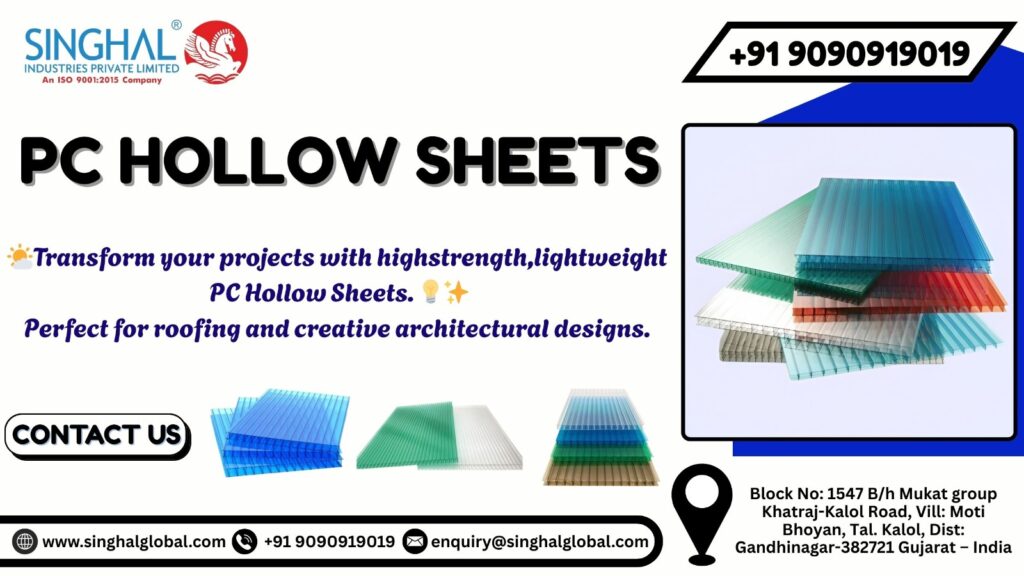
PC hollow sheets refer to polycarbonate sheets that have multiple layers of air or are generally made in a honeycomb or multi-wall structure. The hollow structure not only lightens the weight but also improves the material’s heat insulation and tensile strength. The sizes of these sheets are usually between 4mm to 25mm depending on the area of use. Light sheets (about 4mm to 6mm) are airy and bendable, perfect for room settings or places where there is a minimal risk of impact, while heavy sheets (10mm and over) offer better heat insulation, structural strength, and impact resistance capabilities making them suitable for outdoor and industrial use cases.
However, PP hollow sheets, which are produced from polypropylene, have a similar structure, but their excellent chemical resistance and low price make them an attractive choice, even though they cannot be equal to polycarbonate in terms of transparency and impact strength.
Why Thickness Matters
Let’s say you are into building a greenhouse. Your deciding factor for the Polycarbonate hollow sheet thickness would be how much sunlight gets through, how the greenhouse stays warm, and how sturdy it will be against wind or hail. If the sheet is too thin, it will warp or crack under the impact of the weather; if it is too thick, it will be harder to handle and more expensive, as well. The thickness of the material is the main factor that affects:
- Durability & Strength: Thicker materials have higher resistance to impact.
- Thermal Insulation: The more layers and the thicker the material is, the better will be the temperature control.
- Noise Reduction: Thicker materials usually absorb noise better.
- Weight: Thick materials can add weight, thus affecting the way they are handled and the requirements for structural support.
- Cost: Thicker materials are more expensive at first but may save the user from replacement costs in the long run.
When Thickness Saved the Day
Consider the case of John from Oregon. He built a greenhouse in his backyard through a DIY project and used 4mm polycarbonate hollow sheets because they were cost-effective. However, in winter, a heavy snowstorm led to the collapse of a part of the roof. The 4mm sheets lacked the necessary rigidity for the load. Getting acquainted with his mistake, John switched to a 10mm thickness the next winter, and the building became stable – thus, his tomatoes and nerves were saved. It was a statement for him that not only should any hollow sheet be chosen but the emphasis should be put on the right thickness according to the needs. Sometimes, by spending a little, you keep the big troubles away.
Tips for Choosing the Right Thickness
Define Your Application:
- Are these interior partitions? Roofing? Greenhouse glazing? Each of them has different structural requirements.
- Indoor applications: PC hollow sheets of 4mm to 6mm in thickness are generally enough.
- Outdoor roofing or walls: A thickness of 10mm to 12mm or more gives better strength and insulation.
- Heavy industrial use: 15mm+ for greatest wear resistance should be your choice.
Consider Environment Exposure:
UV protection is indispensable for outdoor use. Thick sheets with the UV coating resist yellowing and becoming brittle more efficiently over time. In case the panel is exposed to strong sunlight or severe weather, it is worth investing in a thicker sheet.
Weight and Handling:
A thick PC hollow sheet is a heavy and less flexible item; hence, its transportation or installation can be a challenging task. In case you are working solo or in a limited space, it is advisable that you select a thickness which will allow you to comfortably handle the sheet. There are times when it is just a little thinner sheet with extra framing that is the right way.
Sound Insulation Needs:
Polycarbonate hollow sheets can muffle sounds, especially when they are thick. Thickness should be the choice when one wants to lessen the noise level coming from places like factory skylights, and noise barriers along the roads.
Aesthetics and Light Diffusion:
Thin sheets allow light to pass through and may result in the creation of a glare, while thick ones diffuse the light more uniformly. Find out the thickness of the material you are going to need depending on whether you want sunlight or light to be softened.
Budgeting Smart:
Initially, good quality thicker sheets cost more, but they can be a cheaper option in the long run due to fewer repairs and replacements. Always weigh the benefits that come with using the product against its price.
Conclusion
It’s not just a matter of technology when it comes to the question of what thickness to choose for a PC hollow sheet or polycarbonate hollow sheet. It’s more like a combination of what meets your needs, budget, and even personal tastes. Sometimes, the smallest thickness may lure you with the saving of money, but are you going to ask yourself: Will it be able to withstand the storms, the noise, and the wear of everyday use? Perhaps, by doing that, you will end up saving the extra money like John did for his greenhouse and also avoiding the trouble.
Also, while we are at it, why not take a moment and think about it. Are the thickest necessarily the best? The answer is no. At times, the most cost-effective solution is the one that gives the best balance between performance, cost, and handling convenience.
Frequently Asked Questions (FAQs)
Q1. Can PC Hollow Sheets be cut or shaped easily?
Of course! Both PC and PP hollow sheets can be readily cut and formed either by using manual tools or by ordering from the suppliers. If you are a DIY fan, a fine-tooth saw will do the job nicely. But if the sheet is too thick, you may have to use special blades or get a professional to do it. Sometimes, DIY efforts may result in the wrong side of work, thus cracking; however, don’t be concerned, as perfection comes with practice.
Q2. Do PC Hollow Sheets reduce noise?
Yes, they do. For example, thick polycarbonate hollow sheets or PC hollow sheets are able to reduce noise from rain, wind, or any other source of noise from the outside world. This basically means that such sheets are great for people living in the city or for schools. Besides that, the multi-wall design works as a sound insulation layer as well; however, thin sheets will not be that effective.
Q3. Are PC Hollow Sheets fire-resistant?
The majority of good quality PC hollow sheets and polycarbonate hollow sheets are designed to be fire-resistant to some degree. They are made in such a way that they slow burning and lower the release of toxic gases. This is an important aspect that building codes take into account. Nevertheless, a quite negative point should be mentioned here—very cheap sheets might not have this feature, so make sure you always purchase certified products.
Q4. Can PC Hollow Sheets be customized in color?
Sure, both the polycarbonate and PC hollow sheets feature a variety of colors and finishes. You can choose from clear or blue, bronze, green, or frosted in order to suit your work with the sheet project. Colored sheets may slightly reduce the amount of light that passes through and also increase the price a bit.
Q5. Who is the largest supplier of PC hollow sheets?
There is no one biggest worldwide supplier; however, in India, Sabic and Merck are the market leaders when it comes to quality polycarbonate hollow sheets. It is always a good idea to get in touch with local dealers who may offer you a better price or after-sales service. On the global level, companies like Covestro and Singhal indutries are the major industry players.