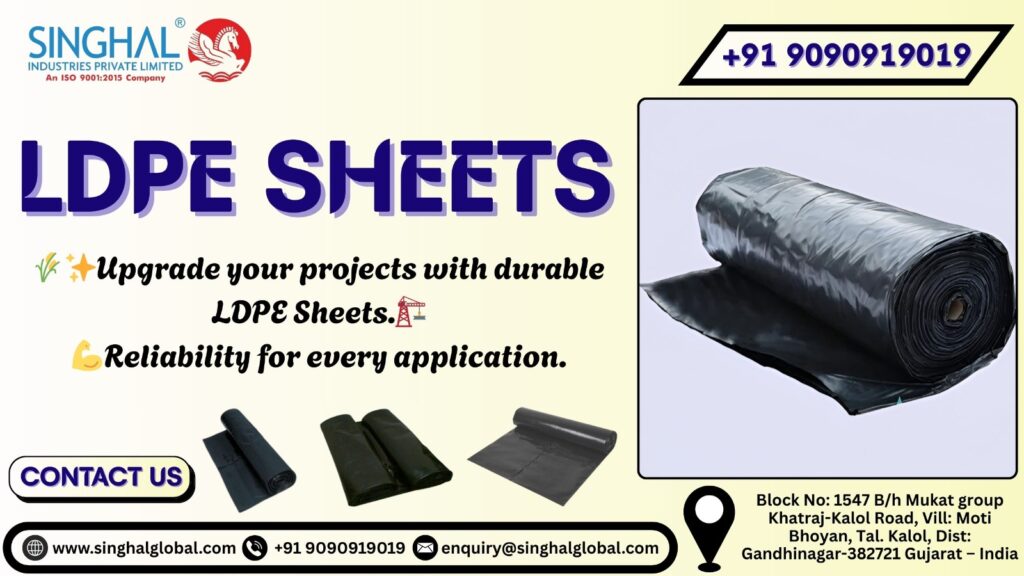
Have you ever thought about how businesses can keep their assets safe whether in packaging or construction? Let me reveal to you a little-known fact: LDPE sheets are usually hidden behind the scenes, working hard. These simple, yet powerful sheets of plastic are now an essential material in many industries, quietly supporting everything from packaging food items to the waterproofing of construction sites. What is it that makes LDPE plastic sheets unique? What are the reasons that so many industries depend on them? How efficient are they? Let’s explore a little more.
Understanding LDPE Sheets
LDPE is a shorthand for Low Density Polyethylene It is a thermoplastic derived from petroleum. It’s light, flexible and impervious to chemical and water -three attributes that make it extremely useful. When we think of “plastic sheets” the majority of people envision solid, hard surfaces. However, LDPE is not rigid at all. It bends, stretches and adjusts like a trusted friend who is there for you.
There are LDPE sheets in packaging as well as construction, agriculture, as well as art projects. It doesn’t matter if it’s covering freshly painted walls or lining water tanks or wrapping products, LDPE proves its worth everywhere.
A good friend of mine, who owns a small construction business in Varanasi, once heard that LDPE sheets protected him from a major loss in the monsoon. The company used LDPE sheet to construct his company and protect concrete that was just poured from the heavy rain. “We could have lost a whole week’s worth of work,” he said, “but the thin plastic rescued the job.” Therefore yes, these sheets may appear basic but their function isn’t a small one.
The Reasons LDPE Sheets are So Popular Across Industries
What is it that gives LDPE its advantage? Let’s take a look at the attributes that make it the best option.
- Durability and flexibility
Unlike plastics that are brittle, LDPE sheets have a remarkable capability to bend without breaking. This makes them perfect for wrapping shapes that are irregular Think of furniture, agricultural products or even parts of machinery.
- Chemical Resistance and Water Chemical Resistance
LDPE does not react readily to bases, acids or grease. It’s perfect for areas that are exposed to chemicals or moisture is normal, such as labs, construction sites, and factories.
- Lightweight, Yet Strong
Despite their light weight yet extremely strong, they’re very durable. A single LDPE sheet will protect the entire floor or wall while plastering or painting, without breaking easily.
- Affordability
When it comes to industrial materials, the cost is a factor. The LDPE sheet price is contingent on its thickness and size but, in general it’s a lot more economical than alternatives like PVC or steel.
- Environmentally Friendly Options
Contemporary LDPE sheets are produced with recycling in the back of their minds. Many even make use of recycled materials – tiny, but a significant step towards greener industry.
LDPE Sheets in Construction
Here’s the place where LDPE sheet for construction truly shine. Construction sites are messy and unstable places; dust, debris, and weather-related disruptions are regular issues. Contractors today use sheets made of LDPE to ensure that their work remains neat and secure. They perform the following functions:
- Protective cover for cement slabs and other materials.
- Moisture barriers under concrete floors.
- Temporary shelters for construction workers.
- Wrapping materials to protect against corrosion or contamination.
When my cousin’s house was being renovated in Lucknow, the workers utilized LDPE sheets to cover the floors of the bathroom prior to the tiles being laid. The foreman stated, “Without this layer, soil moisture could be absorbed and cause damage to the base.” It’s amazing that a single sheet can make such a significant difference, doesn’t it?
LDPE Sheets in Packaging
Have you ever opened the box of a new device only to discover that every component was perfectly packed, safe, and clean? Most likely, LDPE has something to do with it. The lightweight nature of LDPE and its transparency make it an ideal material for packaging. It’s utilized to make supermarket bags, shrink wraps, or bubble films.
Businesses love LDPE packaging, not just because it’s safe for products, but also because it can be customized. Logos, colors, and even transparent windows on packaging made of LDPE provide an added marketing benefit!
LDPE Sheets in Agriculture and Aquaculture
For rural India, LDPE sheets are extremely useful on farms. Farmers use them for pond liners, nursery bed covers, or mulching sheets to maintain the soil’s temperature and humidity. For fish farming, LDPE sheets help line ponds to stop water seepage, which reduces maintenance costs and increases yields.
An agriculturalist from Mirzapur told me how switching to LDPE pond liners reduced his water consumption by half and almost tripled the amount of fish he caught. These stories are real and demonstrate their positive effects well beyond industrial areas.
Sheets of LDPE for Other Everyday Uses
It’s not only big businesses that are awestruck by LDPE – even families find them beneficial. They’re ideal for DIY projects such as outdoor waterproofing, furniture covers and even for making creative projects for children. Because they’re simple to cut and manipulate they make life a little bit more enjoyable in some surprising ways.
The Right LDPE Sheet
When you are buying LDPE sheets, it’s helpful to take into account the needs of your project:
- When building, opt for the thicker sheet (above 200 microns) to ensure long-term durability.
- For packaging, thin sheets will suffice, as they’re more elastic and less expensive.
- If weather resistance is important, UV-treated sheets are well worth the money.
- Always consult with your LDPE Sheets supplier regarding LDPE specifications for plastic sheets to ensure that they are compatible with your specific usage needs.
Conclusion
LDPE sheets might not receive the attention they merit; however, they are still an unassuming champion of modern technology. They are safe, durable, and perform while being cost-effective and flexible. From city builders to small-scale farmers, everyone depends on them in one way or another.
It’s fascinating to see how something as simple as plastic sheeting can make a huge impact. If you happen to find a transparent cover over an area of construction or attractive plastic wrap for your favorite item, take a moment to be awed by the science, technology, and practicality behind it because of LDPE.
Frequently Asked Questions (FAQs)
Q1. What do you think are the differences between LDPE sheets and HDPE?
The Low-Density Polyethylene (LDPE) is softer, less pliable, and slightly less dense than the HDPE (High-Density Polyethylene) that is more resilient and rigid. LDPE is ideal in the packaging and waterproofing applications whereas HDPE is suitable in the most vigorous applications like pipework or containers.
Q2. LDPE – Is the sheet safe to contact food?
Yes. LDPE sheets are non toxic and various international standards have given approval of direct contact with food. This is the reason why you will find LDPE in cling films, food wrappings and bottle coating. When buying to be used as such, always make sure that the commodity is food grade.
Q3. Can LDPE sheets be custom made to order in regards to size and color?
Absolutely! LDPE sheets can be personalized in terms of thickness, size and color. There are manufacturers or those who offer embossed or printed designs that can be used to brand or even be used as a decoration.
Q4. Are LDPE sheets affordable?
Yes. LDPE sheets are good investments in consideration of their extended quality, resistance to damage, moisture and flexibility. The LDPE sheet price is the lowest in its category without compromising on the performance.
Q5. Who is the largest manufacturer of LDPE sheets?
ExxonMobil, SABIC, Dow Chemical and Reliance Industries are the leading manufacturers in the world market. In the case of India, Singhal Industries Pvt Ltd is one of the biggest and trustworthy manufacturers of LDPE plastic sheets and raw polymer granules.