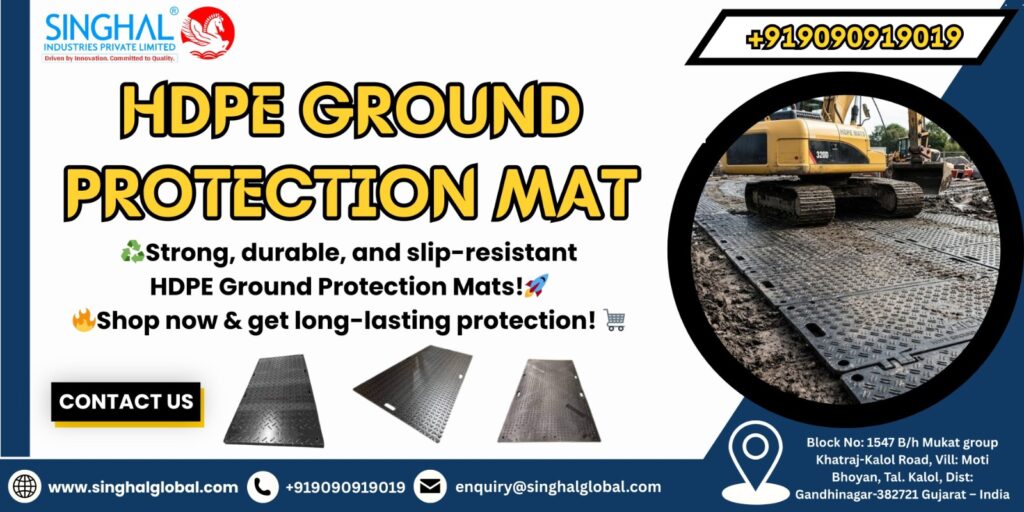
Hey there, fellows! Imagine you’re at a construction site during the middle of monsoon season in Varanasi with rain pouring down like there’s no time for it, dirt everywhere, turning your boots into bricks. You’re trying to bring crane access, but the ground is slippery and plywood is already warping under the weight of it. Frustrating, right? That’s why HDPE mats for ground protection are like superheroes. These sturdy mats are made from high-density polyethylene (HDPE), an extremely strong plastic that is able to laugh when it rains, snows, or when mud or the scorching heat of the sun hits. They’re built for all-weather durability, making sure your equipment is safe and your projects are in order regardless of what Mother Nature throws at you.
I’ve experienced it myself. In the past, at an event that was huge close to the Ganges, we laid some HDPE mats on soggy riverbank soil. If they weren’t there, the trucks could have been buried deep into the ground. But with them? A smooth ride. It’s the kind of confidence that makes one feel safe, you know? You’ll never have to worry about heart-pounding moments as the gear slides over.
Why Ground Protection Mats Made of HDPE Beat the Elements
Let’s take it apart in a simple away. HDPE is the unbreakable mat’s backbone. It’s extremely lightweight, yet 100 times more durable than water pipes constructed from the same materials. The mats evenly distribute weight, which means that heavy vehicles can glide over the terrain without creating craters. Rain? They have a surface that is able to grip tires and let out water in the shape of the back of a duck. Heat? They’re not able to melt or change shape until 80 °C. Cold? Flexible, even in freezing temperatures.
Here’s a contradiction for you: mats are hard as nails, but they’re extremely lightweight. A mat of standard size could weigh between 30 and 40 kg and is easy for two people to carry. Plywood? More dense, able to absorb moisture, and rots quickly. HDPE? It can be reused for many decades. I can remember borrowing a few from a friend to host an outdoor party during Diwali. Muddy lawn saved and no damage. It was like playing God of the Weather!
Prices can vary, naturally. Hdpe ground protection mats price ranges from Rs 5,000 to Rs 10,000 per mat in India, based on the dimensions and the thickness. More robust mats for military operations or oil drilling platforms? Up to the amount of Rs 20,000. It’s worth every cent if they can cut down your downtime.
Real-Life Success Stories
The Field: Stories from the Field
Imagine a road construction team located in the rural area of Uttar Pradesh. A torrential rainstorm turned the area into the size of a swamp. They laid HDPE mats, and in a flash, excavators and loaders started moving around like dry pavement. There were no slips, and there were no stuck machines; the project was completed two days ahead of schedule. The foreman said later, “Man, those mats changed the game. It saved us thousands of dollars in delays.”
Or take events—think Kumbh Mela setups. Many thousands of feet trample wet fields? HDPE mats make instant pathways that protect the grass and soil beneath. In terms of environmental impact, this is a win also, but we’ll come to that. My personal experience: I employed them on a film shoot in the mountains. The rain was heavy; however, the crew remained unaffected. The relief? Priceless.
The suppliers are very important. Reliable HDPE ground protection mats like those used in Gujarat and Delhi hubs offer custom offers and fast shipping. Local ones may be found in Varanasi. Others bring in high quality mats that are of European quality. Be careful of imitations at a lower price because they have low tension.
How They Function
The mats are interlocked similar to Lego bricks. Put pins into holes to anchor them or overlap them to use them for a short time. What is the capacity of load? Up to 500 tons per square meter for good soil. Are you experiencing cold winters in the north? They stop ruts in lawns to allow snowmobiles. Deserts? Dust-proof roads for convoys.
Think about it differently: are they ideal? On extremely rugged terrain, they might require padding underneath. But for mud, grass, and sand, they are unbeatable. I’ve asked suppliers before: “Why not make ’em less expensive?” The answer is that the lack of HDPE thickness is a leading cause of failures. Better safe.
Sizing It Up and Customizing Dreams
Sizes? We’ll be tackling FAQs shortly. However, here’s a quick overview of sizes: from 1m x 1m portable ones to monsters of 4m x 6m for highways. Customization? Yes. Print your logo for your business, change colors for special occasions, and tweak thickness to accommodate extreme weights. It feels personal, as if you are creating a tailored look for your site.
Untruths and Truthful Thinking
There’s a little nutty: HDPE mats can be described as “plastic,” so some eco-warriors aren’t happy. They’re also recyclable and last for many decades, as the wood is chopped daily. Contradiction? Yes, but the data proves HDPE is the winner in terms of lifecycle impact. Which do you think is the better choice: plastic as a hero or a villain?
Informally, they’re expensive in the beginning. For small contractors, it’s costly. But ROI? Insane. Reuse 50 times, and costs plummet.
Applications That Will Blow Your Mind
- Roads for construction: temporary roads built on soft soil.
- Events: weddings, festivals—no messy disasters.
- Utilities: cable-laying without digging into lawns.
- Military: fast bridges across marshy areas.
- Landscaping: keep the grass from cutting mowers.
The Supplier Hunt
Looking for Hdpe ground protection mats? Online marketplaces, industrial directories. They are the best. They can certify ISO load-testing reports. Prices fluctuate based on resin costs and oil prices, for instance. In India, the brands of Mumbai shine. The largest manufacturer?
Conclusion
HDPE mats for ground protection aren’t just equipment; they’re peace of mind during stormy weather. From my adventures in mud to huge projects, they’ve helped save the day. Pricey? Sure. Essential? Damn right. The next time you see rain on your home, you’ll be wishing you’d stocked up earlier.
Frequently Asked Questions (FAQs)
Q1. What sizes are offered in HDPE ground mats?
The sizes vary widely to suit every job. Most common: 1.22m x 2.44m (4×8 feet) ideal for normal paths. Bigger? 2.4m x 4m truck size. Small mobile: 0.9m x 1.8m. The lengths can go up to 6m in custom lengths. Thickness: 5mm light-duty, 12mm heavy. Choose based on the load. I’ve used 9mm on most of my sites, and it’s spot-on.
Q2. Can HDPE mats also be personalized?
Absolutely! Are you looking for anti-slip textures? Graphics with a logo? Different colors to ensure security? Yes. Holes repositioned? Edges with a thinner edge? The Hdpe ground protection mats Suppliers can tweak your edges to your specifications. The cost is higher; however, for special events that require it, it’s a dream.
Q3. What do HDPE mats compare with sheets of plywood?
Plywood is inexpensive in the short term; however, it absorbs moisture, splinters, and is heavy (50kg+/sheet). HDPE? Lighter (20-40kg), waterproof, reusable 100x. The wood warps in the rain. HDPE holds better. Cost: plywood is Rs 500/sheet; HDPE costs Rs 8,000, however, it lasts. Downside? HDPE first hit. Long-run champ.
Q4. Are HDPE mats eco-friendly?
Yes-ish. It is made from recycled HDPE; typically, it is 100 percent recyclable. There are no chemicals that are absorbed. Make sure soil is protected from compaction and let grass grow. Plywood? Trees are felled and quick to rot. Contrary to popular belief, plastic production produces CO2. However, the lifespan offsets it. Studies suggest the environment is 80% cleaner. Reuse, recycle—your call.
Q5. Who is the largest manufacturer of HDPE Ground Protection Mats?
In the world, there are companies such as Singhal Industries Pvt Ltd or Checkers-Safety in the US producing millions of dollars each year. In India, Utracom or local giants like Ahmedabad are the main players. “Largest” is unclear, depending on the regions.