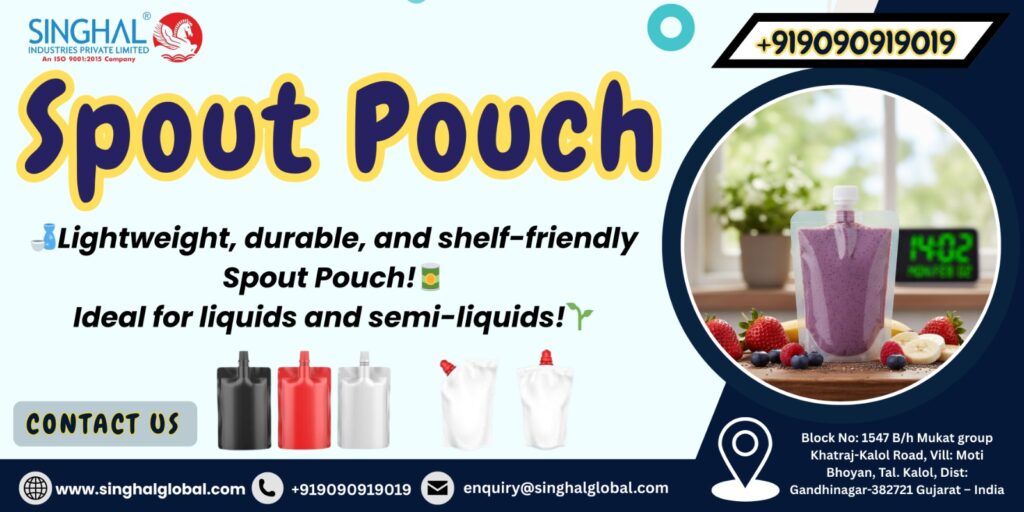
Spout pouches are revolutionizing the way we pack liquids, making it more efficient and eco-friendly. They’re similar to those bags that have an easy spout that you squeeze to pour your liquids without mess. Think sauces, juices, or even detergents. What’s the next step for them? Let’s get to it, but I’m curious if they’ll replace all bottles or be able to take over specific spots.
Why Spout Pouches Matter Now
They’re not recent, but they’re on the rise because people are looking for packaging that is lightweight, portable, and also less wasteful. Traditional bottles? They are heavy, bulky, and don’t get every drop. Spout pouches solve the problem. The cap is re-closable, which means there are no spills, and they can be hung on shelves and look sharp.
In India, spout pouch manufacturers are popping up quickly, particularly in areas such as Delhi in the state of Gujarat. The companies there produce made-to-measure versions for anything from fruit juices to adhesives. The spouts aren’t always perfect, and sometimes the spout can leak if sealed improperly, but in general, they’re an improvement in logistics since they’re super lightweight. Who wouldn’t like to ship more products for less money?
Perfect for Liquids: Spout Pouches for Liquid
This is the reason the spout pouches designed for liquid products sparkle the brightest. Sauces, soups, milk, and even wine — they can handle cold or hot fills without letting you sweat. The flexible material is able to hug the liquid, requiring much less plastic than the rigid bottle. Additionally, they can be emptied nearly completely, reducing food waste up to 99.99 percent. This is significant in a society where we’re throwing away a lot.
But do they really always superior? It’s not the case if you’re working with extremely thick substances or if the spout is likely to get blocked. Imagine taking a bag of laundry detergent in lieu of a bulky bottle that tipped over inside your bag. It’s more convenient.
Cost Breakdown: Spout Pouches Price
Talking money, Spout pouches price varies a lot. The simplest ones are affordable, about a couple of rupees per pouch from Indian suppliers; however, customized printing or fancy-looking laminates can bump it up. Why is the price so different? It is based on the size (100ml to 1 Liter), the substance (plastic or environmentally friendly), and spout type.
Changes in the Market and Trends
Market demand for pouches like these is growing rapidly. The reports say that the demand for pouches that contain liquid will continue to increase until 2035 due to the frenzied lifestyles of today. People who live in cities love pouches that fit into gym bags or purses. Innovative features like resealable spouts that can be sealed and retort processes mean longer shelf lives, without fridges.
In new areas such as India, the growth rate is wild. Spout pouch India production is increasing for sauces, dairy, and even cleaners. In the world, eco-friendly is a big trend, and recyclable materials are on the way, although not everywhere. The opposite is true: they’re lighter, which means less carbon emissions. However, if they’re not reused properly, they will end in the landfills. Can technology fix this?3
Future Trends
Smart spouts, with portion control or even edible films. Drinks are changing — think the wine pouch as well as energy drinks. Non-food too: fertilizers, soaps. In 2030, lightweight packaging will be the dominant liquid. Exciting, right? It could be a bit scary if large bottle makers take on the bottle maker.
Eco-Friendly Angle
Spout pouches cut plastic use versus bottles — less material, smaller carbon footprint. They fold flat when empty, which saves space within recycling containers. They are recyclable or are made from post-consumer resin.
But questions linger. Are they really green? Recycling streams aren’t ideal for multi-layer films, but they’re getting there. India is pushing to ban single-use plastics. Therefore, spout pouches are appropriate if they’re reusable varieties. They can reduce waste in general, but only if the consumers recycle. Are they? But not always. It’s better than breaking glass.
Branding and Customization
Brands love these pouches for their looks. High-resolution printing transforms pouches into billboards with vibrant colors, logos, and more. The stand-up design draws attention on the shelves. For Spout pouches for liquid, it’s perfect marketing: squeeze, pour, done.
Challenges Ahead
There aren’t all roses. Spouts from manufacturing add complexity, leading to higher reject rates sometimes. Food safety regulations are stringent. A leak, and the trust is gone. The cost of raw materials can fluctuate too. In India, supply chains can be slow. However, new technologies are closing the gaps.
What is the issue with scalability? Small-scale production is cheap. Mega-production requires big machines. Do prices continue to drop? Most likely, as demand increases.
Real-World Applications
- Juices and dairy: Simple pour and no drip.
- Sauces: Seal for freshness.
- Cleaners: Powerful and portable.
- Even adhesives or fertilizers: versatile!
Example of a Pune juice company switched to pouches and sales increased 20 percent from the convenience. Human error? Yes, there are people who prefer bottles with a “premium” feeling.
Conclusion
In 2035, spout bags could be equipped with liquid packaging specifically in Asia. Inspired by e-commerce and travel recovery post-2025, as well as green laws. Spout pouch India is expected to lead the way with cheap labor and quick development. However, there are contradictions in the form of convenience vs. recycling. Do biodegradable spouts prevail? The trade policies of President Trump could increase import costs; however, local producers will profit. The time is now, January 2026. It’s the perfect month to get involved.
Frequently Asked Questions (FAQs)
Q1. Are spout pouches suitable for food packaging?
Yes, they are, in general. They’re in line with FDA or FSSAI guidelines when manufactured correctly, using food-grade plastics with no leaks. But are they cheap? Risky. Always verify the certifications.
Q2. Can pouches with spouts be used to serve drinks?
Absolutely. Juices, milk, wine — perfect. The spout is designed to prevent spills, and barrier layers ensure freshness. Hot-fill is also an option.
Q3. Do spout bags reduce the amount of packaging waste?
Yep, big time. There is less substance than bottles, and near-empty dispensing means up to 99 percent product use. But make sure you recycle them!
Q4. Can spout bags be printed with a logo?
Sure, you can. Custom high-res prints make them stand out. Perfect for branding and marketing.
Q5. Who is the largest manufacturer of spout pouches?
It’s hard to define one “largest” — players such as Amcor, Huhtamaki, and Amcor dominate the world. Within India, Swiss Pac, Singhal, and Duropack are top. In terms of volume, Chinese firms lead; however, India is growing fast. Based on measures!
Thoughts on wrapping: Spout pouches may not be perfect, but their future is bright. Easy, cheap, green-ish. Would you like to switch your sauce to another? The Indian scene is hot. Check out the price of spout pouches locally. The shift is inevitable, but bottles remain.