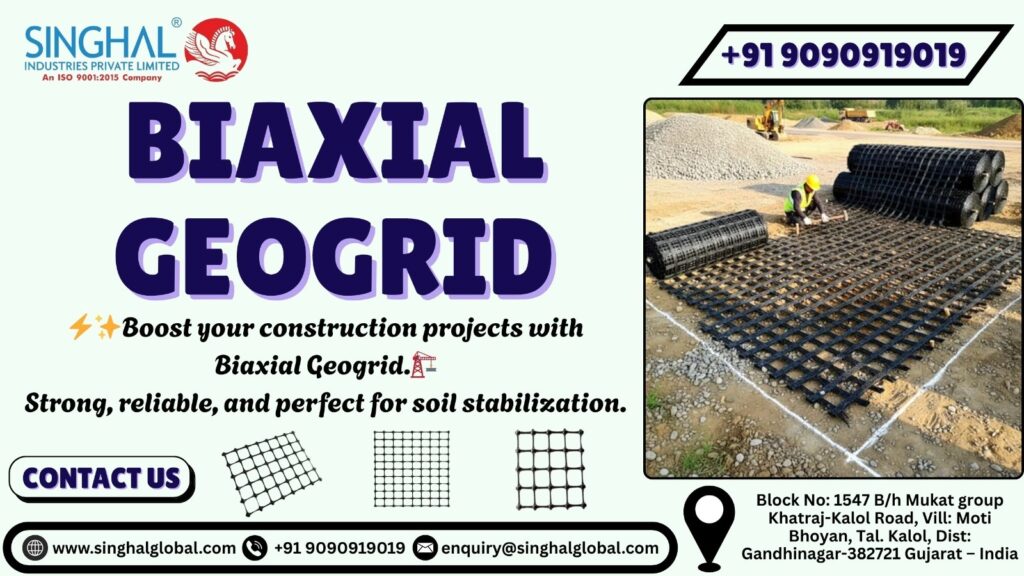
Roads are subject to a lot of damage every single day, from the rumbling of heavy trucks through to torrential rains that wash away the foundation. What do we do to create roads that are more durable, stronger, and less expensive to maintain? Biaxial geogrid is the revolution in road construction that is advancing in the near future. This basic grid-like substance, that is pulled in two different directions in the process of manufacturing, is set to revolutionize the way we construct and strengthen roads, particularly in India where the weather and traffic do not play well together.
It’s not just a flurry of hype. Engineers are already abuzz about the biaxial geogrid. India is at the forefront in the development of smarter infrastructure. It is made up of polypropylene, which is a tough material, or the PP biaxial geogrid is able to be sunk into the soil like the grip of a superhero, spreading loads evenly, so that potholes are an issue of the past. The greatest benefit? Biaxial geogrid prices are dropping as production increases, which makes it more accessible for roads in rural areas. But is it truly innovative? Let’s dig deeper—pun intended.
What exactly is Biaxial Geogrid?
Imagine a fishing net but much stronger and designed to be used on the ground. Biaxial geogrid can be described as a synthetic mesh that is made of high-grade polymers that are stretched both widthwise and lengthwise. The “biaxial” process allows the molecules to be aligned and gives it the same strength in both directions. This is different from uniaxial grids, which pull only in one direction.
What is the significance of this? Roads break when loads push through weak points. Biaxial geogrid is a system that spreads out, similar to distributing the weight on a trampoline. PP biaxial geogrid, in particular, shines due to the fact that polypropylene is resistant to UV rays and water better than the majority of materials. It’s also light, which means installers can move it quickly with no heavy machinery. In India, where the soil’s texture varies between clayey mess and sandy slip and gold, this uniformity is crucial.
But is it really the perfect thing? Not quite. Certain experts say that high-end models cost more upfront, even though they will pay for themselves later. However, with biaxial geogrid prices stabilizing at a level that is affordable for both small and large projects, it’s difficult to argue with.
How Biaxial Geogrid Can Strengthen Roads Today
At present, contractors are placing these grids beneath gravel or asphalt bases. The holes in the apertures let soil particles bind tightly and form a layer that’s more robust than plain dirt. Studies have shown it can increase bearing capacity by about a third and reduce the amount of rutting by up to 50 percent.
In subgrades for roads, particularly those that are soft, it helps prevent sinking. Consider highways loaded with trucks. With no reinforcement, cracks can spread rapidly. Biaxial geogrid acts like reinforcing rebars in concrete, holding back aggregates and dispersing the stress. The nation’s highways are being tested to the limits of this huge time. Projects starting from NH-44 to rural roads make use of the biaxial geogrid. India suppliers aim to extend the life of roads by 10 to 20 years.
One catch: installation matters. Lay it flat, fold the edges by 30 cm, and then compress it; otherwise, it will flop. If done correctly, maintenance will drop sharply. Have you ever walked on a road with potholes that grew overnight? This technology fights this.
The Game-Changing Benefits
Let’s dissect it. The first is load distribution. Vehicle weight is absorbed by soil unevenly, leading to deformation. Biaxial geogrid helps even it out, decreasing the stress on the pavement by 40-60 percent.
Second, longevity. Traditional roads need to be resurfaced every 5 to 7 years. Grids can double that while reducing costs. In moist regions like Uttar Pradesh, it fights erosion as well. Water can’t wash away the stabilized base.
Third, versatility. PP biaxial geogrid can handle everything from parking lots to railway tracks. It’s environmentally friendly, cutting down aggregate consumption by 30%, which implies less quarrying. But is it environmentally friendly enough? Some critics point to pollution from plastic manufacturing, even though recycling can be beneficial.
Cost-wise, the biaxial geogrid cost per square meter is between 50-150, based on the strength (20-40 kN/m). It is competitive if you take into account savings. Fast installation cuts down on labor by 20 percent. Contrary to what you might think, certain projects report better initial digs to be placed; however, long-term gains are evident.
India’s Growing Love Affair with Biaxial Geogrid
Biaxial Geogrid India isn’t yet fully developed, but it’s rapidly growing. The suppliers in Gujarat and Maharashtra make millions of square meters every year specifically designed for monsoon-prone soils. Tech Fab, along with Singhal Global, leads the market, offering PP biaxial geogrids that are certified to international standards. Prices? Starting at Rs 60/sqm, with premiums as high as Rs 200 for high tensile.
What is the reason for India’s interest? Subgrades with soft subgrades are everywhere, from the Gangetic plains all the way to Deccan blacks. Rural roads covered by PMGSY have been mandated in pilots, reducing failures by a quarter.
The Future is in Sight
Quick-forward to 2030. Biaxial geogrid is evolving with sophisticated technology, embedded sensors that monitor the stress in real-time and alert users via apps prior to cracks developing. Hybrid grids made of carbon fibers will provide five times the strength at a similar cost to biaxial geogrids. Custom-designed 3D printed grids for uneven terrains? It’s coming. Nano-coatings that self-heal against chemical agents. Airports and ports will see huge increases. Imagine runways that can handle A380s without sinking.
In India, expect mandatory requirements on all new roads in 2028. The electrification process will mean more weight for EV trucks. Grids will have to be able to handle the weight of these trucks. Bio-based PP biaxial geogrid derived from plants will reduce the carbon footprint by 40%. But doubts linger. Can climate change and the amplification of floods overwhelm it? Early studies suggest no, with drainage layers in conjunction. Costs could drop to Rs 40/sqm and could mean it is all-inclusive even for paths in villages. Exciting, right? Or overhyped?
Installation: Easy Steps to Prosperity
Clear or level, compact until 95 Proctor. Then, roll out the biaxial geogrid parallel to the traffic, and tension it gently. Overlap 30-50 cm and tie using pins. Add 150-300 mm aggregate, compact in lifts. The time is half a full day for every km. Tools? Basic rollers. Tips to avoid wrinkles or weak spots that form. In India, during monsoons, there is geotextile under the surface to allow for separation.
Solutions and Challenges
Not everything is perfect. High traffic needs multi-layers—costly. The solution is to design software such as GEO5 that anticipates the needs with precision. UV degradation? PP biaxial geogrids are stabilized and can last for more than 50 years when buried. Prices fluctuate with the cost of polymer? Bulk buys stabilize Biaxial geogrid prices. Skeptics ask, “Why not concrete?” Grids are flexible and handle movement better. Contrary to what you might think, cement is cheaper in the short term; however, grids are more durable long-term.
Conclusion
Biaxial geogrid doesn’t only fix roads; it’s also ensuring their future. With Biaxial geogrid India expanding to PP biaxial geogrids, we will create stronger, more sustainable infrastructure. Yes, there are questions on scale and environmental impact, but the evidence seems to be overwhelming.
Frequently Asked Questions (FAQs)
Q1.Can geogrids with biaxial facets be used for road construction?
It’s definitely a necessity to stabilize subgrades or base reinforcement as well as overlays on roads. It interlocks with soil, boosting durability, which is ideal for roads and rural pathways.
Q2. How can biaxial geogrids increase load distribution?
By distributing horizontal vertical stress over the grid of its structure, it limits aggregates, reducing localized pressure by up to 50%. Imagine weight sharing similar to a net under a massive burden.
Q3. What is biaxial geogrid’s role in reducing the need for maintenance?
It stops cracking, rutting, and erosion, which extends the lifespan of pavements by 2x. Less repairs equal 30-50% less cost over the course of 10 years. No more frequent repairs to potholes.
Q4. Is biaxial geogrid a viable option in airports?
Absolutely, for runway bases and taxiways with soft soils. It can handle massive weights, such as 50-ton aircraft, and has been proven for expansions across the world.
Q5. Who is the largest manufacturer of biaxial geogrid?
China is the world leader, exporting tons of geogrids each year through companies such as BPM Geosynthetics. The countries of India, Tech Fab, and Singhal are increasing exports rapidly.