In the case of underground structures like basements, tunnels, sewer tunnels, or RCC pipes, water, chemicals, or soil pressure may ruin concrete over time. That’s why HDPE Rib Liner Sheets are able to help. These sheets of high-density polyethylene with a T-shaped rib profile are quickly becoming the most popular solution for waterproofing and corrosion protection in underground construction.
What are HDPE T-Rib Liner Sheets?
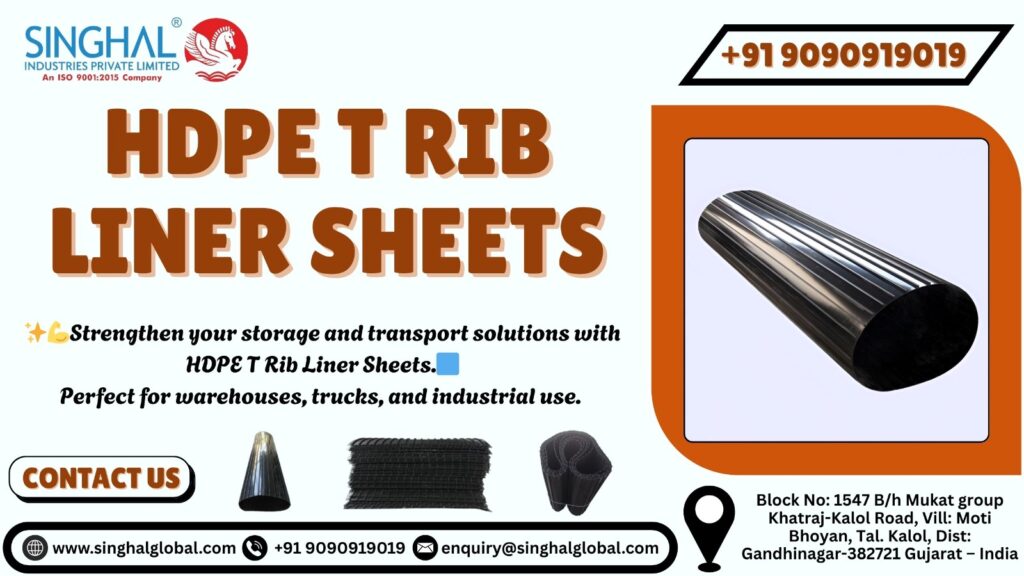
HDPE T-Rib Liner Sheets are elastic, thermoplastic liners made of high-density polyethylene. One side is smooth, while the other side has ribs that are T-shaped with locking extensions. These ribs aid in helping the sheets “lock” to concrete, forming a secure solid bond that is resistant to the leaking of water, chemicals, and scratches.
They are typically employed to make lines:
- Concrete and RCC pipes
- Tunnels and culverts
- Tunnels for wastewater and sewers
- Basements and damp walls
- Manholes, chambers, and canals
When underground structures are constructed, this type of lining serves as an additional skin for concrete, shielding it from acids, moisture, and abrasive groundwater.
Why Should You Use HDPE TR Rib Liner for Underground Work?
Underground structures always face three major adversaries: chemicals, water corrosion, and chemical attacks. Concrete may look solid, but over time it can crack, spall, or deteriorate—especially in sewage-rich or acidic environments.
HDPE T Rib Liner Sheets are helpful since they:
- Are highly impermeable, preventing moisture and water from entering the structure.
- Resist sulfuric acid as well as many other chemical compounds released by sewage flows, which are the primary cause of RCC pipe erosion.
- Offer abrasion resistance, so that water or slurry won’t cause damage to the surface.
- Are lightweight and flexible, which makes installation on irregular or curving tunnel walls much more straightforward than rigid coatings.
In short, the use of HDPE T-Rib liner sheets during underground construction can prolong the lifespan of concrete structures by a decade while reducing maintenance costs in the long run.
Sheets of HDPE-T Rib Liners Cost
The HDPE T Rib Liner Sheets Price will vary based on several aspects:
- Thickness (typically 1.0 millimeters to 5.0 millimeters)
- The width and length of rolls or sheets (common widths of 2.5-2.6 meters, lengths of up to 25 meters or as per your request)
- Color (black, orange, or two-tone choices)
- Quantity (bulk orders reduce HDPE prices)
HDPE T Rib Liner Sheets Price per square meter. The exact figures differ by region and provider, but in India, quotations are generally offered per square meter, as well as per roll, with thicker chemically resistant grades costing more. For underground projects, it’s typical to look at prices in relation to the service life. A slightly more expensive HDPE liner could save a lot of money in repair costs over the next 20-30 years.
HDPE T Rib Liner Sheets Suppliers
Locating dependable HDPE T Rib Liner Sheets Suppliers is essential, as sheets of poor quality can break or leak under pressure. In India, there are a variety of distributors and producers that specialize in these liners:
- Sewage infrastructure
- Tunnels and culverts
- Water-retaining structures and basements
When selecting a supplier, look for:
- Experience in wastewater and underground construction projects
- The ability to customize dimensions and thickness
- Technical assistance in welding as well as installation (extrusion or butt weld)
A lot of suppliers offer test certificates and samples that are crucial when you’re working on lining tunnels or basements where failure isn’t an option.
The way of their installation underground?
Installation of HDPE T Rib Liner Sheets is generally in a generalized structure:
- Clean and prepare the surface of concrete RCC (removal of loose material and sharp edges).
- Take the liner out of the roll and position it with the T-rib having the face facing the concrete and the ribs to grab and connect.
- Care should be taken to seal joints, edges and holes to avoid weak points.
Commonly Used Applications in Underground Construction
Along with lining pipes, HDPE T Rib Liner Sheets are used in an innumerable variety of semi-underground and underground structures:
- RCC is covered by sewage tunnels and wastewater tunnels that ensure that it is not attacked by sulfuric acid and corrosion.
- Waterproof (ground water) basements and underground parking floors and walls.
- manholes and chambers to avoid chemical attack and leakages in narrow spaces.
- Wet walls and canals- line channels that move water or wastewater so as to reduce erosion and seepage.
- Storage facilities, which are chemical resistant are used as internal liners in industrial tanks and reservoirs.
Across the board, the T-rib profile increases the adhesion and in fact, the liner can stay in place despite the pressure.
Benefits over Traditional Waterproofing
Compared to traditional techniques of bituminous coatings and cementitious waterproofing techniques, HDPE T Rib Liner Sheets provide:
- Greater service and reduced maintenance.
- Higher resistance to acid and chemical attacks, especially in sewage rich locations.
- The faster installation procedure and the reduced number of labor-consuming operations.
Conclusion
HDPE T Rib Liner Sheets are no longer an “optional” liner; they’re now a norm in modern underground construction, particularly when chemical, water, and corrosion are the main concerns. With the proper HDPE T Rib Liner Sheets Suppliers, a properly installed installation, and an eye on HDPE T Rib Liner Sheets Price and performance, the liners will make basements, tunnels, and sewage systems more durable and leak-proof.
Frequently Asked Questions (FAQ)
Q1. Can they be waterproof?
By no means HDPE T Rib Liner Sheets may be waterproof and practically impermeable in case of a proper positioning. HDPE material does not hold water and the welded joints have an impervious continuous barrier against the seepage of water into the soil or concrete.
Q2. Can they be used in basements?
Absolutely. In commercial and residential buildings, liners are usually used in the waterproofing of basements. They are made on floors and walls of the basement in order to prevent the flow of groundwater and moisture to prevent efflorescence and the destruction of the structure.
Q3. What is the quality checking process?
Some of the quality tests, which will be carried out in HDPE Rib Liner Sheets by a reputable manufacturer that include, are:
- Tensile strength and elongation experiment to find out the strength of the material.
- Hydrostatic pressure tests to test permeability.
- Chemical resistance tests (particularly to acids, like sulphuric acid).
- Tests on the strength of the welds done on seams to determine whether the joints are as strong as the base material.
Ask the test outcomes and certifications all the time before making big orders on underground construction projects.
Q4. Are they applicable in filling industrial tanks?
Yes, HDPE Rib Liner Sheets are generally applied to line the inside of the industrial tanks with water, sewage or other chemicals. They are resistant to solvents, acids and abrasion and hence they can be used in chemical-resistant lines both in industrial treatment plants and storage systems.
Q5. Who is the largest exporter of HDPE Rib Liner Sheets?
No one has a consensus on who is the largest exporter, but there is a number of Indian and multinational companies that control the export market. The biggest HDPE T Rib Liner Sheets Suppliers in India are the Singhal Industries Pvt Ltd manufacturers of special-purpose plastic-sheet manufacturers and also the large-scale HDPE-lining manufacturers, and they often export to the Middle East, Africa, and the Southeast Asia in tunnel, canal, or wastewater projects. Such rankings are dynamic and in most cases buyers will shortlist 3 or 4 leading exporters with regard to their past success in projects and technical assistance.