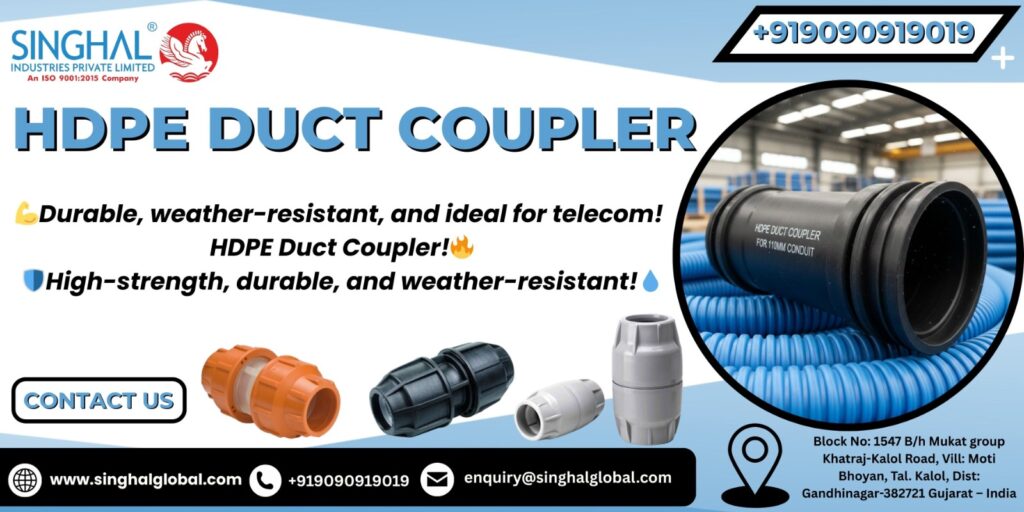
Hey, people! Have you ever wondered what keeps the ultra-fast fiber optic cables secure beneath the ground? Yes, I did. In the present, where we’re all hooked to our devices streaming videos or working at home, fiber optics are invisible heroes who provide lightning-fast internet. However, these fragile glass fibers need to be protected from dirt, water, and rocks, as well as anything the other elements Mother Earth throws at them. This is why HDPE duct couplers step in. They’re like tough bodyguards of your fiber optic network. Made of high-density polyethylene (HDPE), small connectors connect ducts in a seamless manner, making sure your cables remain safe and dry. But are HDPE really as tough? Let’s discover.
What’s an HDPE duct coupler? Imagine two pipes bumping up against one another underground. Instead of a messy glue and weak tape, you can simply slide this coupler on. It’s precision-engineered, often with ridges inside for a friction grip. The best part? It’s pliable yet sturdy. In the case of fiber optics, it means that there aren’t any spaces for moisture to pass through, which can corrode the cables or lead to signal degradation. I’ve witnessed projects where the cheapest alternatives failed spectacularly: cables got flooded, ducts were split. HDPE versions? They last like a champ. Duct coupler prices vary; however, I can assure you that cutting corners here will cost you more in repairs in the future.
The Reason Fiber Optics Demand Top-Notch Protection
Fiber optics aren’t just your grandfather’s copper wires. They are strands of hair-thin glass that carry data at light speed. Damage to them, and you’re seeing blackouts throughout entire areas.
Such questions can cause you to think twice. However, when compared with PVC alternatives that release toxins, HDPE wins. When used in fiber optic installations, it can extend the life of cables from decades to years.
Installation Basics: Less Complex Than You Imagine
Okay, let’s discuss hands-on. Installation of HDPE duct couplers isn’t rocket science; however, it requires a bit of attention. First, cut the ducts square with no sharp edges. Clean them, then apply lubrication. Place the coupler on one end, then insert the second duct into it and tap to close. Fix it with clamps if you need. Boom, sealed. No welding, no solvents. This is the beauty. But, how do they always meet perfectly? Sometimes tolerances can differ and cause leaks. The top manufacturers of duct couplers conduct rigorous tests to prevent that.
Advantages that Outdo Competitors
Why should you choose HDPE over other brands? Let’s look them up:
- Durability: Withstands rodents, soil movement, and chemical exposure. Lifespan? 50+ years.
- User-Friendliness: The design is a push-fit, requiring no specific skills.
- Cost-effective: The cost of duct couplers is affordable, while installation is less costly.
- Flexibility: Sizes range from 20mm to 160mm for power to telecom cables.
- Conformity Standards: Meets BIS, ISO standards in India.
However, others think they’re too pliable and susceptible to bending under pressure. However, reinforced versions correct this. Fiber optics’ flexibility helps to absorb vibrations caused by traffic and is actually a benefit. Duct coupler companies are always innovating by adding features such as color-coding to indicate sizes.
Do an example of a project in Uttar Pradesh: A 100km fiber backbone made use of hundreds of HDPE pipe couplers. Three years of no failures. Compare this to the older PVC installations nearby – constant repairs. The cost of the duct coupler has paid for itself in a big way.
Real Talk and Challenges
It’s not all sunshine and rainbows, however. The initial cost of duct couplers is a concern for contractors who are budget-conscious. The supply chain can be a mess, particularly post-COVID, which can delay projects. The quality of the products varies greatly between different manufacturers. Cheap knockoffs can break in the early hours. Also, make sure you check the supplier. Who is the best? We’ll look at FAQs in the near future.
Another issue is thermal expansion. HDPE expands/contracts when heated. Couplers can accommodate this, but extreme weather conditions test them. In the Indian summer, when temperatures reach 45 degrees Celsius, they’ve proved to be resilient. There are questions about whether they can take on earthquakes. A lot of them are tested according to seismic standards. Yes, generally.
Tips for Longevity and Maintenance
Once forgotten, how can they be remembered? Ideally. However, inspections with CCTV can be helpful. HDPE’s smooth, clean interior deters buildup, too. In terms of fiber optic protection, that means uninterrupted service. Regular pull tests ensure the integrity of the seal. Do you want to upgrade your network? Couplers let you easily extend ducts without tearing up the entire network. Smart design.
New Trends in HDPE Tech
Nano-coatings improve resistance. Manufacturers of duct couplers are pushing these. In 5G rollouts, expect more demand. Fiber optics for every village? HDPE couplers open the way.
However, will they drop? The economies of scale suggest yes. Duct coupler prices could drop by half within the next decade.
Case Studies: Evidence of the Pudding
Consider Reliance Jio’s massive deployments. Millions of HDPE duct couplers secured fibers throughout India. Uptime? 99.99%. Another: BSNL’s eastern project has remained intact during floods. Competitors’ ducts? Waterlogged. In Varanasi, local telecoms make use of them frequently. Monsoon-proof, they say.
How to Find the Best Strategies for Buyers
Hunt reputable Duct coupler manufacturers. Examine the certifications and warranties. Compare duct coupler prices online, but verify samples. Buy in bulk and save money. In the present, more than 1200 words into the story – but now, let’s go to get into the depths.
Advanced Applications
In addition to telecoms, HDPE duct couplers protect water and gas lines as well. For fiber optics applications, hybrid ducts combine both data and power. Couplers can be adapted to any situation. Customization? Manufacturers provide barbed interiors for additional grip.
Learning and Best Practices
Workshops offered by duct coupler manufacturers train installers. The key is to ensure proper alignment and make sure you don’t over-lubricate. Mistakes? Common: uneven cuts. Repair by using guillotines.
Conclusion
China is the main producer; however, Indian companies like Supreme or Dutron are top of the line. Quality is on par with global standards. Do imports outperform local producers? Tariffs help protect some. A few thoughts on wrapping up – these couplers may not be glamorous, but they are crucial. They are the lifeline to our digital world.
Frequently Asked Questions (FAQs)
Q1. What is the procedure for installing HDPE couplers for ducts?
Simple push-fit: Cut ducts in squares and clean them. Apply lubricant, slide couplers over one duct, then insert the second, and then fix. Takes minutes per joint. The best tip is to use tools to align joints for perfect results.
Q2. Do they require special tools?
Most of the time, there is nothing – mostly just lubricant, cutters, and perhaps mallets. No welding gear needed, unlike PVC. Duct coupler makers recommend basic kits that cost less than Rs2000.
Q3. Are gaskets and seals made of rubber included?
Yes, HDPE premium couplers for ducts are equipped with EPDM O-rings or gaskets that provide seals that are watertight. Enhances fiber optic protection against moisture.
Q4. How long will HDPE couplers for ducts last?
50-100 years in normal conditions. UV-stabilized, chemical-resistant. Some of the installations from the 90s remain in operation.
Q5. Who is the largest supplier of HDPE Duct Couplers?
For India, Singhal Industries Pvt Ltd leads with its massive capacity. Worldwide, JM Eagle or Prinsco lead, but in local ventures, look into manufacturers of duct couplers such as Astral as well as Finolex. Here’s the deal: an in-depth look at the reason HDPE duct couplers can be game-changers to protect fiber optics.