The jumbo bags with heavy load PP are the mainstays of construction sites, able to haul massive quantities of sand, cement, gravel, or aggregates without breaking a sweat. These huge, sturdy bags made of woven polypropylene handle weights that will crush ordinary sacks and make bulk transportation effortless. But are they able to stand up to forklifts and cranes every day? Or do they let go at the moment you are least expecting it?
What is it that makes PP Jumbo Bags tick The PP jumbo bags, sometimes known as FIBCs as well as bulk bags, begin as woven polypropylene fabric, which are strong sheets of lightweight material that are then stretched into panels or tubes. They’re constructed to be with extra strength. Think U-panel or 4-panel designs with strong foundations (250 GSM and more) as well as UV-stabilized coatings that combat sun damage.
Sizes? The most common ones are 90x90x120 cm, ideal for payloads of one ton; however, they are able to scale up to 2-5 tons in mega hauls. These aren’t cheap shopping bags. The weave—typically 10×10 mesh with 1000-denier yarns—gives the bag a breaking strength of 90 kgf both lengthwise and widthwise. Laminated versions include the protection of a plastic layer (100-120 gauge) for waterproofing, ensuring that wet concrete that’s been soaked by rain isn’t able to seep in.
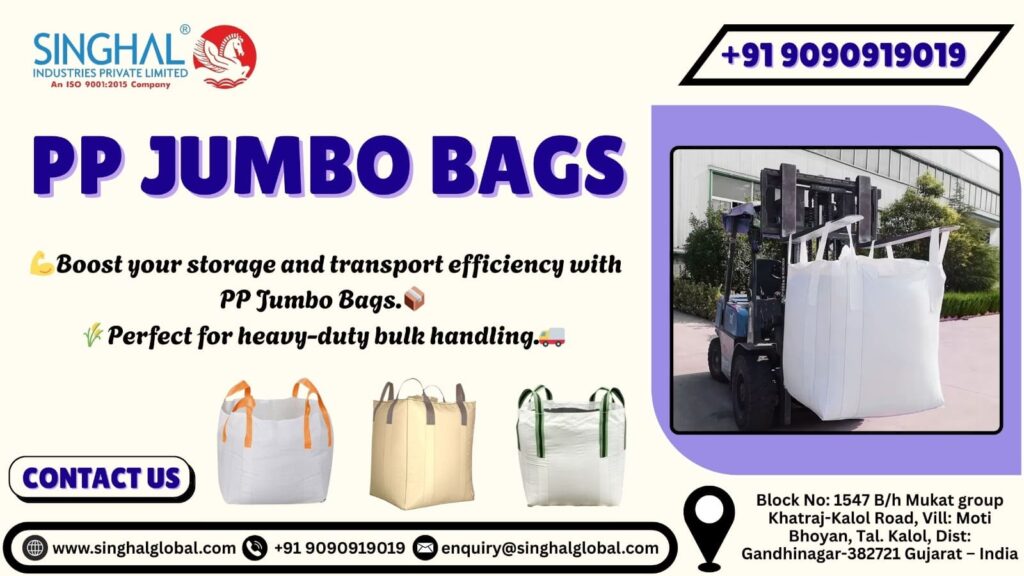
PP Jumbo bags made by bulk packaging makers in India are equipped with spouts to make it easy to discharge, baffles that keep their shape after filling, and lift loops that allow for safety in handling. This is a fun fact: some bags come with “sift-proof” edges; however, I’ve seen cheap bags leak fine dust just like sieves. Contradictory, huh
Customization reigns supreme. Do you want your logo to be printed in striking red Or extra loops for rotating discharge? Customized pp jumbo bags manufacturer India experts handle the bag, tweaking it to fit sand (open to the sides) as well as cement (top spout, lower flat). They’re also recyclable, which makes them feel good in the midst of all that construction trash.
Why is polypropylene better than polyester The latter is less expensive and able to handle more moisture, even though it melts at temperatures above 100 degrees Celsius. Watch that close to hot asphalt.
Why Construction Loves These Monsters
Construction sites go through tonnes of material every day. Just think of quarries that dump gravel or mixers emptying cement. Heavy-load PP bags can cut down handling time by a third: one bag equals 25-50 smaller bags, cutting down on time and labor costs as well as truck trips. They’re stackable, forklift-friendly (up to 3 feet high), and can be drop-tested up to 2 meters without breaking. In India, the booming infrastructure like highways and high-rises requires them. Gujarat and Maharashtra hubs are able to supply them continuously.
Security factors are crucial. 5:1 is a way of saying that a bag can hold 5 tons before it fails according to UN standards. For aggregates, they can stop clogging machines due to spills. For scraps of steel, the reinforced corners can stop tears. PP jumbo bags for industrial packing supplier India networks are quick and usually equipped with liners to control dust. Bags with baffles stay put, unlike floppy bags which grow. However, during monsoons, they may absorb water even when they are not coated. Add lamination and problem solved. This prevents the loss of millions of dollars each year, as they claim.
India’s Manufacturing Muscle
India is a world-class powerhouse with PP jumbo bags for bulk packaging manufacturer India. The leaders located in Ahmedabad and Delhi manufacture millions each year. They make use of homopolymer from virgin PP (MFI 3-5 10g/min) for maximum strength, mixing with calcium carbonate at a rate of 25% to provide stiffness. Factories make eco-friendly versions of recycled PP, resulting in the 220 GSM bodies that withstand UV radiation for 12-18 months outside.
PP jumbo bags for industrial packing supplier India, such as those from Gujarat, have one-stop shops that range from circular weave tubes to flat PP sheets that are sewn on site. Exports are flooding across the Middle East for desert projects. Customized PP jumbo bags for bulk packaging manufacturer India professionals shine through the flexibility of printing—your safety warnings or weight specifications in several languages.
Who’s the biggest? Jumbo Bag Refurbishment or Gujarat giants are volume kings that can handle 1MT+ bags. The clusters produce 100,000 units a month, which is insane. Does quality match? Most of the time, yes, but make sure to check seams. Pro tip: When building demands, you must use the 3% UV stabilizer as well as coated fabric. Uncoated fabric fades quickly in the Indian sun. The test of suppliers is IS-9755 breaking strength 91.8 kgf min., threads are 40 kgf. Human error can sneak in. I’ve been told of batches with threads that are loose. Always look over the threads.
Safety and Handling Essentials
Transfer the load via conveyor to the top spouts of the hoist, then lift with four loops (never two!) and unload at the bottom discharge. Place pallets on top, maximum 1.5 tons for each square floor area. Forklift tines should be placed under loops, no cutting sides. In construction, rotate bags 180 degrees for even discharge, avoiding bridging.
Regulations? Do you follow UN FIC Type C of needs that are conductive (rare when combined). Lifespan? 6-12 years if stored dry and free from insects. Monsoon hack: warehouses indoors. Floods can destroy them. Also, temperatures? Keep under 80 degrees Celsius. It’s a simple process, yet omissions can cause collapses—scary things. Why would you risk it.
Conclusion
Real wins: Mumbai metro stations cut cement transportation costs by half. Quarries stack 20 tall securely. Downsides Overfilling and seams popping. A heavy downpour can increase the volume of uncoated seams by 20 percent. Select coated. It is also useful for fly ash for bridging power plants as well as construction. Are you impressed.
Frequently Asked Questions (FAQs)
Q1. What industries use jumbo bags?
Construction is top of the list for cement, sand and aggregates, chemicals, mining, food (grains), and pharmaceuticals. Flexible for bulk dry goods less than 5 tons.
Q2. What is the material PP Jumbo bags made of?
Polypropylene is a recycled or virgin polypropylene fabric woven (200-250 GSM) that is often coated with film made of LDPE/PP (100-120 gauge) and UV-stabilized threads and possibly liners. Tough, chemical-resistant stuff.
Q3. What capacity of weight is available?
From 500 kilograms for light aggregates up to 500 kg for heavy-duty construction hauls. 5:1 safety factor as standard. One MT (1000 kilograms) is the most commonly used.
Q4. Do you have food-grade jumbo bags available?
Yes, there are special coated or food-contact PP varieties FDA-approved for minerals or grains, but the ones for construction usually contain coatings that are not suitable for food use. Please specify the food grade.
Q5. Who is the largest supplier of PP Jumbo bags?
The Singhal Industries Pvt Ltd Gujarat-based giants Jumbo Bag makers or Singhal-like networks provide PP Jumbo bags for industrial packing suppliers in India, with enormous exports and custom-designed output. Their global reach is what makes them stand out.