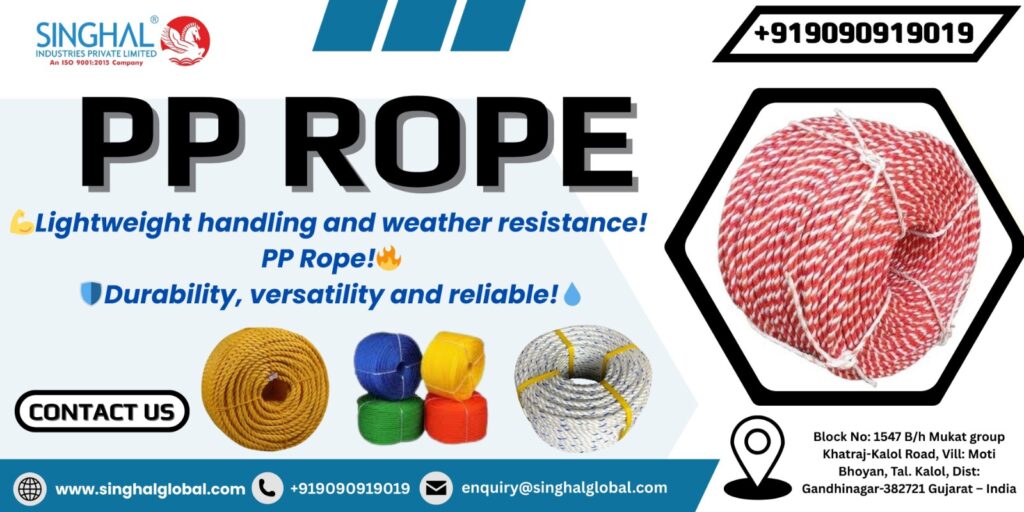
Polypropylene rope, often known as PP rope, is now the most popular material used on construction sites all over the world. It’s strong, economical, and can withstand all kinds of harsh situations that construction workers face every day.
The Reason PP Rope Shines in Construction
In the beginning, let’s talk about strength. Although it’s extremely light, PP rope packs a punch due to its outstanding tensile strength. It can be used to hold up heavy building materials, tie down scaffolding, or even support temporary structures with no fear that it’ll break when pressure is applied. Also, it’s impervious to wear caused by abrasive surfaces and bouncing loads, which is crucial when you’re on a busy site that has things rubbing and bumping frequently.
But is it really that tough It’s true, mostly; however, some argue that it wears quicker than nylon in very rough areas. But for most tasks, it’s a good choice. Construction sites can spill oils and solvents. You can have it. PP rope smudges away the spills while retaining its strength. Additionally, it won’t take in water, so spills or rain won’t make it mold or rot.
Easy to Use and Weatherproof
Outdoor construction is about having to deal with weather, doesn’t it? PP rope is the best in this regard. It’s naturally waterproof and floats, making it ideal near floods, rivers, or wet ditches; it won’t sink into the water when it slides. UV resistance is built in too and is especially present when treated, which means it will not degrade rapidly when exposed to UV.
Lightweight ropes are a game changer for those working. The burden of carrying heavy coils for hours exhausts you. However, what about PP rope? It’s simple to move around, decreasing fatigue and speeding up work like lifting or marking the boundaries. It’s also cheap! Bulk purchases allow projects to stay within budget without sacrificing safety.
Have you ever wondered why people like it for tarps or barriers? It’s flexible even in cold weather; it doesn’t get stiff like other ropes. You can choose colors to enhance the visibility of your site: orange for danger zones, yellow for boundary lines, and orange for danger zones. There are many questions that pop up, such as can it stretch? It does stretch; however, not enough to warrant concern for use in the short term.
The Most Important Uses for Job Sites
- Scaffolding tie: secures platforms and poles securely.
- Hoisting lines: lifts materials and tools easily.
- Safety barriers: mark off dangerous areas clearly.
- Material binding: binds the rebar, lumber, or concrete forms tightly.
- Temporary anchors: secures the tarps against wind or anchors gear.
When it comes to transmission line work like overhead power systems, PP rope excels too—light yet sturdy to pull and support. There are occasions when agriculture overlaps, as farmers use it to bundle; however, construction companies take maximum advantage of its industrial-grade grit.
India: Finding Reliable Suppliers
The booming construction business Marine PP rope supplier India needs the best suppliers. That is why the high-quality producer of PP India plays the leading role. They manufacture ropes dedicated to the construction of heavy-duty objects, and they also provide an opportunity to choose between braided or twisted designs and various thicknesses.
In the projects closely located near ports or water, marine High-strength PP rope manufacturer India offers weather-beaten rope that can be floated and is resistant to saltwater. They are ideal for bridges or sea buildings. Do you want to scale up? India exporter of industrial PP rope is an international supplier that ensures that your supply chain is dynamic with anti-chemical and UV-guarded inventory.
Why should you choose local The Indian producers are able to cut costs, deliver faster and they are up to date to the international standards. Remember to buy the units that are certified by ISO so as not to buy the knockoffs that are cheap but cannot withstand the load. It is strange that some of these bargains are even more expensive to fix.
Safety Tips and Load Handling
Sure, PP rope in India can handle heavy loads. Tensile strengths vary based on diameter; however, 10mm ropes are able to lift hundreds of kilograms safely. Always verify ratings and apply safety considerations (like 5:1 when it comes to construction). It will not rot; however, you should check for wear and abrasion.
Colors There are endless options for white, blue, red, green, yellow, and even customized mixes for website coding. Agriculture Absolutely—bunches crops, ties nets, and resists pesticides.
Reviewing the Benefits
PP rope isn’t 100% perfect; UV can make it weaker over time, and it can melt at temperatures above 80 degrees Celsius, but in the construction industry, its advantages are greater than the cons. Cost savings can reach 60% at times, according to certain sources, as well as it reduces the amount of waste that is generated with its long-lasting life. Combine it with high-strength PP rope manufacture India to achieve the most effective results.
Conclusion
Consider your next task. Did you drop a rope into water It then floats back up. Are you looking to tie your knot quickly? Easy and knot-friendly. Construction has just become simpler. However, there are a few contradictions. Some claim it’s not suitable for crucial lifts due to stretching; some use it for all. Make sure you test it to see if it’s suitable for your needs.
Frequently Asked Questions (FAQs)
Q1. What is the difference between braided and twisted PP rope?
Twisted is the basic type of twisted fibers, which are less expensive and more stiff to tie. Braided weaves fibers tighter, easier to pull, and more robust. Choose according to the job requirements.
Q2. Can PP rope handle heavy loads?
Yes, it has the highest tensile strength to its weight. Diameter is important; thicker ones can lift tons, but make sure they are compatible with the load and have safety margins.
Q3. Which colors can be found?
Most colors: white, blue, black, green, yellow, and orange. Customized colors, too, for brand recognition or visibility on websites.
Q4. Is it possible to use PP ropes in farming?
Yes, tie crops, help plants grow, and create nets that resist the effects of moisture and chemical fertilizers like phosphates.
Q5. Who is the largest exporter of PP Rope?
It’s hard to pinpoint an individual “largest,” but in India, S.S. International is the top high-strength PP rope producer, as well as marine High-strength PP rope manufacturer India and Industrial PP rope exporter India. Other companies such as iRopes and Arham Polymers compete strongly.