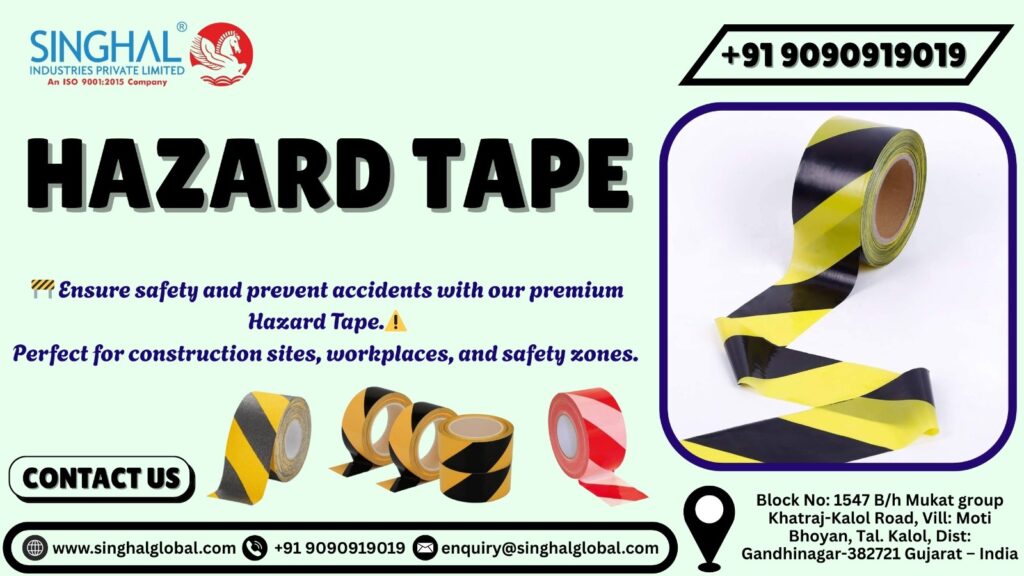
If you’re in charge of an industrial facility, such as warehouses, factories, or construction sites, you’re aware that dangers are everywhere. The slippery floors, the large machinery, chemical leaks. just one bad step and boom, trouble. Hazard tape comes into the picture as your guardian in silence. The bright, striped tape is used to identify dangerous zones quickly, keeping employees safe and ensuring smooth operations. In this article, we’ll explore its most effective industrial applications, as well as the reasons why it’s essential and why Indian Hazard Tape manufacturers are leaders in the field. We’ll incorporate real-world scenarios, suggestions, and the FAQs you’ve been searching for. In the end, you’ll know why avoiding hazard tape is just like driving in darkness without lights. Let’s roll!
Industrial environments are full of chaos. Forklifts rumbling, noisy machines flying around, liquids and powders all over. Accidents They can occur quickly. Hazard tape, usually that striking combination of red-white or yellow-black-white, screams “stop!” without words. It’s affordable, quick to apply, and easy to peel off and clean after the task is completed. It’s no wonder that manufacturing facilities all the way from Mumbai to Kanpur are stocking rolls of it. Made of tough vinyl or PE, it adheres to metal, concrete, and even wet floors. And what about India’s dusty and humid plant life? It’s a pro.
Core Applications in Factories
First up, floor marking. Imagine a bustling assembly line. Hazard tape marks the areas that are not allowed around presses or conveyors. Workers notice it immediately. The stripes are ANSI compliant, which means the color is black and yellow for physical hazards such as high beams or trip hazards. This saves lives and reduces insurance claims. In chemical factories, red tape flags areas of spills or storage facilities that are corrosive. There’s no more guessing games.
Warehouses adore aisles. Tape lanes for forklifts mark pallet stacks. Ever seen chaos during peak shifts Hazard tape helps to keep things in order, increasing the flow of work by 20% to 30%. Logistics hubs employ glow-in-the-dark versions for night operations. The maintenance teams tape off the machines for repairs to avoid “oops” instances where a tool slips.
Construction in plants Temporary barriers for foundations or scaffold bases. It’s lightweight and attaches to posts with ease. In oil refineries or pharmaceutical cleanrooms, special tapes (anti-static, chemical-resistant) are used to mark radiation spots or high-voltage equipment. In all places, it enforces OSHA-like guidelines while avoiding penalties.
Safety Boosts You Can’t Ignore
Safety isn’t simply taping on floors. It’s psychology. Bright colors trigger “alert!” within our brains. Research shows that marked hazards reduce incidents by half. In manufacturing, tape traces emergency escape routes—glow stripes guide to exits. Fire-prone areas? Flame-retardant tape holds during blazes.
For large industries such as mining or steel, it delimits the zones of crushing under cranes. Workers glance down, stay clear. Training? Tapes for beginners help newbies learn quickly, “here are dragons.” There’s less verbal nagging required. The factories report fewer slips and falls, and one Gujarat manufacturing facility had no floor accidents after the rollout of tape.
Integration with PPE Tape reinforces signage. Zones for hard hats, eye protection areas, hard hat zones—all covered with tape. This is low-tech genius in an era of high-tech.
Versatility Across Sectors
Hazard tape manufacturer India are experts in the field. Local pros churn out rolls tailored for our tropical weather—UV-resistant, won’t fade in the monsoon sun. From auto plants to food manufacturing, possibilities expand.
Take food processing: tapes mark ovens with high temperatures or areas of oil that are slippery. Hygiene benefits: easy-to-clean surfaces. Pharma Sterile tapes for cleanrooms, without residual. Electric power stations use them to create live wires, as well as hangars for aviation for spills of jet fuel. Even industrial parks, even events—tape crowds away from the equipment. Outdoor yards Reflective tape shines under truck lights, marking loading docks. Versatile, right? Rolls are available in 2-6 inch widths, lengths of 30-100m. Types of adhesive or non-slip for floors as opposed to barricades.
Why Indian Suppliers Rock
India’s booming. Factories multiply, so does the demand for Hazard tape supplier India. Local producers offer speedy delivery, customized prints such as “Caution: high voltage” in English and Hindi. Cost It’s dirt cheap, between 50 and 200 dollars per roll, compared to imports that are twice as expensive. Quality matches global standards. Biaxially directed PP or PVC is tear-proof. Hazard tape exporter india are shipping to the Middle East and Africa—meeting EU safety standards. Are you looking for bulk purchases? Discounts are plentiful. One company located near Prayagraj is responsible for half the area’s plants. They modify adhesion to make it easier for dusty floors and colors to reduce light.
The truth is that a textile mill located in Uttar Pradesh had forklift mishaps. They changed to a high-performance tape. Zero crashes in one year. Managers told me, “It’s like an invisible forcefield—cheap magic.”
Challenges and Fixes
Tears Low-grade vinyl smiles at boots. Dirt buildup Cleanse with mild soap. Fading? UV tapes will fix it. Cost-related issue The bulk Hazard tape supplier India cuts it. Do you have wet areas? Waterproof versions can grip. Extreme heat (steel mills) Silicone-coated steel can withstand temperatures of 100 degrees Celsius or more. Technology twist: tapes printed with QR codes can be linked to safety videos. Smart factories dig it.
Case Studies from the Field
A Mumbai chemical plant employed the Hazard tape manufacturer India to cover spill areas. Incidents dropped by 60%. A Kanpur warehouse taped forklift routes—throughput increased by 15%. An exporter in Gujarat labeled containers with Hazard tape exporter India specials, avoiding customs snags in the international market. These aren’t fairytales. Realistic wins: lower downtime, happier insurance companies.
Conclusion
Hazard tape is more than just sticky material. It’s your first line of protection against industrial chaos. From barricades to floors, it helps save lives, money, and even your mental sanity. In India, where factories are everywhere, using the Hazard tape exporter India pros is a smart move.
Frequently Asked Questions (FAQs)
Q1. Can I use hazard tape for temporary barriers?
It’s a good idea, and it’s great for it! Attaches between posts for fast installation, such as construction pits or machine repair. Clean, clean tear-off without leaving any residue. Ideal for alerts of a short duration in plants.
Q2. Can hazardous tape be used in industrial environments?
100%! Made for warehouses, factories, and plants—it marks machines, slips, and chemicals. Tough adhesive sticks to rough floors; colors pop under lights.
Q3. What is the best way to store hazard tape?
Store in a cool, dry spot. Under 30°C and low humidity. Rolls should be upright, away from direct sunlight or chemicals. It lasts for a long time if sealed properly.
Q4. Does the hazard tape tear easily?
No, the quality product from Hazard tape manufacturer India can withstand tears. The thick vinyl or PP can withstand traffic. Imports that are cheap could break, so you should buy high-quality.
Q5. Who is the largest supplier of hazard tape?
The manufacturer of hazard tape in India, similar to Singhal Industries Pvt Ltd, dominates with its huge output and national reach. SIPL supplies top-quality plants and exports tons as well.