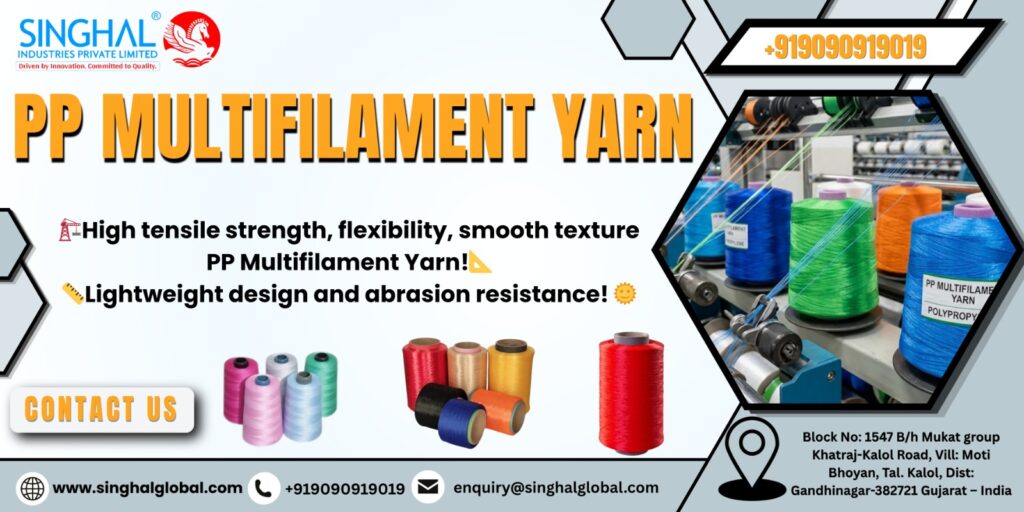
the PP multifilament yarn is recognized as a strong, light winner in the realm of synthetic fibers. It turns simple polypropylene into strong threads for nets, ropes bags and ropes that will last for a lifetime. These yarns are packed with fine filaments that are twisted together, making products stronger to withstand the wear and tear. The textile hubs of India crank out these yarns every day, fueling everything from fishing equipment and safety gear.
It is made from melt PP resin, which is then pushed into tiny slits, the multifilament yarn withstands chemical, water and rot with the utmost ferocity. The price of multifilament yarn is usually between Rs150 and 300 per kilogram, making it a popular choice for budget-conscious makers. If your goal is weaving cargo nets, or stitching geotextiles with PP, the yarn provides reliability without breaking the bank.
How It’s Made: The Spinning Magic
The process of making polypropylene multifilament yarn starts off with high-quality polypropylene chips that are being fed through an extruder. They melt at temperatures of 220-260° C. Then a pump pushes this goo into a spinning ejector–think of showerheads that have nozzles that are super-fine. Out come endless filaments that cool in air, bundle up, and get stretched for strength.
Stretching the molecules aligns them and increases tenacity up to 6-8 g/denier. Annealing is the process that sets everything up by a rapid heating bath, which eliminates stresses. Machines wrap it around the bobbins at a speed of 400-1700 milliseconds. One-step processes are less space-consuming; two-step methods increase the power for ropes. Factories alter the denier (300-3000) for specific tasks–tinier for fabrics, more robust cords.
Indian players such as Trident Polyfab dialing this in with oiling and godet rollers to prevent tangles. It’s a low-waste, efficient product that can scale up big.
Everyday Toughness in Ropes and Nets
Ropes scream for PP multifilament yarn. When braided or twisty, it blocks UV rays while being flexible even when exposed to salt or sun. Fishing nets found in Kerala water last longer due to their long stretch. It’s less than 20% when it’s loaded with heavy. Multifilament yarn prices drop in bulk purchases, and coastal residents stock up on yarn at a low cost. In the agricultural sector, the yarns are used to tie shade nets and crop covers that block 90% of the UV without decaying. The hydrophobic nature of polypropylene multifilament yarn ensures no mildew, which is ideal for monsoon-prone fields. One farmer in Varanasi changed his nylon for PP and cut the cost of replacement by half. Talk about real conversation from the field.
Safety Gear and Industrial Wins
Industrial safety gear is awed by this yarn. Harnesses, slings, as well as barrier tapes make use of its strong break strength, up to 1000N for 1000-denier lines. It will not snap under the weight of forklifts or catch on the rebar. The versions that are flame-retardant guard against sparks from factories. Lashing straps for cargo keep trucks on the highways in a steady position; they resist abrasion, oils, and oil. When working in the construction industry, scaffolding nets avert falls and do not fray. PP multifilament yarn is able to keep weights at a low level, which is crucial for reaching work. Safety experts recommend it over other bulkier alternatives.
Cutting Costs Without Cutting Corners
What makes it so well-known? PP multifilament yarn slashes production bills. Raw PP is a bargain in comparison to nylon or polyester, which is machined with lesser downtime. It is not dyed often. Natural white or colored PP mixes in the melt. The price of multifilament yarn is in a steady range even when there are oil spikes due to local resin factories. Recycling is simple. Scrap yarns melt easily, and waste is eliminated. Makers can report savings of 20-30% on the final product, such as woven bags. The growth in packaging in India means lower prices for packaging for mills that process rice and cement hauls.
Innovation Driving the Future
Tech is reviving PP multifilament yarn. Nano-additives extend UV life by five years or more. Bio-based PP reduces carbon footprints—Reliance tests the products right today. The smarter spinnerets turn finer filaments into more comfortable upholstery. Air-intermingling jets create yarns that are more supple, with no twist required. This saves energy. High-tenacity grades reach 10 grams/denier in ultra-thin ropes. Indian companies like Singhal indutries export these innovations and are gaining market share in the global market. Production rates increase up to 2000 milliseconds per minute, trimming multifilament yarn prices further.
Applications Across Industries
Versatility is the rule here.
- Packaging: Tarps, bags, and woven bags—holds 50kg rice in one go.
- Agriculture: Bird nets, greenhouse threads—weatherproof forever.
- Marine: Anchor lines and crab traps—floats and doesn’t turn rotten.
- Sports: Paracord, kite lines—light, strong snap-back.
- Geotech-related: Erosion mats, silt fences—soil stays where it is.
The Polypropylene multifilament yarn is easy to adapt from 100-denier wisps up to massive 5000-denier monsters. Texturizing and other tweaks to textiles increase the bulk of carpets.
Real-World Wins and Stats
Let’s look at Gujarat’s fishing fleets. PP yarns prolong net life by 40%, resulting in savings for the village of Rs50 lakh annually. In the logistics parks of Uttar Pradesh, the slings beat competitors by 3:1. Global exports surpassed millions of tons. China leads in quantity; however, India’s quality surpasses the rest of the world. Prices? Multifilament yarn prices are at Rs180/kg for a 600-denier rope quality today. The demand for yarn is increasing due to the popularity of e-commerce.
Challenges? They’ve Got Fixes
The yarn can shift under constant loads. Insufficient dye pick-up? Third-gen dopes solve it. The sensitivity to heat limits ironing; however, how do you iron ropes? Mills include stabilizers to give 50°C tolerability. Quality control is the key to success, testing using bursts to ensure there are no weak points. Indian specifications are in line with ISO 10319 for geotextiles.
Conclusion
Changes in climate demand stronger gear. PP multifilament yarn takes on the challenge by recycling loops and intelligent fibers. The yarn mills in India are aiming for 20 percent growth per year by feeding the infra and exports. From dams to deep-sea fishing nets, these strong fibers are built for the future. Request quotes for multifilament’s price today. Your new product that is strong and durable is waiting.
Frequently Asked Questions (FAQs)
Q1. What is the best way to PP multifilament yarn aid in reducing the cost of production?
It’s dirt inexpensive raw material; it’s fast and efficient in the machine, and it doesn’t need dyes as often. Recycling and waste reduction are low, which means that bills decrease by 25 percent. Multifilament yarn price stays under Rs250/kg in bulk.
Q2. Does PP multifilament yarn actually be utilized in industrial safety products?
Yep, big time—harnesses, nets, straps take brutal abuse. The high tenacity and chemical resistance ensure it is OSHA-grade safe.
Q3. What are the latest developments that are improving PP yarn multifilament production?
Nano-UV boosters, bio-PP, more spins per minute at 2000 meters. Air-mingling can reduce the number of twists, reducing power. Polypropylene multifilament yarn becomes stronger, greener, and more durable.
Q4. How can PP multifilament yarn help improve rope’s durability?
Aligns molecules to provide 7-10 g/denier strength and resists UV/water/rot. Low creep ensures that ropes stay taut. The braids can flex without fraying. Durable 3x nylon for marine applications.
Q5. Who is the largest exporter of multifilament yarn?
China is the top volume producer; however, Indian companies Singhal Industries Pvt Ltd the best exports to Europe and the US. Multifilament polypropylene yarn is shipped to the world via Gujarat hubs.