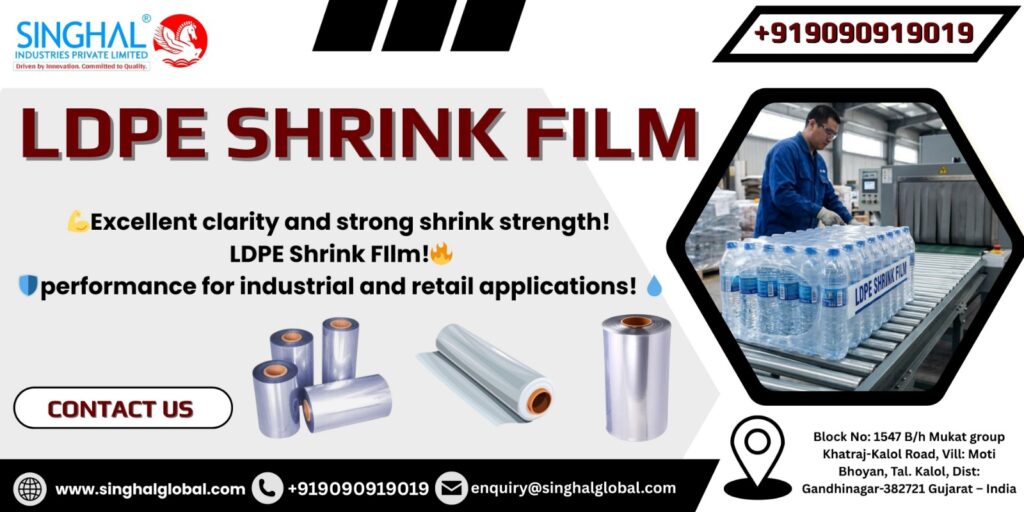
If you’re in the business of packaging or are just interested in keeping your food fresh and safe, LDPE shrink film is one of those unnoticed heroes. It’s simple stretchy plastic wrap that expands to a tight seal as you heat it and ensures that your food items and meats or vegetables are safe from any leaks or damage.
What Makes LDPE Shrink Film Special?
LDPE is a shorthand for Low-Density Polyethylene. It’s a super-flexible material that is strong yet lightweight. When it comes to food packaging, it is wrapped around bottles, trays, or boxes as an extra skin that blocks out moisture, air, and dirt. What I really like is the way it maintains the appearance of everything in the store, yet is clear enough to showcase the food item inside.
This isn’t your typical wrap. It’s got an extremely low melting point, which means it shrinks quickly in a heat tunnel, without ruining delicate foods. It’s also strong enough for heavy loads, too, like multiple bottles of water and frozen food items. Manufacturers modify it to improve clarity and strength, as well as printing capabilities, so you can add labels or logos that pop.
This is a great tip: Shrink film manufacturers in India are making top-quality versions of the film these days, using top-quality LDPE that is in line with global standards. Locations such as Brainiac India or other companies in Haryana are leaders with consistency in quality.
Safety First: Why It’s Food-Approved
It’s no joke in the world of food products. LDPE shrink films shine because they’re FDA-approved here in the US and are compliant with similar regulations elsewhere, including FSSAI in India. It’s safe to put into food products, even at room temperature or when heated during the process of shrinking.
In contrast to other plastics from the past, such as PVC, LDPE is chemically inert. There aren’t any toxins that sneak out. This is a huge advantage for direct contact with dairy, meats, or food items that are ready to eat. Recycled LDPE? It’s not so great for food, but the virgin material is gold. It can also handle temperature fluctuations very well, from frigid to room temperature without breaking or becoming hard.
Top Benefits for Everyday Use
Let’s examine the reasons businesses use it. First of all, the cost—Shrink film prices in India are between Rs120 and 160 per kilogram, based on the thickness and the supplier. It’s a bargain considering the level of protection you receive. The width of the rolls ranges between 200mm and 500mm, and a standard shrink roll cost could be at least Rs125/kg for a length of 400m. Affordable, right?
It’s also versatile. Wrap individual items such as cheese blocks, or bundle six packs of soda. Clarity lets the customer know what’s inside, which can boost sales. And durability? It is resistant to punctures, which means there aren’t any tears during transport. It’s also recyclable, and some brands offer thinner gauges in order to reduce the use of plastic.
For Indian markets, local Shrink film manufacturers in India allow easy and fast delivery, customized sizes, and a competitive shrink film price that beats imports. This reduces shipping costs too.
How It Works in Real Life
Imagine a bustling food factory located in Varanasi. Fresh vegetables are loaded into trays, then covered with LDPE film, then run through a shrink tunnel at 150-200 degrees, and boom! A tight and airtight packaging ready for the market. The humidity won’t cause any more problems—a major benefit in the Indian climate.
In supermarkets, it helps keep the bakery products soft and free of bugs. In exports, it provides the necessary tamper-proofing to ensure international security. One downside? You’ll need the right equipment, but it’s common today.
Picking the Right Specs
Thickness is important. Gauges of 80-200 indicate less thickness for lighter items and thicker for heavier items. If it’s too thin, it breaks excessively, which can increase shrink film prices.
The clarity and shrinkage rate (50-60%) are essential for professional appearances. Make sure your device is compatible first. Shrink film manufacturers in India provide samples, so take a few to test. Make sure to look for food-grade certificates and rolls that are consistent to avoid waste.
Wrapping Up the Advantages
LDPE Shrink Film isn’t flashy; however, it does deliver. Secure, inexpensive, and reliable, shrink film cost and Shrink film roll price make it an easy choice for small-scale shops as well as large exporters. In India, with the rise in exports of food, it’s on the rise. Combine it with reputable suppliers and you’re ready to pack.
A funny thing is that sometimes people mix it with PVC. LDPE is more eco-friendly and safer. Test gauges for cutting costs. Thinner is often the best choice. If you’re in the market for sourcing, look for local shrink film producers in India to find deals below 140 rupees per kilogram.
Market Trends in India
The Indian packaging market is expanding. Food processing is booming and reaching billions of dollars; the demand for LDPE is rising. Shrink film producers in India increase production and offer eco-friendly varieties. Prices remain steady between Rs120 and 160/kg; however, bulk orders drop the Shrink film roll price to around Rs110 at times.
Exports coming from China? Not really; locals are more efficient and more affordable today. Exports are also growing; the Middle East is a fan of Indian quality.
Tips for Buyers
Negotiate on volume. Request 3-inch cores to facilitate handling. Store in a cool and dry place; heat will ruin them. Check the percentage of shrinkage; 55 percent is considered sweet for the majority of food items.
Conclusion
Our harsh climate requires tough packaging. LDPE is able to handle the monsoon’s humidity like a pro. Factories in close proximity to Delhi produce high-quality products at lower prices for shrink films. The world is moving to safer plastics? India’s ready.
In Varanasi or Punjab, suppliers deliver same-day. Local pride is also a factor, as they support local jobs and obtain top-quality film. The future of this film? More green, thinner versions are coming. However, for the moment, this is the most popular choice for food-safe, effective packing.
Frequently Asked Questions (FAQs)
Q1. Is LDPE shrink film safe for food packaging?
Yeah, absolutely. LDPE is FDA-approved and doesn’t release toxic substances into food, which makes it ideal when it comes into direct contact with food items. Make sure to use pure material, not recycled, to ensure the highest security. It is used for vegetables, meats, and other items without issue.
Q2. What thickness is ideal to use for shrink films?
It’s all about the product. For lighter foods such as breads, 100 to 150 gauge is well. Quick shrinking, cheap cost. More substantial items such as frozen bags? Go 150-200 gauge for strength. The price of shrink film remains reasonable, at about 130-130 rupees for these. Contact the supplier to confirm exact measurements.
Q3. How do you choose the best shrink film manufacturer?
Look for a company that has experience, like established Shrink film manufacturers in India with food-grade certifications. Compare the cost of shrink film as well as roll lengths and even custom-made options. Check out reviews about IndiaMART or visit factories; quick delivery and samples make the deal. Its reliability is superior to cheap knockoffs each time.
Q4. What is shrink film utilized to do?
Shrink film rolls pack items tightly—think multi-packs of drinks or snack trays or pallets. When it comes to food, they protect freshness and enhance clarity. Industrial uses encompass everything from toys to bricks; however, food is the main focus in terms of safety and aesthetics. Rolls are extremely handy for machines.
Q5. Who is the largest exporter of LDPE Shrink Film?
It’s a competitive race, but firms like the ones in Bahadurgarh, Haryana, lead exports to Asia, the Middle East, and Africa. GPI Global Packaging or Branopac India are the largest suppliers of custom-designed films. There is no one “largest” crowned; however, Indian firms are the most dominant regionally.