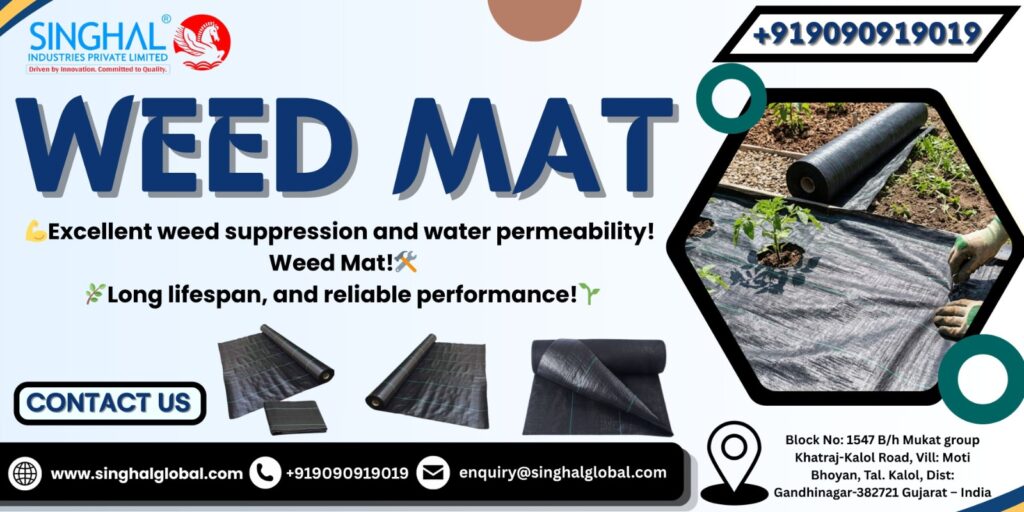
Weeds cause the most problems in gardens, farms, and other landscaped areas. Regular spraying of herbicides, weeding, and the repeated raking of weed mat can cost time and cash. However, there’s an easy solution that lasts for a long time: mats for controlling weeds. These tough fabrics offer gardeners and farmers a practical low-maintenance method to control the weeds while also cutting down on the use of water and labor.
What is a weed-control mat?
A mat for controlling weeds is a perforated UV-stabilized groundcover that blocks sunlight from reaching seeds in the soil. It is typically made of high-density polypropylene or HDPE weave or non-woven, which means it’s durable when wet, sunny, and under pedestrian traffic. Farmers place it directly on empty soil between the rows of plants, in the shade of trees, or in flower beds. The fabric acts as a physical barrier, preventing the most annual weeds from thriving but letting air, water, and other nutrients through.
What are the benefits of using mats to control weeds?
Long-lasting Weed control mats can last for up to 3-5 years, subject to GSM and UV treatment. This means that you won’t need to apply chemicals again or pull weeds out every season, which reduces time and costs in the long run.
Retention of moisture and erosion control
The mat shades the soil, decreasing the amount of water that evaporates from the surface and allowing roots to remain damp. It also keeps dirt in its place, which means the wind and rain tend not to remove valuable topsoil from nurseries, orchards, and farms.
Lower herbicide use, a healthier environment
Since the fabric itself stops growing weeds, you are able to reduce chemical sprays or even eliminate them from many locations. This is beneficial for the environment, groundwater, plants, and human health, particularly in vegetable farms and home gardens.
What are the weed mat manufacturers’ criteria for choosing the materials?
The reputable Weed mat manufacturers in India focus on three factors: durability, permeability, and UV resistance. They make use of heavier-weight fabric (around 90 to 110 GSM and higher) for landscaping and agriculture, as lighter sheets break or deteriorate faster. The majority of manufacturers provide white, black, or double-layered weed mats. Black mats absorb heat and are popular in colder regions or poly-houses. White or lighter-colored mats reflect sunlight and aid in keeping cool in hot climates such as Varanasi and adjacent farm belts.
The typical price for weed mats in India
The price of a weed mat in India is based on a variety of variables:
- GSM (grams per square meter): Higher GSM typically means greater strength and also a higher price.
- The quality of the fabric and UV stabilization: Better treated fabric lasts longer and costs slightly more.
- Brand and size of roll: 100m rolls are typical; however, the width (1-2 meters, etc.) affects the per-square-meter cost.
From market listings for general markets, basic HDPE weed mat price between Rs20 and Rs25 per square meter for light grade, whereas the larger, UV-stabilized 100 to 110 GSM rolls may range between Rs25 and Rs35 per square meter or more, based on the brand and supplier. Contractors and buyers who are large scale typically negotiate cheaper Weed mat prices per square meter if they order in bulk.
The right thickness is determined by the GSM
If people ask, “What is the thickness of a mat for weeds that is the best?”, they usually are referring to GSM (weight) instead of millimeter-style thickness. For most nurseries, farms, and gardens, 90 to 110 GSM is an ideal equilibrium between durability, strength, and price.
- 75-90 GSM: Good for short-term usage and light weeding pressure as well as indoor poly-houses.
- 100-120 GSM: Great for horticulture fields, orchards, and other landscaped areas that require 3 to 5 years of operation.
- 120+ GSM: Most often employed in commercial plantations or areas with high traffic levels for groundcovers where tear resistance is of the utmost importance.
If you’re operating heavy machinery or have a lot of pedestrians, it’s often worth the cost for a larger, more dense management mat for weeds
The top weed mat makers in India
A number of companies are recognized as top producers of weed mats in India and supply both export and domestic markets. This includes specialized plastic-sheet makers in states such as Maharashtra, Gujarat, and Tamil Nadu:
- Singhal Industries Private Limited is a well-known manufacturer of UV-stabilized and eco-friendly weed mats.
- Singhal Global provides heavy-duty mats for weed control in gardens and agriculture.
- HDPE-sheet makers in Gujarat that sell white and black mats for weed control.
Although “largest Weed mat manufacturer” is subject to changes in the market, Singhal Industries Private Limited are often referred to as major producers of weed mats in India because of their large production capacity and extensive distribution networks.
How do you install a weed control mat?
Even the most high-quality weed mat can be a disappointment when laid improperly. An easy, efficient way to do this is:
- Make sure the soil is prepared: Take out the most invasive weeds and make sure that the mat is level so the mat is flat and free of any folds or gaps.
- Place the mat on top and overlap: Lay out the weed mat in rows or around the tree base, leaving a small gap (about 10-15 cm) in the middle of the stem. The edges should be overlapping by about 10-15 cm to prevent weeds from entering the joints.
- Peg or weight the edges: Use stones, bricks, or metal stakes (landscape pins) to keep the mat in place and avoid wind from lifting. In farms, some people put a thin layer of soil or mulch on top of the mat to increase aesthetics and to provide extra protection.
Once the mats are installed, they can be planted on those mats (by cutting small slits) or in the spaces between rows, based on the system you have installed.
Conclusion
A common question is whether the mats made of plastic are environmentally friendly. modern weed control mats are advertised as green because they cut down on herbicide usage, conserve water, and reduce diesel-powered weeding machine hours in the course of their use. They can also be reused for a variety of seasons or crops, so one mat can replace many chemical sprays or manual weeding. They are, however, mostly made of synthetic polymers. Therefore, proper disposal and recycling plans are important. Certain producers are now offering recyclable or a portion of recycled weed mat material in order to boost their environmental footprint.
Frequently Asked Questions (FAQs)
Q1. Can water flow through a mat of weed?
Yes. The majority of weed-control mats are made of porous or perforated fabric that allows nutrients and water to soak into the soil. The plants continue to get water; however, the mat blocks sunlight so that weeds don’t develop easily.
Q2. What is the thickness of weed mats that is the most effective?
For long-term use, 90 to 110 GSM (medium-to-heavy soil cover) is typically suggested. The mats with a lighter weight (75-90 GSM) can be used for shorter-term projects. 100-120+ GSM is ideal for large-scale farms, orchards, and commercial landscapes.
Q3. Are weed mats eco-friendly?
In comparison to the frequent sprays of herbicides, weed mats can be considered green because they lower chemical runoff, conserve water, and reduce the use of fuel to weed. However, they’re made of plastic, and reusing them over a period of time and recycling them at the end of their life is crucial for sustainability.
Q4. What is the price for mats for weeds in India?
In India, the basic HDPE mats for weed control typically cost between Rs20 and Rs25 per square meter for the lighter quality. while UV-stabilized mats with 100-110 GSM are priced between Rs25 and Rs35 per square meter, based on the brand and supplier. Large orders typically reduce the cost of weed mats per square meter.
Q5. Who is the largest manufacturer of weed mats?
weed mat manufacturers are operating across India; however, Singhal Industries Private Limited are frequently mentioned as leading weed mat makers that supply both international and domestic markets.