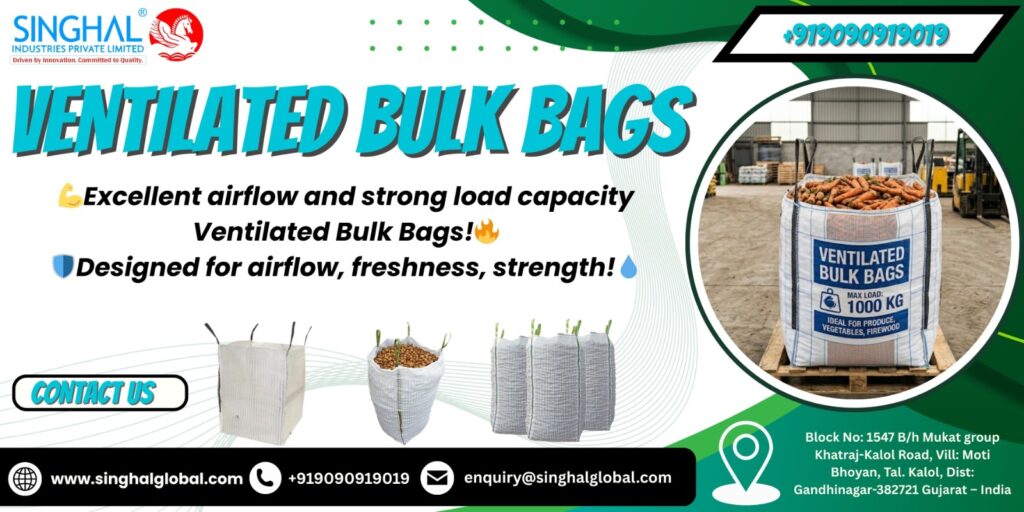
The Ventilated bulk bags have changed our entire perception of how to shop in a way that ensures that our food grade materials remain fresh and safe to use. The ventilation makes sure that no problems arise, such as spoilage or molding of the food. Here in this write-up, we will learn the significance of ventilated bulk bags, especially for people living in India who are looking for suppliers of bulk bags.
Why Choose Ventilated Bulk Bags?
Ventilated bulk bags are like the lungs of all the bulk material inside. They let the air flow in. Ventilated bulk bags are very significant when it comes to perishable products. Ventilated bags are manufactured using quality polypropylene material along with mesh sides and panels that do not allow moisture retention, and thus protect the food grade products. It is essential for food grade material because moisture can lead to spoilage or growth of bacteria.
These are suitable for use in various industries such as those involved in food production and farming. Examples include onions, potatoes, fruits, and grains. These goods require breathing in order to remain healthy. Unlike the regular FIBC bags that trap heat and air, the ventilation bags reduce condensation. Therefore, they are perfect in developing safe foods. Additionally, they are environmentally friendly, due to reduced wastage of food materials.
Key Features That Make Them Stand Out
The first thing to note is the design of the bag is usually ventilated. They include perforated panels on the sides or baffles which let air in but do not allow contents to spill out. They’re made of strong materials, able to handle up to 2000 kg of safe work loads, and comply with standards for food safety, such as FDA and UN approvals to handle food in contact. Breathable bulk bags producer India knows this, and they weave premium PP fabric that is designed to be UV-stabilized for outdoor usage.
One more advantage is the ability to customize these bags according to your needs. You will be able to get these bags in various capacities that start from 500 kilograms to very heavy 1000 kilograms, along with top-spout discharge to make the unloading process quick. The ventilation ratio usually ranges from 20 to 30 percent depending on the bag variety, but it is enough to facilitate the free flow of air without making the bags fragile.
Perfect for Food-Grade Applications
When it comes to food handling it is essential to be safe you think? Ventilated bulk bags help keep oxygen flowing to avoid anaerobic bacteria that thrive in closed conditions. They are ideal for plants like garlic and carrots, which release ethylene, a ripening gas that accelerates loss of nutrients inside airtight containers. Because they let excess moisture go and preserve the quality of the product from farm to store.
Consider potatoes, for instance. However, with bags that are ventilated, they mimic natural airflow, which can extend the shelf’s life by several weeks. This isn’t merely a flimsy theory. The major food manufacturers rely on these bags for their safe and hygienic handling. Additionally, they’re recyclable and are in line with the sustainable supply chain for food.
Benefits Beyond Freshness
Ventilated bulk bags can improve cooling efficiency; place them in a warehouse and let air circulate naturally. No expensive equipment required. They are safe and reduce risk-no lifting problems because loops forklift-friendly design makes handling easy. For the booming Indian agro-export market Being a bulk bag manufacturer that breathes India provides a competitive advantage.
Who Are the Top Players in India?
India is home to a wide array that includes Ventilated bulk bags manufacturers in India including those from Gujarat and Maharashtra at the forefront. Find manufacturers that are using pure PP grains for purity.
They export to all over the world, which means that they meet international standards for quality. If you’re purchasing, look for ISO certifications and food contact approvals to ensure safety handling each time.
Real-World Uses in Food Industry
Farmers utilize them to harvest citrus or onions–load directly out of the field. Their breathability helps keep the fruits and vegetables fresh throughout trucking. Processors can pack nuts or grains and avoid the growth of mold in humid climates such as India’s monsoon time. Seafood handlers too prefer air-conditioned bulk bags for fresh fish as the airflow helps prevent ice melt from becoming soggy.
One example: a veggie exporter reduced losses by 25% after switching to these bags to transport potatoes for in the Middle East. The air conditioning stopped sweating in containers, and ensured that quality was maintained.
Maintenance and Best Practices
They should be clean. They can be clean using mild soap whenever necessary to avoid damaging the material. They should also kept in areas where there is no risk of UV radiation. While stacking, always remember not to exceed the maximum height in order to allow air circulation between the bags.
Combine with the proper fumigation procedure to export. The ventilated design isn’t a barrier to gas treatment. A breathable FIBC bulk bag from India frequently provides user guides that make it easier for those who are new to the business.
Conclusion
Ventilated bulk bags don’t just serve as packaging, they’re an excellent purchase for anyone working in food handling. They combat the issue of moisture head on, guarantee compliance and increase efficiency. If you’re a farmer, processor, or exporter switching to these tools could change your business, resulting in less losses and more satisfied customers.
In the bustling market of India the search for a Ventilated bulk bag supplier that is breathable in India is simple. Contact them, request samples and experience the difference. Safety in handling begins here, making sure your food stays in good condition and your business flourishing.
Frequently Asked Questions (FAQs)
Q1. What is the price per piece of a ventilated bag?
Prices differ based on the size and the features Expect around Rs150-Rs400 per bag for the standard 1000kg models. Bulk orders will cost less and Breathable bulk bags manufacturer India similar to those found in industrial hubs provide reasonable rates, based on customization.
Q2. Are ventilated bulk bags UV-resistant?
Yes, they are treat with UV stabilizers lasting between 12 and 24 months outdoors. This shields food-grade ingredients from sun-burn during storage in open air.
Q3. What is the ventilation ratio in these sacks?
Usually 20% to 30% ventilation ratio by the use of mesh or panel design. It customized according to specific food requirements.
Q4. Who is the largest supplier of Ventilated bulk bags?
Singhal Industries is the largest Ventilated FIBC bulk bags supplier India. Some other major manufacturers are Umasree and Kanplas.
Q5. Does ventilation in sacks prevent spoilage?
Yes, because ventilation is sufficient, moisture and ethylene gas will not build up, and spoilage of foods, such as vegetables and fruits, will not occur.