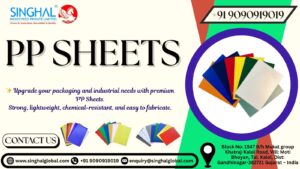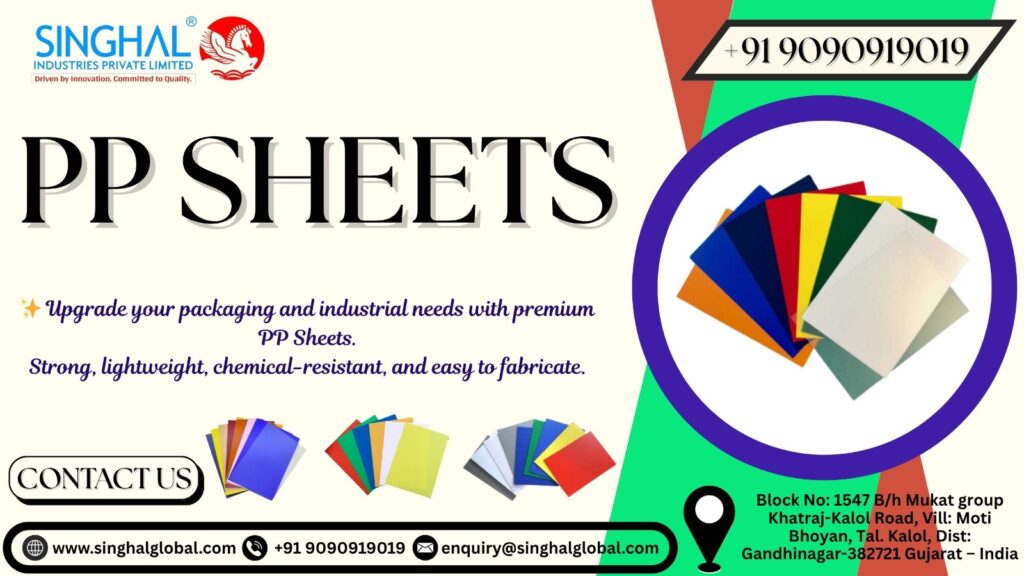
Polypropylene (PP) sheets are slowly transforming workflows in the industrial sector through offering. A speedy, flexible, cost-effective, and flexible material that can use for many packaging, production as well as fabrication requirements. Manufacturers and buyers increasingly choose PP sheets because they combine chemical resistance, lightweight strength. And easy machinability qualities that speed up processes on the factory floor and reduce total lifecycle costs. The Polypropylene sheet manufacturers have improved processes for extrusion and finish which provide uniform sizes of 4×8 sheets and customized options. Polypropylene sheets suppliers can make it easier to procure for industries that require quick turnarounds and dependable supplies.
Why PP sheets accelerate industry
Polypropylene sheets speed operations for several practical reasons. First, its light weight and stiffness allow automated equipment to handle greater quantities of material using less effort and wear, thereby increasing the speed of production and reducing maintenance. Additionally, the material’s resistance to acidic solvents, common solvents and alkalis mean that tanks, liners and partitions can quickly installed without coatings or secondary barriers making installation faster and reducing inspection cycles. Third, standard sizes – like polypropylene sheets 4×8 can be incorporated into cutters, conveyors as well as storage units, which reduces the need to retool and speeds up changes between tasks. In addition, since the majority of Polypropylene sheet manufacturers offer slots or pre-cut options, fabricators often bypass the primary machining process and directly move to finishing assembly. This can reduce the time between order and delivery.
Practical industrial applications that demonstrate speeds gains
Polypropylene sheets are utilize in applications where speed and reliability are important. For packaging, PP sheet pallets, separators, and reusable crates are less heavy than steel or wood alternatives, allowing faster loading and unloading, and reducing transportation costs. In wastewater and chemical plants, PP liners and tanks can reduce downtime due to their resistance to corrosion, without the need for time-consuming secondary coatings. Machine guards, manufacturing jigs and barriers for protection made of PP can be quickly manufactured and replaced, ensuring that production lines run without interruption. Production of food and pharmaceuticals use PP to create non-reactive working surfaces as well as partitioning that are quick to clean and return to use and improve the overall efficiency of equipment.
Materials properties that impact the floor
Polypropylene sheets have a beneficial combination of chemical and mechanical characteristics that translate into benefits for operations. They’re impact-resistant and fatigue-tolerant that means they require less frequent replacements and their resistance to moisture keeps components in dimensional stability even in humid conditions; and their thermal stability over typical temperatures allows for use close to warm equipment. Because many of the Polypropylene sheets suppliers offer different thicknesses, as well as color/UV-stabilized alternatives, purchasing teams are able to make sure that the grades of the sheets are exactly in line with requirements without the hassle of custom-sourced resins.
Selecting the best source: Manufacturers and suppliers
Selecting reputable manufacturers of polypropylene sheets and trusted suppliers of polypropylene sheets is essential in times when speed is important. The most reliable manufacturers ensure consistency in melt as well as thickness tolerances and flatness. These attributes reduce downstream adjustment and scrap. Suppliers that carry standard sizes, such as Polypropylene sheets 4×8 and have stocks of stock aid production planners in avoiding long time-to-market and shutdowns at the last minute. When considering suppliers, teams of operations must look into the fabrication options available (cut-to-size CNC routing, cut-to-size as well as thermal forming) and delivery reliability and if the vendor supports the use of traceability and material certificates. All these factors directly impact how quickly industrial projects can go from concept to implementation.
Tips for fabrication and installation to ensure that things are moving
To speed up the process Fabricators typically follow the following best methods to ensure speedy PP sheet work. Make use of standard 4×8 sheets when it is possible to benefit from already-configured jigs and handling tools. When cutting, score-and snap as well as clean, precise CNC routing using sharp tools will reduce cleanup time. When welding or bonding, solvents that have been validated or hot-air welding methods provide rapid, secure seams. Staging sheets close to the point of use on racks or mobile carts minimizes internal transport time. Additionally, collaborating with manufacturers of polypropylene sheets who provide pre-drilled, CNC-cut or heat-formed pieces can cut several days or hours off your project schedules.
Cost-effectiveness and sustainability fast returns
Although the primary benefit to PP sheets is speed and efficiency, the material can also provide an increased ROI. The material’s recycling capabilities and its long service duration reduce the frequency of replacements and time spent handling waste. Lightweight components reduce the cost of shipping and handling time, and corrosion-resistant components reduce maintenance intervals for preventive maintenance. In the end, the combination of advantages of cost and operation accelerate the rate at which an organization can see net savings.
Common issues and practical solutions
Certain teams are concerned about the stability of their dimensional structure under temperatures, bonding strength or even surface finish. These are easily address by the correct grades and finishing procedures. It is important to work closely with the manufacturers of polypropylene sheets to select UV-stabilized or glass-filled grades suitable for outdoor or high-load applications and also consult PP Sheet Suppliers regarding primers or surface treatments when high-strength adhesive bonding is needed. Making these decisions in advance ensures that there is no rework, and ensures projects are on time schedules.
Conclusion
A mid-sized food packaging plant substituted wood separators as well as metal barriers using polypropylene sheets, which are cut into pre-cut 4×8 sheets. The plant reported quicker switchovers, less time spent on sanitation (due to porous PP surfaces) and lower stress on staff handling. When it ordered from a vendor that had stock in hand and also provided CNC cutting prior to installation, the plant cut down the lead time for installation from weeks to days, and decreased the costs of replacement on a regular basis.
Frequently Asked Questions (FAQ)
Q1. What do PP sheets are employed to do?
Sheets of PP are use as packaging components, pallets and crates that can be reused tanks and sump liners and machine guards and work surfaces for pharmaceutical and food industries, chemical-resistant panel, signboards, as well as made-to-order parts for jigs and fixtures. These applications leverage the PP’s chemical resistance, low weight and machinability, to speed up production and reduce lifecycle costs.
Q2. What are the advantages of sheets of PP?
Benefits include high resistance to chemicals, high impact strength, excellent chemical resistance, very low absorption of moisture, light construction, recycling, and it is compatible with the most common fabrication methods (routing and welding or thermoforming). These characteristics reduce maintenance time, reduce downtime and reduce the time of delivery when purchased in standard sizes such as the polypropylene sheet 4×8.
Q3. Are sheets of PP waterproof and chemical resistant?
Yes. It is highly resistant to many types of acids, bases, and chemicals and also does not allow any water absorption; hence. PP sheet is highly recommend for usage in wet or corrosive conditions. If exposed to strong chemicals or high temperatures, then choose the correct grades and consult with a polypropylene sheet manufacturer.
Q4. How can I cut sheets of PP correctly?
Cut sheets of PP with cutting-edge carbide and HSS tools. For thin sheets the scoring and snapping techniques can be use; however. For larger or more precise parts CNC milling or cutting produces sharp edges.
Q5. Who is the largest manufacturer of PP sheets?
The global market is dominated by big manufacturers and regional leaders Like Singhal indutries Pvt Ltd. The largest single manufacturer can differ according to region and timeframe based on mergers and capacity expansions. When selecting a supplier, look at the polypropylene sheet producers for their capacity to produce, their quality systems. As well as available stocks rather than relying on the size only.