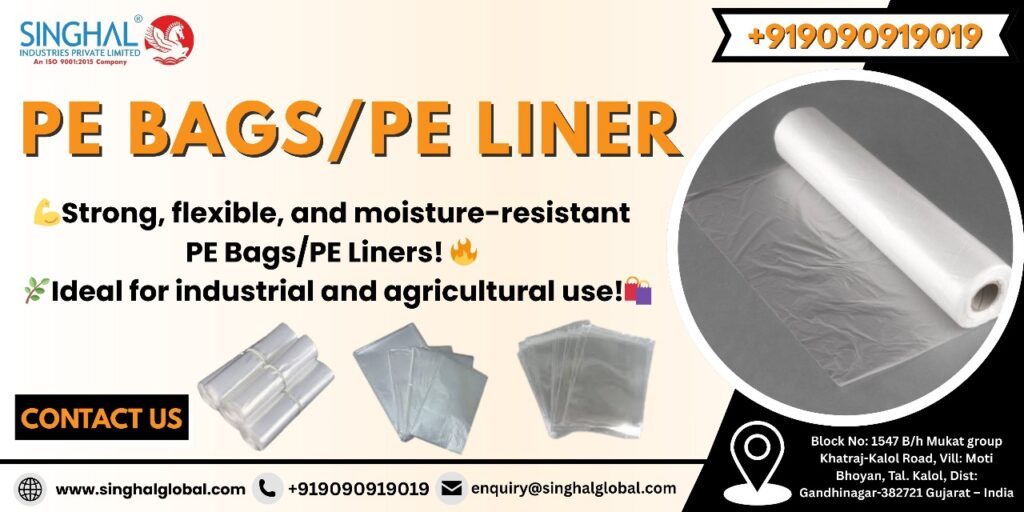
PE liners have been those silent helpers that one would not bring to mind first when thinking of tech packaging for pharmaceutical products. Having said this, they still remain the main factors that make and keep the medicines safe, pure, and sound in terms of abiding by strict global rules. It is proven that when these polyethylene liners and PE bags are used, the products will be maintained both from a chemical and physical point of view from the production line all the way through to the patient.
What are PE liners in pharma?
PE liners represent a step towards drug safety. It is the inner protective elements of a pharmaceutical package made of polyethylene that are located in the middle of barrels, FIBC bags, and cardboard boxes, as well as other containers, and thus, they are able to generate a sealed and clean environment for pharmaceutical products. Moreover, one could also describe them as an extra layer between medicines and their outer wrapping, using which common causes of pollution such as dust, air, or pathogens are easily shut out.
Pharma manufacturers are employing PE liners as solutions for powders, APIs (active pharmaceutical ingredients), granules, tablets, and even liquids in some bulk handling setups. A vast number of industrial plants designate these liners as primary or near-primary packaging that implies the necessity of the materials utilized to be of high quality and sanitary.
Why hygiene is non-negotiable
Situation: In small medicine, contamination can make a difference between saving a life and throwing away a batch that is worth millions of rupees. Therefore, pharmaceutical-grade PE liners are created using single-purity feedstock and are created in clean production facilities that are GMP and ISO certified.
Free standards like the FDA 21 CFR for contact materials, European Pharmacopoeia, and other pharmacopeial directions provide that no harmful substance is emitted by the plastic into tablets, powders, or injectables. A good number of those pharma-grade PE and LDPE bags are also built to be sterilized by such methods as gamma, ETO, or steam, in a way that is very important for sterile or semi-sterile operations.
Safety and regulatory standards
Pharmaceutical wrapping materials that include PE liners are subjected to tests that determine whether they are biocompatible, extractable, leachable, and safe enough material-wise. Regulatory frameworks such as USP Class VI, ISO standards for medical packaging along with various national regulations (like FDA or ISI guidelines) set quality and safety benchmarks that suppliers should adhere to.
In the case of food-contact and pharma-grade bags, the manufacturers are very much inclined to state that the products they deliver are of food-grade quality or FDA-compliant, are not harmful, and are chemically stable in that they don’t interact with the contents. From the consumers’ point of view, this means that your PE liners ought to be backed up by the right paperwork, compliance certificates, test reports, and source traceability in order to be audit and regulatory inspection-friendly.
Role of PE bags and liners in hygiene
PE liners and bags contribute to maintaining hygiene in three major ways:
- Firstly, they do not allow dust, microorganisms, and aerial particles to enter the materials when they are kept or moved in difficult places.
- Secondly, they provide excellent moisture and oxygen barriers, which is very important for hygroscopic or highly sensitive products such as dry syrups, effervescent powders, and certain APIs.
- Thirdly, they facilitate the use of tamper-evident and sealed packaging systems, thus tamper detection is made easy along with reduced risk of unauthorized access during the time of logistics.
Some PE pharma bags are also antistatic, meaning that they reduce the occurrence of static and the risk of attracting particles or damaging the sensitive powdered materials. It may sound like a tiny feature, but it really matters in high-potency or cleanroom environments.
PE bags price in India: what really affects it?
Most procurement managers first think solely of the PE bags price in India and honestly, it’s a fair point – budgets are tight and volumes are high. The price of PE or LDPE pharma-grade bags and drum liners in India usually varies due to the following factors:
- The thickness (microns) and the size of the bag or liner.
- The material (normal LDPE vs. medical or pharma grade LDPE/PE with certifications).
- The quantity of the order, the requirements of customization, and the needs of printing or labeling.
The range is as wide as the online marketplaces and industrial portals sellers, where the price of basic LDPE drum liners might be shown per kg with the rates changing by region and quality level. However, pharma customers normally pay slightly more for the certified high-purity food or pharma contact standard-compliant liners, and this tiny extra cost often saves a lot of money through fewer rejects and compliance problems.
Choosing PE liners suppliers
The PE liners suppliers are not all created equal, and that is the point where many pharma companies either end up winning or struggling. Some buyers go after the lowest price and then find themselves in trouble when audits question their documentation, consistency, or hygiene standards. Others pick suppliers who deliver stable quality, cleanroom production possibilities, and regulatory documentation, and such partnerships usually last for a long time.
Good suppliers will provide:
- Certified food or pharma-grade raw materials.
- Production in controlled, clean, or cleanroom environments with the right quality systems.
- Ability to change the size, thickness, and design of liners for drums, bags, or FIBCs that are part of your process.
PE liners manufacturer in Delhi and regional sourcing
Collaborating with a PE liners manufacturer in Delhi or nearby industrial areas can be a great option for many Indian pharma and chemical companies. Along with shorter lead times and easier factory visits, local support during audits or new project trials makes the collaboration hassle-free. Plastic packaging manufacturers from industrial clusters around Delhi NCR offer a variety of products such as LDPE and PE bags, drum liners, and specialty liners for pharma and food use.
Buyers are more likely to choose the regional suppliers who can quickly respond to their urgent needs, support in the development of new sizes or special liners, and give the technical direction on compatibility and sealing methods. However, the right choice might sometimes be a supplier from outside the city if they can provide higher cleanroom capabilities or specific certifications required by multinational clients.
PE liners for drums and containers
PE liners are the most common means of lining drums, pails, and containers used for chemicals, intermediates, and pharmaceutical products. Between bulk drugs, HDPE drums have become the trend in the pharma industry for carrying the pharma products in the form of powders, and the addition of PE bags or 3D liners into them can be considered as an extra step of hygiene and product safety.
These liners:
- Help in cleaning by minimizing the direct contact of the product with the container walls.
- Prevent contamination of the new products originated from previous batches in multi-use containers.
- Enable safe storage and transport of liquids, powders, and semi-solids in sealed single-use containers.
As a result, a company can change between their products without putting in more time and money for thorough cleaning and validation of drums.
Conclusion
Pharmaceutical PE liners are not merely plastic parts; they are a quiet yet very significant safety layer that keeps your product safe from outside contamination. It is those small acts of choosing a reliable PE Liners manufacturer in delhi or any other location and deciding by considering the price, cleanliness, and safety standards that lead directly to the safety of the patients and the good name of the brand.
Frequently asked questions (FAQs)
Q1. Are PE bags suitable for food packaging?
Yes, PE bags can be used to package food. However, only those made with food-grade material that conforms to FDA standards and has been produced under hygienic conditions are considered safe for food packaging. Such bags are commonly used for packaging grains, sugar, dairy powders, and other food products. Also, as a result of similar standards, these bags may be used for various pharmaceutical applications.
Q2. Can PE bags be customized in size and thickness?
Generally, PE bags and liners may be altered in terms of length, width, gusset, and thickness to fit certain containers, drums, or FIBC bags. Several PE liner suppliers provide pharma-tailor-made solutions such as the introduction of antistatic features, special shapes like 3D drum liners, and printed identification or barcoding for their customers.
Q3. How do I properly seal a PE bag?
The right sealing practice varies from one application to another; however, heat sealing is by far the most used method when it comes to PE bags in the pharma industry and food sector. As for the liners that are placed in drums or FIBCs, users may seal an airtight closure by twisting and tying, using cable ties, or even applying heat seals above the product level, and often sealing parameters are validated in regulated environments.
Q4. Are PE liners suitable for drums and containers?
PE liners are a perfect fit with metal and plastic drums, pails, buckets, or even large container systems that are used for liquids and powders. In the case of pharmaceutical and biopharma applications, these liners not only make the products cleaner but help in risk reduction of cross-contamination as well as simplification of handling of media, buffers, and bulk drug substances.
Q5. Who is the largest manufacturer of PE bags?
There are Singhal indutries are major PE bag manufacturers worldwide as well as in India, and the “largest” may differ depending on the area, product type, and volume. Generally, buyers look for well-established manufacturers who have strong quality systems in place, hold the necessary certification for food and pharma contact, and have the capability to deliver PE bags and liners consistently and in large quantities.