There is a silent revolution going on in modern homes, and it is hiding in the walls. Decorative WPC wall panels are making these spaces not only warm and stylish but also personalized, which is a combination of classy and cozy at the same time. These panels combine the lovely aspect of wood with the practicality of contemporary materials, and for a lot of homeowners, that balancing just “feels right.”
What are WPC wall panels, really?
WPC is an abbreviation for Wood Plastic Composite. In a simple manner of explaining, WPC wooden panels are those made out of wood fibers (or wood dust) mixed with plastic plus some additives, which results in a strong and long-lasting material that has a wood-like appearance but is of better performance in different situations. To avoid the disadvantages that come with pure wooden material, such as swelling, cracking, or warping, WPC ensures that the wood is stable and consistent while still maintaining a natural wooden appearance.
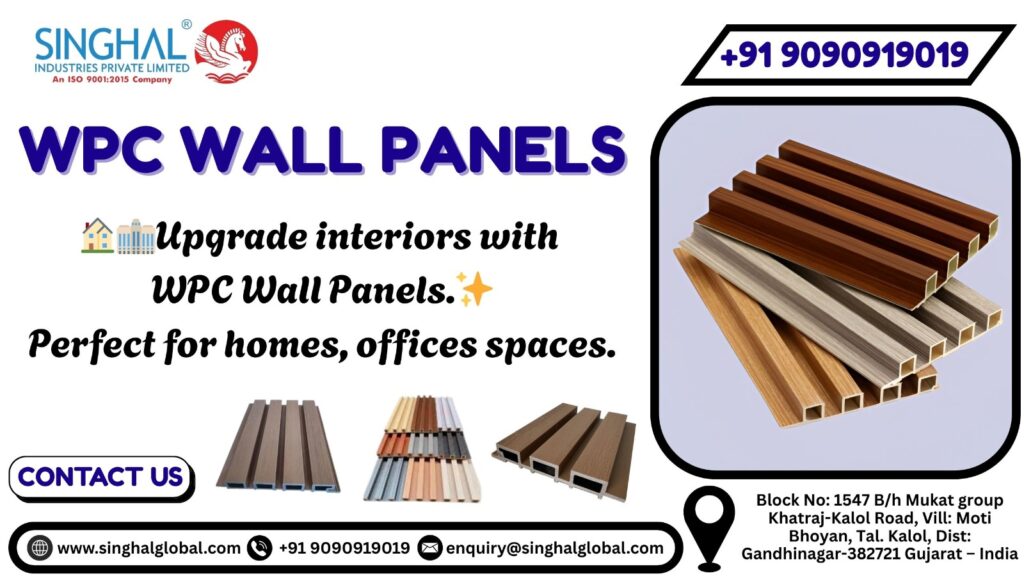
As decorative WPC wall panels, this material is formed into sheets, slats, or profiles that can be fixed on the interior walls for the purpose of bringing in the elements of the third dimension, texture, and design. There are people who put them on the wall behind the TV to create a feature wall, while others use them for the complete coverage of walls in living rooms, bedrooms, offices, and even corridors. The good thing about WPC panels is that they are available in a vast range of colors and designs—wood grains, matte finishes, textured surfaces—so it is quite easy to blend with any style, be it minimalistic, modern, rustic, or traditional.
Why homeowners are drawn to WPC
There is an emotional side to all this. A lot of people are fond of the texture of wood; it gives them a feeling of nature, comfort, and warmth. However, interiors made of pure wood are costly and require regular maintenance, such as polishing, termite treatments, and careful cleaning. At times, the heart says “wood,” but the wallet and practicality say “no.” This is precisely the point where WPC wooden panel designs come to the rescue: “Alright, let’s compromise.”
Decorative WPC wall panels enable you to have that wooden appearance without the problem of warping or termites all the time. They are quite often better at moisture resistance than wood and are thus made easy by their cleaning, which is why they have become the favorite of urban apartments, offices, and also some semi-humid areas like dining rooms that are adjacent to kitchens. It is not magic, of course—nothing is perfect—but for many users, WPC feels like a grown-up, smarter version of wood.
Role of WPC wall sheet manufacturers
There is a whole industry behind those stunning walls that are silently working. WPC wall sheet manufacturers create, experiment, and produce various kinds of WPC wall products: flat sheets, fluted panels, 3D designs, and more. While some factories produce materials of high quality and sophisticated finishing for luxury villas and hotels, others produce for the lower segment, like office projects, institutes, or rental properties.
Proper manufacturers put their money into technology to ensure that the mixture of wood and plastic is both stable and safe. They try out colors that are not easily faded, surfaces that are scratch-resistant, and designs that are in vogue. However, not all manufacturers get it right. Some low-quality products may look too plasticky or might have a short lifespan, so it becomes very important to select trustworthy brands rather than just going for the cheapest price.
WPC is the same as any other material in that respect: quality matters.
Design flexibility with WPC wood panels
WPC wood panels have a design flexibility feature, which is one of their major merits. Here are some of the design options you can consider with these panels:
- Design a single dramatic feature wall in the living room
- Install a subtle textured panel behind the bed extending the headboard
- Use vertical fluted designs in corridors, making the area appear higher
- Mix WPC panels with paint, mirrors, or shelves to create layered designs
These panels are generally less difficult to cut and put in place as compared to stone or solid wood cladding. Interior designers are fond of them because they are at liberty to experiment with the lines and patterns—horizontal for breadth, vertical for height, or mixed for a more artistic feel. For the DIY lovers, some WPC panels can also be installed through the use of basic tools and a little patience.
Practical benefits: durability and maintenance
From a practical standpoint, WPC panels have been:
- Considerably less sensitive to household moisture than solid wood
- Lower probability of cracking, warping, or being attacked by termites
- Quite simple to clean using a soft cloth and a gentle cleaning agent
Therefore, they become quite attractive for homes with children or pets where the walls tend to get dirty or scuffed more often. Instead of being concerned with repainting every few years, a lot of homeowners decide to decorate their WPC wall at certain spots so that the freshness can be maintained for a longer time.
WPC vs traditional wooden panels
A lot of people are asking the question of whether WPC can eventually substitute wood. The truth is, it really depends on what you value the most.
Pure natural material, one-of-a-kind grain patterns, and if you don’t mind the upkeep, solid wood still holds its fascination.
Nevertheless, if you are after a solution that is stable, consistent, and requires minimal maintenance and still gives a “wood-like” impression, then WPC wooden panel designs might be a really wise decision.
Conclusion
Decorative WPC wall panels for personalized interiors are a perfect example of the harmony between style and functionality. They provide the people with the option to make areas that are an exact reflection of their personality, warm, modern, cozy, or even bold—without demanding endless maintenance or large budgets. There will always be people who claim that “nothing beats real wood,” and that is absolutely fine. However, in a great number of homes and offices nowadays, it is WPC panels that are turning out to be a wise compromise can be surprisingly beautiful.
Frequently Asked Questions (FAQs)
Q1. Are WPC wall panels eco-friendly?
WPC wall panels are generally better for the environment than some traditional ones as they can incorporate recycled plastic and wood waste, thus saving fresh timber. In addition, they are more durable than many low-quality wood products and therefore less need for replacement. However, since they still have some plastic, they are not perfect from a strictly “natural” perspective. It is more accurate to classify them as a resource-efficient option rather than 100% green or 100% bad.
Q2. Could WPC panels be used instead of wooden panels?
Definitely, WPC panels might be utilized in lieu of wooden panels in most instances, notably in contemporary residences and business interiors where the emphasis is put on factors such as longevity, stability, and infrequent upkeep. Those who desire the appearance of wood but without the corresponding problems may find WPC as a very feasible solution. Nevertheless, there are still some people who choose real wood because of their emotional attachment or aesthetic reasons, and in particular, in luxury or heritage settings, wooden panels remain the first option.
Q3. Are WPC panels able to insulate a room better?
WPC wall panels might bring a slight improvement in thermal and acoustic insulation as compared to a wall with only paint, and this is mainly when they are installed with an air gap or a backing layer.
Q4. Is the WPC wall panel low weight?
Most decorative WPC wall panels are less heavy than their solid wood or stone equivalents, which is a significant advantage regarding the transport and installation stages. The weight of these can vary depending on the thickness and the pattern, but usually, they are at the average level: heavy enough to give a feeling of solidity, but still light enough to be able to be handled by normal interior framing and fixing methods.
Q5. Who is the largest export of the most WPC wall panels?
The market for WPC wall panels is competitive and is divided among major producing countries; thus, it is not easy to single out or universally acknowledge the “largest” exporter of WPC Wall Panels. Different companies are leaders in different geographical areas and product segments (such as decking, boards, or wall cladding). Customers usually find it more beneficial to compare the certifications, product quality, and services of different exporters instead of just focusing on their size.