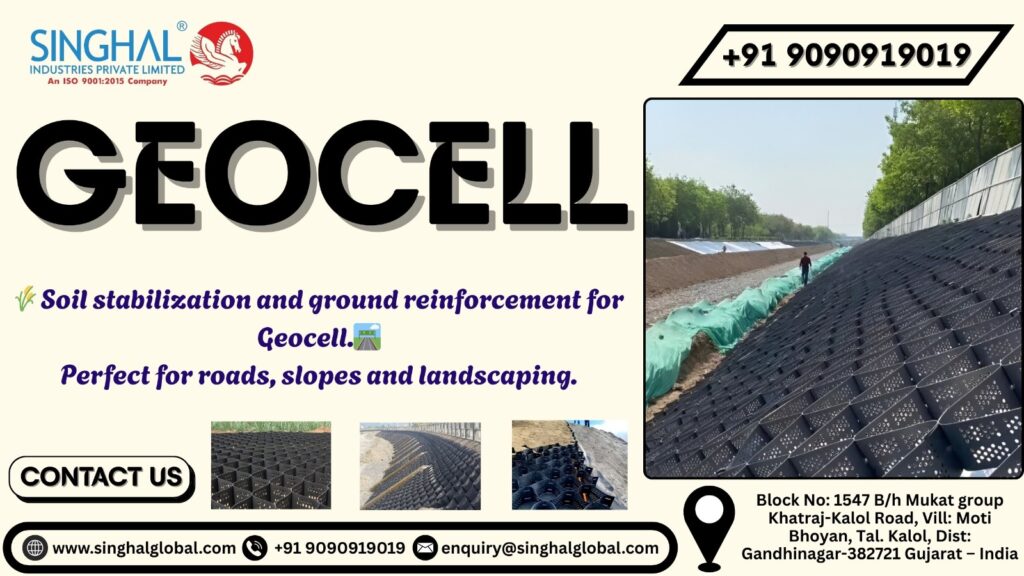
Imagine driving along an unpaved rural road in India and every bump seems to be threatening to take your car and eat it up. That’s the type of stress which got me thinking about possible solutions such as Geocell. The honeycomb-like marvel is lightweight to carry around, but can be quite a force in terms of holding up to massive loads—think of trucks moving over soft soil without sinking. This is changing the way we construct everything from roads to driveways, and it’s high time.
What is Geocell?
Geocell begins as flat expandable sheets that are made mostly of high-density polyethylene (HDPE), which is a durable plastic that’s been used since the 1980s, but has been improved for use by Geocell in road construction. You can tear it up like an accordion and then it transforms into a 3D grid of cells that are ready for filling with gravel, dirt, or whatever else you want to fill it with. The concept? You should trap the fill material in a way that it won’t shift as sand does in an avalanche.
I recall hearing concerning how the US Army tested early versions on Florida beaches in the days when tanks were rolled over without a hiccup. It’s the easy part: easy to transport, roll off on site, and put down stakes. But are they heavy-duty? Yes, those cells bind everything together and spread loads across the entire space instead of hitting weak points. This isn’t just a flimsy idea, and real-world projects have shown it reducing settlement by 50 percent.
It’s funny that some people believe it’s a different grid similar to geogrids. Nope. Geocells are vertical, forming walls that block soil movement from every angle. Have you ever wondered why roads fail in the rain? Geocell states, “Not on my watch.”
What is the reason Geocell shines in road construction?
Geocells during road building is the place where this technology truly stretches. Roads in areas such as India are subject to monsoon ferocity and a plethora of overloaded trucks each day. Traditional methods are to pile on the layers of gravel in a thick layer, which is expensive and wasteful. Geocell? You use half the material, stabilize the base, and boom, your road lasts years longer.
Consider a road development in Rajasthan. There was a lot of soft desert sand; however, engineers laid down Geocell and then filled it up with local aggregate, and now semis transport products without damaging the road surface. It’s emotional, right? No more villages being cut off by the rain, kids attending school with less risk. I’ve seen photos of before and after mud pits, then easy sailing. Costs? Reduced by 30-40% as you do not import stones.
There’s a paradox here: Geocell is light, yet surpasses concrete bases that weigh a lot in flex. Geocell’s rigidity causes cracks when the ground is uneven; Geocell bends with the soil, just like the tree that is blown by winds. It’s time for a debate: why aren’t there laws requiring this all over the world? Governments are slow to adopt technological advances, but innovators are pushing ahead.
Geocell Driveway India: A Game-Changer for Homes
Geocell driveway Indian solutions have been appearing in farms and suburbs alike. Imagine your Varanasi home, where monsoon flooding turns the entryway into a lake, and cars are stuck. Geocell helps to fix this. Unroll it under gravel, and it creates a permeable base that drains water while holding 200 tons per square meter.
The real-world example: A good friend from Uttar Pradesh built one last year. His driveway was sinking beneath his car; the new Geocell one? It’s solid and sturdy in the wake of heavy downpours. He saved money by not digging up deep foundations, and it looks neat with grass growing through the gaps to give it that green look. The environmental benefit: rainwater is absorbed, and there are no mosquitoes that breed in puddles.
Installation is easy even for small teams. Dig a little, place the cells (maybe about 150mm tall), and fill them, then compact. It can be done in one day. However, the question is: does it perform on clay soils like those found in this area? Yes, studies show that it increases bearing capacity by 4x. But, make sure you buy high-quality HDPE; imports can warp when heated.
Highlights on Geocell Manufacturers
Finding dependable Geocell manufacturers in India is crucial. Not all are created equal. Firms such as Singhal Global crank out UV-stabilized panels that are specifically designed for the local climate—high humidity, heat, or whatever. They’re exporting too, but focus on domestic needs like NHAI projects.
There’s Ocean Geosynthetics, pushing perforated cells to improve drainage. Also, Indonet Group? They are the leaders in road technology that blend Geocell with grids to provide mega stability. Personal experience: I spoke with a rep from the supplier once and felt the product; it’s light like cardboard, however I dropped a brick off at height and there was no damage. Choose ones with ISO certs; avoid fly-by-nights promising miracles at rock-bottom prices.
Who is responsible for it? Poor welds can fail quickly, costing you money. Top manufacturers test up to fifty kN pulling strength. Thanks to Techfab India too—they’re huge in improving the soil. Opinion: Help locals; they’re developing for Indian soils far better than imports.
Everyday Apps and Real Wins
In addition to roads, Geocells take on slopes and airports, and even channels. In the flood-prone Bihar, the riverbanks were encased in armor. Water is rushing, soil stays. The feeling of awe: Farmers taking back their land. No more erosion, no more stealing topsoil each year.
A nagging issue with this is: This is “lightweight,” but hauling full cells requires planning. Don’t overload trucks! Variate your method: short transport for rural gigs or big rigs to haul highways. An example from Australia is mining access roads on sand dunes. Geocell allowed them to skip pilings and save millions of dollars.
Benefits That Will Blow Your Mind
Load spread. Lock the soil. Cost reduction. Geocell is able to do all of it. Reduces the thickness of the base by 50%, and cuts aggregate by 40 percent. Flexible enough to handle frost better than solid slabs. And is it permeable? Yes, water flows through and there are no hydro-mirages.
Have you ever felt helpless as you watched the new driveway fall apart? Geocell brings empowerment. It’s easy to install and projects can be completed in a short time. Sustainable angle: Utilizes on-site filling, which reduces carbon emissions from the transportation of stone. However, it’s not perfect. It needs experienced installers or cells that shift.
The Installation Scoop — No Sweat
- Prep ground, clear debris.
- Stake the perimeter.
- Expand cells, secure.
- Infill layers and shake to compact.
- Cover with asphalt or gravel.
Simple, right? For Geocell driveway India, aim for 100-200mm height; roads, taller. Pro tip: Perforate for drainage in wet zones. Time? A driveway that is 100 square meters? Two guys, one day. Errors? Overfilling the first layer is a common problem for newbies, but it can be fixed. It’s a pleasure to see it finished like building forts when I was a kid; however, this one’s built to withstand earthquakes.
Conclusion
Geocell isn’t a perfect product. It’s costly in the beginning if you’re not careful with prep, and heating can soften materials of poor quality. But the track record of Geocell screams the value. Imagine India’s infrastructure boom: Geocell driveway India for every house, Geocell in road construction across the country. The emotions are high in intelligent building.
Frequently Asked Questions (FAQs)
Q1. What is Geocell eco-friendly?
Sure. It is recyclable HDPE, which will save habitats and minimize the used materials. It has low energy consumption like cement. But transport emissions? Low if the source is local. Green thumbs up!
Q2. What are the advantages of Geocell?
Best attributes: stabilizes loose soils, 30-50% less expensive, decades long, install it easily. Load distribution magic averts potholes. Eco-win too. Downside? Upfront learning curve. Worth it, though.
Q3. Does Geocell have the capacity to carry heavy loads?
Surely–designs absorb 500kPa+ loads. Trucks, tanks, no problem. It was demonstrated by Florida tests; that is reflected along Indian highways. Heavy-duty, remember?
Q4. Can Geocell be employed in flood control projects?
Yes! Banks are secured, and channels protected from the scour. Bihar projects were able to hold monsoons. Permeable too—no backups. A game-changer for those of us who are tired of flooding.
Q5. Who is the largest supplier of Geocell?
A tough call, globally. Presto Geosystems pioneered it. The company is based in India; Techfab claims volume lead, Singhal Global quality king. Check around; “largest” varies by the metric.