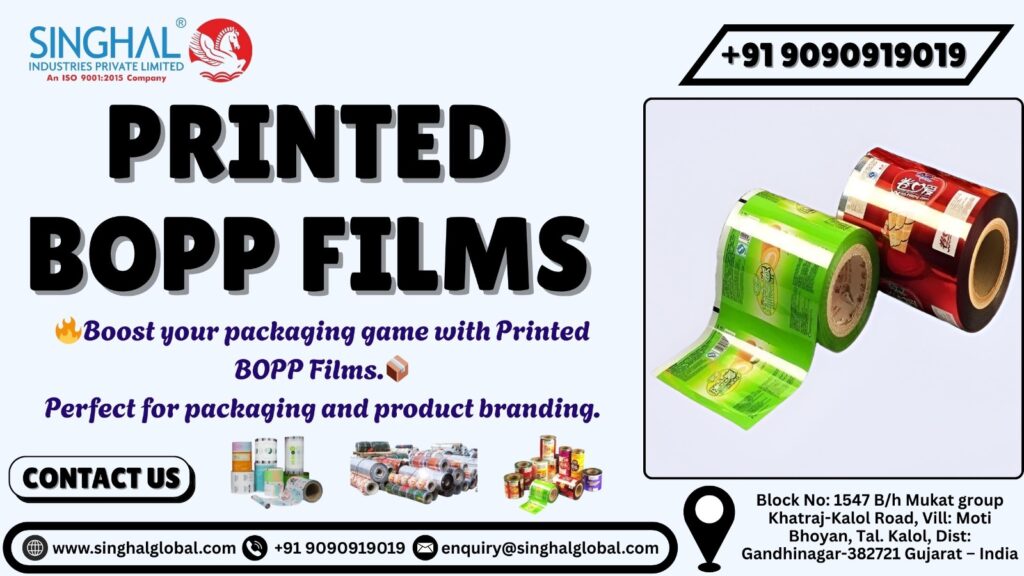
Hey, have you ever purchased an assortment of snacks from the supermarket and put it down because the packaging said “buy me”? The vibrant design, those bright colors that pop from the outside it’s not magical. It’s typically Printed BOPP film performing its work. Yes, BOPP is Biaxially Oriented Polyester. But don’t think that the name is a scam to you. Simply put, it’s an extremely tough, clear plastic film with stunning graphics to create a stunning appearance for your products when they are on the shelves. This is the material that transforms ordinary cosmetics or biscuits into the ultimate shelf-saver.
I have a memory of this incident that I had in my early days of hustling in a tiny packaging shop in Lucknow. There were these plain biscuit wrappers that were not noticed by anyone. The sales were not great, you know? We then changed into printed BOPP film. We put on some striking designs featuring fruit bursting forth in yellows and reds, and then customers were snapping them up like hot samosas. The excitement was high. The owner was ecstatic, with tears nearly, and said it was the reason he saved his business. That’s the kind of power we’re going to explore at this moment. But, are all things flawless? It’s not always so. Printed BOPP film price may be a pain if you’re not careful about the suppliers you choose. Let’s go through this step by step with real-life tales, a snippet of my own thoughts, and, yes, some contradictions, since there’s no such thing as all white and black.
Why Printed BOPP Films Steal the Show in Packaging
Imagine being in a busy supermarket. There are rows of merchandise shouting to be noticed. What’s it that makes yours win? It’s the first look. Printing BOPP films are like the makeup makers of packaging—they give gloss, color, and shine to make your product sparkle. They are made of polypropylene stretched in both directions (hence “biaxially directed”). These films are durable, light, and crystal clear prior to printing. Then, premium inks are applied by using gravure or flexographic printing. The result? Designs that won’t fade, scratch, or peel.
However, here’s my personal experience: I’ve witnessed suppliers reduce the quality of ink they use, and trust me, it’s obvious. One customer complained that, after a week on the shelf, ink colors appeared dull, like faded tattoos. Heartbreaking, right? This is why selecting dependable Printed BOPP Film suppliers is essential. They will provide the highest gloss and UV resistance, ensuring that your product’s design will be eye-catching from the moment it leaves the factory until you get it into the hands of your customer.
Real-life example? Think of Lay’s chips. Those crinkly, colorful bags? They are often packed by printed BOPP. The BOPP helps to keep the chips dry while the printed design shouts out flavor. Take Haldiram’s Namkeen’s in India. Their packages are made from BOPP films that have intricate patterns of celebrations and spices. When it came to Diwali, I purchased one of their packs because the gold-embossed design made it appear premium. In terms of emotional connection, it brought the festival spirit to my home. But is it true that the packaging affects the taste? The research suggests yes, psychologically. A dull wrapper can make food appear old even though it’s still fresh. Crazy, huh?
What’s the Nuts and Bolts? How BOPP Films Are Produced
Let’s talk about the technicalities, but it’s simple, like chatting over chai. BOPP film begins as polypropylene pellets, which are then melted and extruded into a thin layer. Then it’s stretched—machine direction to strengthen, transverse to improve clarity. Printing happens next. The suppliers use plain BOPP, printing in a variety of colors, and occasionally include laminations to give them additional barriers.
The cost of printed BOPP film is wildly different. Basic BOPP film can cost anywhere from Rs 120 to 150 per kg, while the most expensive versions that are matte or metallized? Up to Rs 250 per kg. Why is this? Films that are thinner, higher printing resolution, or green inks. I once had a negotiation with a Printed BOPP Film supplier in Gujarat. They reduced prices by 15% for large orders. It was like winning a lottery! However, beware of the contradiction: cheaper films can mean less quality. One time, a cheaper roll ripped when printing, which took hours. Is saving money worth the hassle? Tell me.
Thickness? From 10 microns for light labels to 60 microns for bags that are heavy-duty. Suppliers customize—some even do sequential numbering for promo packs. A tip to remember: make sure to request samples. I was able to do this with the help of a Delhi supplier, and it helped me avoid an unsatisfactory batch.
Advantages That Can Make You Switch (With A Few Clicks)
Pros? Endless. High tensile strength, which means no tears. Printing quality is excellent for sharp images. A moisture barrier helps keep contents fresh. The product is light and therefore shipping costs are reduced. Eco-angle? Recyclable, in contrast to some plastics. There are suppliers that offer biodegradable versions of plastic!
But contradictions exist. It’s fantastic for clarity; however, the heavy printing may reduce transparency. It’s expensive upfront, but the ROI? Massive. I’ve seen small businesses rival giants through clever printing. There are many questions: Is it sustainable enough? Yes, but the oil-based roots are a source of concern for eco-conscious people. Manufacturers are rethinking their approach, but.
Obstacles and Strategies to Survive
It’s not all roses. The fluctuation in Printed BOPP Film price and resin costs affect the buyers who are small. Solution? Contracts with suppliers that are long-term. Static issues during printing? Anti-static additives solve it. Sustainability issue: recyclable but the mono-material trend is huge. Some brands mix it up with PE, which is a bit controversial since sorting becomes complicated. My suggestion: ask suppliers to purchase an increase in PCR (post-consumer recycling) content. It’s a good feeling, isn’t it?
The real tale: a baker was facing wrinkles during the dry Lucknow summers. The bakery switched to BOPP coated, and the problem was solved. Emotions? Relief, pure and easy.
New Trends for the Future: What’s Coming for Printed BOPP?
Printing smart! QR codes linked to recipes. AR-enabled packs. Nano-tech to create better barriers. Manufacturers are innovating quickly. Price could fall with technology. In India, and with FMCG growing, demand is skyrocketing. In Lucknow streets to exports worldwide, printed BOPP is the king.
Conclusion
Printing BOPP films aren’t just packaging; they’re also silent salespersons. They inspire joy, trust, and thirst. From my chaotic shopping days to the present, their impact on businesses has been transformative. Yes, prices can differ, suppliers are important, but the enthralling magic? Undeniable. Have you ever tried to design one? Take a few samples from printed BOPP film manufacturers and play around. Your products merit the spotlight.
Frequently Asked Questions (FAQ)
Q1. Are BOPP films printed with a printer appropriate for packaging food items?
Absolutely, yes! They’re FDA-approved and food safe when inks aren’t toxic. Ideal for snacking and dairy products, or even the retort pouches used for curries. My friend who is a spice expert is adamant about it—no flavor transfer. Be aware of contact with food. Some require lamination.
Q2. What are the benefits of printed BOPP films?
The top benefits: stunning quality of print, long-lasting, and value-for-money when you buy in large quantities. It protects against light and oxygen and extends shelf lifespan. It builds trust emotionally. Packs proclaim “quality inside.” Versus paper? BOPP wins on moisture resistance.
Q3. Do printed BOPP films provide high-quality clarity?
You bet. The base film is crystal clear as glass. Prints increase without clouding. The ideal window pouches for displaying the product. Contrary to popular belief, heavy metallics decrease clarity, but that’s just the compromise for the WOW-factor.
Q4. Which thicknesses are there with regard to printed BOPP films?
Tons! 10 microns for labels, 20-30 microns for packaging that is flexible, up to 60-plus for laminates. Suppliers tailor it. Thicker BOPP films save cost, while thicker increases durability. Select based on the weight of the item.
Q5. Who is the largest manufacturer of printed BOPP film?
In the world, Jindal Poly Films or Singhal Industries Pvt Ltd are the leaders in India, with massive capacities. Printing BOPP film producers similar to them have the upper hand. But “largest” depends—volume? Innovation? I’ve seen regional companies that are punching above their weight.