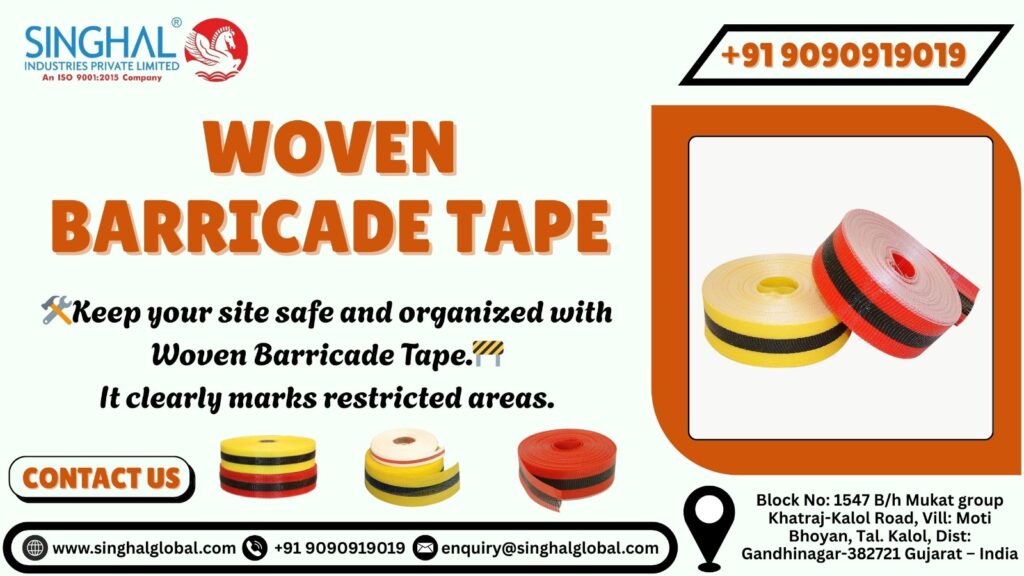
Woven barricade tape is recognized as a sturdy, reliable option to keep people in line and mark dangerous places. It’s not the typical flimsy tape. Think of it as a most powerful piece of safety equipment.
What makes Woven Barricade Tape Unique?
The tape is made of solid polypropylene fibers, which gives it strength against tears and stretch. Contrary to plastics with thinner fibers that break in the wind, the Woven barricade tape can stand up through the harshest weather conditions that range from hot temperatures to frigid temperatures. Construction crews are awestruck by it on construction sites, but it’s important in mining, forestry, as well as events in which you have to secure zones quickly.
The vibrant colors of yellow, orange, and red scream “stay there!” from a distance. Also, it’s recyclable; put it on, tear it off, and then use it repeatedly without looking shabby. This is why woven tape for barricade manufacturing is designed to focus on long-term durability first. The companies put their energy into weaves that can withstand extreme wind as well as rough handling. But is it truly impervious to breaking? Sometimes, in extreme winds, there’s a chance to see a tiny sag, but it’s dependent on how solid yours is.
Controlling Crowds: Things in Order
Imagine a protest or festival with crowds everywhere, chaos just waiting to occur. Woven barricade tape acts to provide a fast, non-aggressive wall. Spread it over fences or poles, and it will create instant “no-go” zones, without the heavy metal structures. The high visibility of the product draws attention quickly, much superior to cones on their own.
It’s ideal for special events, for controlling pedestrians’ movements, or for securing stages. Police often use it to prevent accidents as well, securing roads and permitting emergency personnel to pass through. One cool perk? It’s easy to tie, meaning there are no scissors required. Have you ever tried this using normal tape? A complete mess. Woven versions are less time-consuming and require less effort, making crowd control easier.
But can it work for large crowds? Most likely, but in the event that people are pushing the limits, you may need two layers or stakes. Still, for most scenarios, it’s a game-changer.
Hazard Marking: Warn Before Disaster Strikes
Hazard marking is the area where the tape shines the brightest. Road repairs, construction pits, chemical spills – wherever there is a risk, the barricade tape woven in a woven weave marks it in a loud and clear manner. Non-adhesive, it doesn’t adhere to anything and tears away in the future. People can spot bold words such as “Danger” and “Caution: Don’t Enter” from a distance of hundreds of feet. When the light is dim? There are reflective strips that shine under headlights.
Industries use it for machines and warehouses to prevent flooring that is wet. It’s also cost-effective, since you purchase once and use it for a lifetime. What is the question, does it withstand chemicals? Most are, in fact, resistant, but make sure to check the specifications. A spill of something harsh could cause colors to fade faster than you’d prefer.
Manufacturing Process and the Price of Woven Barricade Tape
The manufacturing of barricade tape woven starts with extruding polypropylene threads and then weaving them tightly on industrial weaving looms. Include UV stabilizers to provide sun resistance and print your messages using heavy-duty inks that will not smear. Top manufacturers test for tensile strength, up to 500 pounds in certain rolls. Controlling quality is essential as bad weaves can tear easily and cost you money. This is the reason why Singhal Industries pops up a number of times, and they’re promoting themselves as a solid Woven barricade tape Manufacture with an export-oriented focus.
Today, is there a Woven barricade tape price? It varies widely. Basic rolls of 3 inches by 1000 feet are priced between $20 and $50, but larger or printed ones can cost $100 plus. Bulk reduces it. Cases of 10 could cost $300-600. Originated from India and China? Costs less, but beware of the cost of shipping. Local US items cost more, but they arrive quickly. Prices fluctuate with plastic prices also, and there was a 20% increase last year due to oil price spikes. Are they worth it? Absolutely, as they last longer than inexpensive tapes by 10 times.
Uses Across Industries
- Construction site: Close excavations, areas for heavy equipment.
- Roadwork: Alert drivers to potholes and lane closures.
- Events: Guide crowds to fairs, sports, concerts, etc.
- Emergency situations: Police tape off accidents or crime scenes.
- Plants and factories: Mark flooring that is slippery, high-voltage zones.
- Mining and forestry: Mine it to create rough terrain. Trees get caught on regular tape; however, woven wraps around it.
- Property lines: Also included in surveys.
Versatile, right? A nebulous distinction: it’s called “tape,” however, it behaves more like a fabric. It’s confusing at first; however, once you understand it.
Advantages Over Other Barriers
Why choose woven? Durability is top of the list, no blowing around like vinyl. Reusable slashes long-term costs. High visibility reduces accidents. Studies have shown that bright barriers can reduce incidents by 30 percent. Weatherproof also; rain or sun? No fading quickly. The eco-angle is a way to reduce the amount of waste generated by replacements. Although plastic isn’t the best choice for the environment, it’s a great choice for those who are.
Easy to tie and compact in size. When compared to fences? More affordable, quicker installation. Downside? The heavier roll weighs more. Also, upfront costs are a problem even if you’re low-cost. Pay now and save for later.
Tips for Installation to Get the Best Results
Take it to the ground with metal posts that should be placed every 10-15 feet. Make sure you stretch it taut, but not too tight. Sagging hides messages. To combat wind, double it or include sandbags. Be sure to check it every day as vandals or wind could move it. Use clips or zip ties for ends. Use your nighttime for sleeping? Be reflective. Print your own custom design? Inform the printers of your language: English, Hindi, whatever.
The mistake that people make is skimping on the width. 2 inches is acceptable; however, 3-4 inches screams louder.
Conclusion
From minor fixes to major events, it guards people’s lives as well as cash. Next time you’re marking hazards, skip weak tape. Go woven. Are you in need of a site? Take a look, contact a Woven barricade tape Manufacture, and get it done. But wait, do you know if there is better technology to come? Perhaps smart tapes that have sensors? Who knows? In the meantime, this is the way to go.
Frequently Asked Questions (FAQs)
Q1. What makes it different from regular caution tape?
The normal caution tape is thin plastic, easily tearable, fades quickly, and is a one-use marvel. Woven barricade tape? The thick weave is tear-proof, durable, and weatherproof. It’s the ideal upgrade for serious jobs and not for kid stuff.
Q2. Are warning messages printed on it?
The majority of them have bold prints such as “Caution,” “Danger,” or other custom-designed designs. The inks are UV-resistant, and multi-language choices are also available. Blank is an option, but printing attracts more attention. Suppliers like Singhal make customs easy.
Q3. Are export-grade versions available?
Absolutely—export-grade woven barricade tape meets international standards, thicker weaves, and better packaging for shipping. Indian manufacturers such as Singhal offer worldwide shipping, fully compliant with OSHA’s similar rules all over the world.
Q4. Does it meet the safety requirements?
Yes, Tensile tests, color fastness, and more—all are checked. Make sure to verify the source. Cheap knockoffs may fail test results. Do not take shortcuts when it comes to safety.
Q5. Who is the largest manufacturer of woven barricade tape?
It’s hard to determine which is the “largest” ; it depends on the location. Singhal Industries Pvt Ltd claims big in exports, Presco rules the US market, and Brady does global. Chinese factories also produce tons of material. The production of India is growing quickly with high quality.