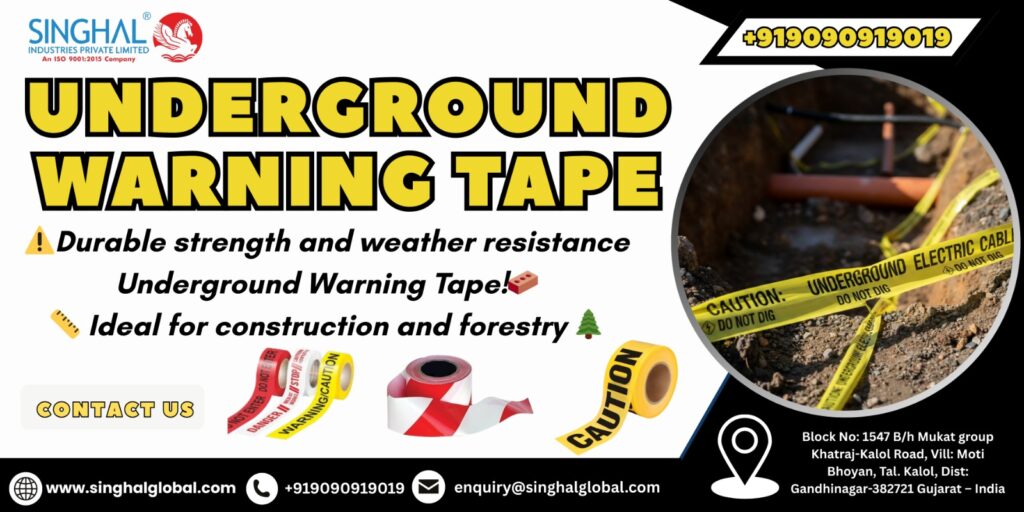
Underground Warning Tape serves an essential function in ensuring that construction sites are safe and preventing major catastrophes. It’s that bright, luminous strip that is buried under the surface shouting “stop digging!” before you strike an oil pipeline or a power line. However, is it as easy as just rolling in some rubber? Let’s take a dive and avoid diving too deeply.
What is the significance of excavation?
The work of excavation can be deadly quickly if you do not know what’s beneath. Cities are full of cables, pipes, and wires that date back to decades ago, but nobody knows precisely where they are. Underground warning tape serves as the primary protection in the excavation system, averting workers prior to backhoes and shovels causing chaos.
These tapes are durable, constructed from materials such as polyethylene, which slams away soil pressure and moisture. They’re also color-coded with red for electric gas, yellow for electric, and blue for water, based on guidelines that are universally accepted. Without them, you’d risk your wallets and lives. Are you wondering why utilities insist on this? One hit could shut down a community for several days.
However, here’s a paradox: some people think that it’s too much for jobs with a small number of employees. Are they right Nope. Even backyard diggings have struck cables. A Warning tape for underground cable can save the day by appearing early, giving workers time to contact locators.
The Key Qualities that make it reliable
What makes quality underground warning tapes apart? Its durability first. It is designed to handle backfill load without breaking, in contrast to cheaper alternatives that tear up underground. High-visibility prints remain bold for decades, even in soil that is acidic.
Use Warning tape for underground cable specification. Typically, it is 6 inches wide, 100 to 1000 meters long rolls, and has a strength of 100 pounds per inch. The colors pop when dirt is in the air, and some are coated with metallic cores to be detected by locators. Non-detectable versions? They’re easier on your pocket for areas with low risk.
Also, Warning tape for underground pipes? The same idea, but adapted to sewer or water lines. Green or blue hues are printed with “CAUTION BURIED water line below.” It is flexible when it’s installed; however, it is strong enough to provide a smooth surface upon impact. Manufacturers alter the thickness of the product – 4 mil for standard, and 8 mil for heavy-duty, to meet the needs of the project.
What is the question, do specifications differ by country Yes, India follows APWA standards most of the time, but it is important to verify the local codes.
The tapes are laid flat in trenches and do not require bunching. Dispenser boxes make rolling out easy, even for small teams. Amazing how something that is so easy can prevent chaos. Or is it just the inefficiency of not properly mapping utilities
Installation Basics: Don’t Mistake This Up
The correct installation is only half of the challenge. Place it at least 12 inches over the utility, and center it on the trench. Backfill the trench gently. Heavy machinery breaks down thin tape. Open-cut trenches Then roll it out in a continuous manner and without joinings, if it is possible.
To use directional or plowing drills, put it between soil layers. The best tip is to overlap the end by 6 inches, then put them on tape. The depth of the tape is important. If it’s too deep, it doesn’t alert, and if it’s too shallow, the machines trap it too early. Have you ever seen a team ignore tape and then dig? It happens more often than you think and can result in fines.
In soil that is rocky, you can utilize tracer tape that is detectable using wire. It is paired with electro-magnetic locators to perform surface scanning. Simple steps, big payoff. What is the reason why certain projects fail to follow it? The reason is usually cost-cutting – up until the lawsuit is a reality.
Benefits beyond the obvious
The headline is safety; however, savings add up. One damaged cable? Repairs can cost thousands, not to mention downtime. Tape can reduce the chance by 80% on conforming websites. It’s passive too – no batteries, no maintenance.
Environmentally? Less digging means less disruption. Colors help to prevent misrepresentation; striking prints such as “DANGER HIGH Voltage” make it clear. Contractors can use it to protect themselves against lawsuits. Utilities are awestruck by it during compliance audits.
Time to detect: the tape is more upfront; however, it pays back in avoiding strikes. Non-detectible? Good for private lines; however, public works require locatable. Which one is more suitable? It depends on the stakes. Underground warning tapes for the warning systems used in excavations aren’t ideal – UV fades when exposed, but beneath it shines.
Real-World Applications across Industries
Utilities place it in power grids, telecom cables, and gas mains. An Underground warning tape protects fiber optics in urban sprawl and prevents service interruptions. Highways The DOT-approved tapes identify culverts. Pipelines for oil and gas make use of heavy-grade versions and orange stripes to increase visibility. Water districts cover sewer pipes in green. Telecom? Orange is the best choice for broadband. Fire hydrants too are identified. In India, thanks to mega-projects such as Smart Cities, it’s everywhere.
Materials and Tech Breakdown of Materials and Tech
Polyethylene dominates – HDPE for strength, LDPE for flexibility. The addition of additives blocks UV and chemicals. Inks? Permanent, non-fading. The types that can be detected are made of steel or aluminum foils, that can be detected using CAT tools.
A warning tape for underground cables specification usually states width 150mm, length 365m, thickness 0.15mm, print every 1m. Pipes get wider rolls. Standards like BS EN 12613 or ASTM D 637 ensure quality.
Innovations? Eco-friendly biodegradable? It’s not yet widespread. Smart tapes that have RFID? Are they coming, but expensive. The basic rule of thumb for the moment. Why mesh instead? Tape’s cheaper, easier.
Cost and Sourcing Realities
Affordable? Starting at $0.10 per meter. Rolls under $100. Bulk reduces it to less. ROI? Huge. One save can cover several years’ worth of tape.
There are a variety of suppliers from locals to international. India is home to players like Premier Greentech churning HDPE tapes. Who’s the biggest? It’s difficult to determine. However, giants like 3M and Brady dominate volumes. Local companies are undercut in price.
Custom orders Branding, prints in bilingual languages are simple. Roll sizes work with trucks. Storage? Dry, cool – is a good idea for the long term.
Advanced Tips for Professionals
Layer it: tape over mesh for ultra-protection. Use the bedding with sand. The GPS map is installed to keep records. Auditors love that. Regulations? OSHA requires it. India’s CPWD also. Fines for skips? Steep. Future? Sensors embedded? Interesting, but tape is the mainstay.
Conclusion
Underground warning tape isn’t the most glamorous, but it’s a hero. From warning tape for underground cables and pipes to warning tape for underground cable, it can save lives, money, and even mental health, and cash.
Frequently Asked Questions (FAQs)
Q1. Is Underground Warning Tape Cost-Effective?
Absolutely, and ridiculously so. With a cost of pennies per square foot, it can prevent thousands of damages. One study revealed that compliant sites reduced utility strikes by 70 percent. Cheap insurance, or are we skimping on safety?
Q2. Can Logos Be Printed?
Absolutely. Manufacturers can print logos of their companies and custom warnings, as well as QR codes that link to maps. It meets the branding needs of companies without any extra cost. Flexible printing tech handles it all.
Q3. Do Contractors have the ability to specify it easily?
Very simple. Standard specs such as width and color are available in the menu. Custom? Quote in days. Online portals let you choose the warning tapes for pipe underground variations quick. There are no headaches.
Q4. How Do I Know How Long Underground Warning Tape Last?
50+ years if buried right. HDPE resists rust and will not change in quality. Surface exposure? 5-10 years before the fade. Tests confirm the integrity of the plant after a decade. But neglect install, and poof.
Q5. Who is the largest supplier of Underground Warning Tape?
It’s a tough call to make. The toughest decision: 3M and Brady dominate the world in volume and have millions of meters being shipped each year. For India, Premier Greentech claims the top spot for HDPE of high quality. It depends on the region, isn’t it?