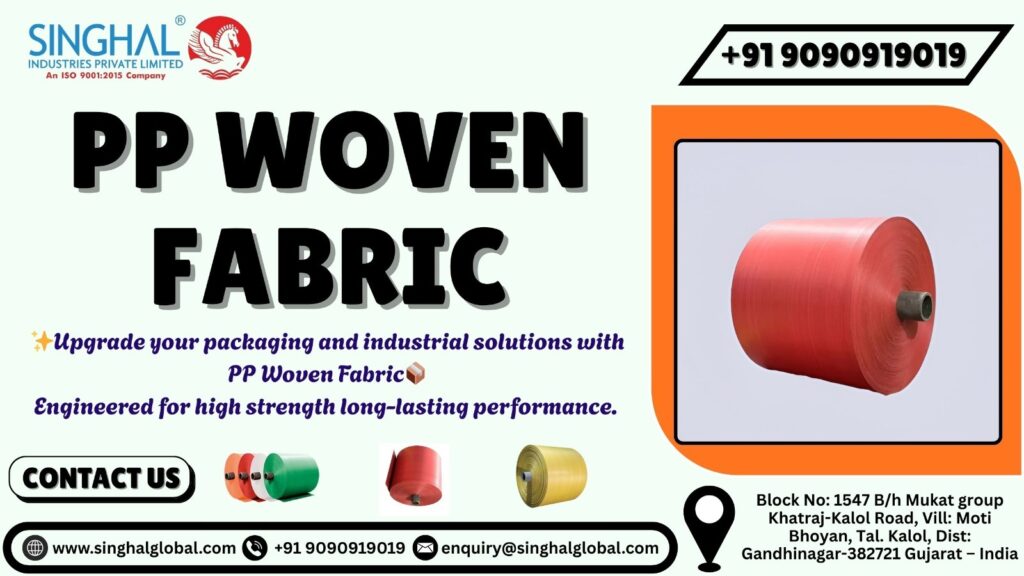
PP woven fabric is a durable, reliable choice for companies that require strong packaging and protection materials. Made from polypropylene, this fabric can handle massive loads, yet is inexpensive and lightweight. It’s everywhere, from the cement sacks of farm cover to the covers for it. Indian manufacturers are at the forefront of developing it to be more durable every day.
What exactly is PP Woven Fabric?
PP woven fabric, also known as polypropylene woven fabric, is made by interlacing thin strips made of polypropylene granules that are melted. They first turn into flat tapes via extrusion and then are stretched for added strength. Looms weave them in a crisscross pattern, warp over weft, making a tight, durable sheet.
The process isn’t the most glamorous; however, it’s highly effective. The result is a roll of fabric that is breathable and robust against tears. In contrast to thin plastics and other materials, this fabric won’t break easily under pressure. Polypropylene woven fabric shines in real-world use because it resists water, chemicals, and UV rays pretty well, depending on added coatings.
Polypropylene fabric producers in India make top-quality rolls for international markets. Regions such as Gujarat and Rajasthan have large plants exporting tons of fabric each year. They’re cheap to produce here, thanks to local raw materials and skilled labor.
Why PP Woven Fabric for Industry?
It’s lightweight, reducing shipping costs. Furthermore, it’s reusable. A good PP bag can last for about 4 to 5 years if properly maintained.
It is also eco-friendly. The plant is easily recycled to make new products, thus reducing the amount of waste. In hot climates such as India’s, it won’t degrade or attract insects.
PP fabric Suppliers ensure that you are getting laminated versions that are moisture-proof. This can be beneficial for the packaging of fertilizers or food items. The strength is due to the weave density, measured by GSM (grams per square meter), generally 60-200 GSM for the majority of jobs.
Key Properties That Make It Stand Out
The strength and flexibility can go hand in hand. PP woven fabric expands slightly but snaps back. It’s ideal for bags that are filled to the top. Tensile strength is between 500 and 800 N/5cm. This is way more than the strength of thin poly or paper.
Breathability allows air to flow and prevents the growth of mold in stored items like grains. It also has UV stability to be used outdoors, lasting between 6 and 12 months in the sun without cracking. Chemical resistance impedes acids and alkalis commonly used in fertilizers. Lightweight—about 70g per square meter standard—implies easy handling. There’s no heavy lifting required. It’s also printable. Suppliers include warnings or logos with inks that adhere well.
Manufacturing Process Step by Step
- Begin with polypropylene granules. They can be melted at temperatures between 200 and 260 degrees Celsius.
- Squeeze them through dies to form tapes.
- Cool, cut to length (2-5mm), and stretch for 5-10 times more to increase toughness.
- Then, wind tapes onto the bobbins.
- Set warp tapes on looms, hundreds stretched tightly.
- Weft tapes are shuffled across; the over-under pattern enlarges the fabric.
- The weft is beaten to make it tighter by using reeds.
- Cut rolls, check for any flaws.
- Optional: laminate using polyfilm or printing.
- Then roll it up and put it in sheets or bags.
The whole process is fast using modern circular looms, which can produce 50-100m in a minute. Polypropylene fabric manufacturers in India make use of top equipment that originates from China or Europe to ensure high quality. They can alter the tape’s flatness as well as denier (1000-2000D) to suit individual requirements.
Top Applications Across Industries
Packaging reigns supreme. Rice, sugar, cement—PP bags woven with netting hold everything. Large bags (FIBCs) transport tons of cargo for export. In the field of agriculture, crop covers protect the crop from frost, and weeds are tamed by mulch.
Construction is a fan of geotextiles and sandbags that stabilize soil. Automotive? Seat covers and trunk liners are resistant to dirt. Furniture makers also have coated versions for outdoor chairs. The food industry relies on laminated PP fabric producers for animal feed or flour bags. It’s flexible; cut into tubes for tubular bags or flat to make stitched ones.
Benefits Over Other Materials
In comparison to jute, PP is smoother, cleaner, and rodent-proof. There are no fibers that shed. Versus non-woven, it’s stronger for heavy duty. It’s also less expensive long-term as it’s durable.
Recyclability earns green points. You can melt it down and create new fabric, and there is no loss of quality after a few cycles. It requires less energy to make as well. In India, recycling hubs and recycling centers turn garbage into crates or pipes.
The customization seals the deal. Lengths of 30-150cm, widths infinite. PP fabric manufacturers alter weaves to increase the degree of openness or tightness.
Role of Indian Manufacturers and Suppliers
India has the most exports, more than 1 million tons annually. Polypropylene fabric manufacturers in India, such as Singhal, Anita Plastics, and Satyendra, have the lead in ISO-certified factories. They supply Asia, Africa, and the Middle East.
PP fabric providers provide bulk rolls or bags, usually B2B, with speedy delivery. Prices hover at Rs50-100 per kg, depending on specifications. Quality’s rigorous tests for burst strength and abrasion. Exporters meet global standards like ISO 9001. They’re expanding their operations to sustainable PP made from bio-based sources.
Future Trends and Innovations
Bio-based PP made from sugarcane reduces fossil fuel use. Nano-coatings improve strength by 20 percent. Smart fabrics that have sensors to support IoT packaging will be available soon. India’s capacity is expected to grow to 2 million tons in 2027. Polypropylene woven fabric is expected to grow in the bulk packaging of e-commerce. Expect stronger, thinner weaves that will save material. PP fabric suppliers eye automation for faster production. Recycling loops closing—100% circular economy possible.
Conclusion
In the age of speedy delivery and bulk goods, this fabric will keep things safe without causing financial hardship. It’s strong, greenish, and is everywhere. For companies, partnering with Polypropylene fabric manufacturers in India ensures solid supply chains. If you’re packing cement, as well as covering up fields, PP woven fabric is a reliable choice. Although it’s not perfect, for durability and affordability, it’s hard to beat. When you next look at a rice bag, consider the weave that holds it in place.
Frequently Asked Questions (FAQs)
Q1. Are there colors available?
PP woven fabric is available in white. However, manufacturers dye it blue, black, green, yellow, and any shade. Pigments are combined to form a uniform shade. Customized shades are also available for branding. Black and other UV-resistant shades last longer outside.
Q2. What is the distinction between woven and non-woven fabric?
Woven resembles a basket where the tapes are weaved to give the necessary calmness, which is good with huge loads. The fibers of non-woven connect at random, are cheaper, but less absorbent and soft. Woven fabrics are less shreddy and shape retentive.
Q3. Does it meet the requirements for farming?
Absolutely. Covers for crops, silage wraps, shade nets, and shade wraps—PP woven fabric shields plants from rain, sun, and insects. The breathable weave prevents the growth of rot. Mulch options block weeds and keep the soil warm.
Q4. Can it be made to be personalized?
Yes, big time. You can alter the width, color, GSM, and laminates. Prints, colors, even anti-slip or UV coatings. Polypropylene fabric manufacturers in India can be tailored to your specifications, starting with plain rolls to sacks printed with your logo.
Q5. Who is the largest exporter of PP Woven Fabric?
India is at the top of the list worldwide, with companies such as Singhal Industries and others shipping millions of tons. China comes in a close second; however, India’s superior quality and cost advantage make it the most powerful. The exact definition of “largest” is not the same every year; however, Indian companies are the dominant players in South Asian markets.