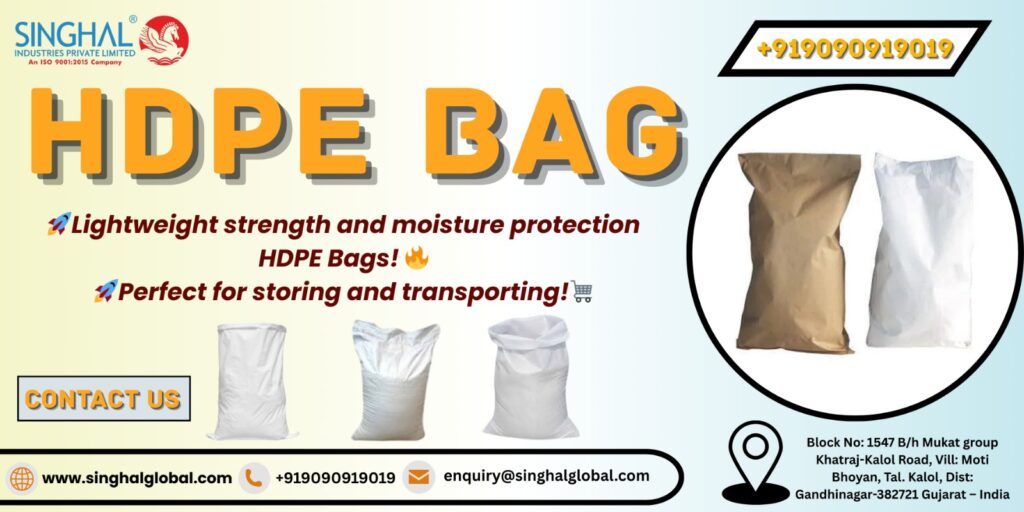
HDPE bags are becoming a game changer for farmers as they safeguard crops, reduce wastage, and can save money in daily farming. If used in a smart way to store seeds, grains, fertilizers, produce, and seeds, they will directly increase the productivity and profitability of the farm.
What are HDPE bags?
HDPE bags are made of high-density polyethylene plastic. It is an extremely durable and chemically resistant material that is widely used for packaging, construction, agriculture, and food processing. They are available in a variety of shapes like woven sacks, fertilizer bags, laminated bags, or liner bags. The most common characteristics of HDPE bags are good durability, tensile strength, resistance to water, and a variety of chemicals, as well as a low weight. Because of these qualities, HDPE bags can carry large loads such as fertilizers or grains without breaking easily.
The HDPE bags that farmers typically encounter are:
- Bags of pesticide and fertilizer
- Bags for storage of grain and seeds
- Bags for animal feed
- Produce bags for packaging (like onions, potatoes, etc.)
The role of HDPE bags in the field of agriculture
HDPE bags are used to support nearly every step of the value chain for agricultural products from the field to mandi. They protect the products throughout transport, loading, and storage.
Principal uses of farms:
- Storage of pulses and grains: HDPE woven sacks with liner protect the grains from insects and moisture while preserving the quality and the weight.
- Fertilizer and chemical packing: The majority of fertilizer brands in India depend on HDPE bags as they are able to hold large quantities of material, withstand the possibility of leakage, and rough handling.
- Feed and Seeds: For seed firms and farms for poultry or dairy, HDPE bags are commonly used for seed packaging as well as storage of animal feed as they can stack easily and are less susceptible to tear.
- Transporting to markets: The bags can be stacked in trucks, tractors, and godowns, increasing the efficiency of space and reducing the risk of damage in transit. For farmers, this means fewer bags that are ripped, which means less spillage, and more protection against humidity and rain, particularly during monsoon.
How HDPE bags can be an amazing game-changer for farmers
HDPE bags are revolutionizing the way farmers manage their crops in many practical ways.
- More protection and less waste: The resistance to moisture keeps grains, as well as seeds and fertilizers, protected from dampness. This is the main reason for loss of nutrients in rural storage. Pest resistance can protect you from rodents and insects as compared to jute that is traditional as well as loose storage.
- Packaging that is cost-effective: HDPE bags are fairly affordable to HDPE bags manufacturers, and their lengthy life can make them more cost-effective over traditional options like wooden crates or single-use plastic bags. Farmers are able to reuse bags multiple times if they are treated correctly.
- It handles and stores easily: HDPE bags are light and strong, and there is a common situation when one individual does not have to do any extra work to take it in and out of the truck. They are stackable and stack, and this ensures that more space is utilized by stacking in sheds, godowns, and village warehouses.
- Quality support and shelf life: HDPE bags can preserve the quality of produce for extended periods of time because of maintaining the level of moisture and contamination. This can be very helpful especially to farmers who are distant to the major markets since the land could need a longer duration to be transported.
- Recyclability and sustainability: HDPE is recyclable and a significant portion of HDPE bags are made of some recycled material. This will assist in the minimization of the overall waste of plastics in case bags are recycled and recycled after the expiry of their usefulness.
HDPE bags used in an Indian context
For India, HDPE bags are commonly used to pack sugar, grains, cement, fertilizers, as well as other bulk goods. The scale for agriculture is immense, which makes HDPE bags a crucial component of the agricultural economy. Numerous companies operate in important industrial centers. For instance, there are a variety of HDPE bags manufacturers in Gujarat, and an Hdpe bags Supplier in Ahmedabad will be able to cater to traders, farmers, and agro-industries from various states. The concentration of manufacturing keeps supply stable and the prices affordable.
When we discuss HDPE plastic bags price in India, the price usually varies on:
- Size and weight of bags (GSM)
- Type (plain, laminated, topped with liner, and printed)
- Quantity to be ordered (small lots vs. bulk)
- Cost of transport and location
Due to high local manufacture and competitiveness, Indian farmers usually have access to HDPE bags at reasonable costs through retailers, agro-input shops, or directly from the suppliers.
An example of the use on a typical farm
Imagine a medium-sized farmer harvesting wheat. Instead of keeping loose grains or storing it in jute bags that have worn out, the grain is packed in 50 kg HDPE woven bags with an inside liner. The sacks are placed in a tiny warehouse shielded from wet flooring and walls on the sides. In the coming weeks, the farmer will sell gradually as the market HDPE plastic bags price increase and does not have to worry about losses due to spillage or water. When each season ends, bags could be used again for storage of animal feed or seeds to plant the following crop, which will extend the lifespan of the packaging.
Conclusion
HDPE bags are easily printed with logos, brand names, as well as product information and regulatory information. This is especially beneficial for fertilizer companies, seed companies, brands, and grain traders that want a uniform branding on the market. Farmers selling using their own FPO, FPC, or brand of cooperative, custom HDPE bags will give their product an appearance that is more professional and help establish trust and help customers to recognize their product on the flooring or in stores.
Frequently Asked Questions (FAQs)
Q1. Could HDPE sheets be utilized in tank fabrication?
It is true that HDPE sheets have been employed for the fabrication of tanks for chemical storage, tanks to store water, and processing containers due to the fact that they are resistant to corrosion, light, and weldable. They are often used when chemical resistance and a long service time are essential.
Q2. What industries can benefit the most from HDPE bags?
Many industries utilize HDPE bags, such as agriculture (grains, seeds, fertilizers), food and feed (sugar, salt, animal feed), chemicals, and building materials (cement, sand), along with retail packaging. Any industry that requires strong bulk packaging that is moisture-resistant is a good candidate for HDPE bags.
Q3. Are there any chances that HDPE bags can be used to manufacture food packages?
Yes, HDPE can be used in a wide range of applications involving food contact that include the possibility to use it as a packaging material of grains, flour, pulses, salt, sugar and other processed food items, but only when the bags are made of quality food-grade materials and meet the hygiene standards. The HDPE is an acceptable type of food packaging material accepted and used by many regulatory bodies in the largest markets, provided that it meets the requirements.
Q4. Can HDPE bags be personalized to print and brand?
It is true that HDPE bags can be customized using multi-color printing, logos, information about the product, and barcodes. Manufacturers provide various sizes, colors, and designs so that brands and even farmers’ producer associations can establish a distinct brand in their bags.
Q5. What are the main benefits of the use of HDPE bags?
The primary advantages are the strength of the material, its resistance to moisture as well as many chemicals, reusability, light weight, and overall cost-effectiveness in comparison to other packaging options. They also allow for more efficient storage, less wastage, easy handling, and recycling after their lives.
Q6. Who is the largest manufacturers of HDPE bags?
India is home to a variety of major HDPE bags manufacturers, particularly in states such as Gujarat, where the packaging and polymer industries are Singhal Industries Pvt Ltd . Instead of one “largest” brand globally, buyers typically choose from prominent regional manufacturers as well as an Hdpe bags Supplier in Ahmedabad and other centers based on their quality, capacity, and certification.