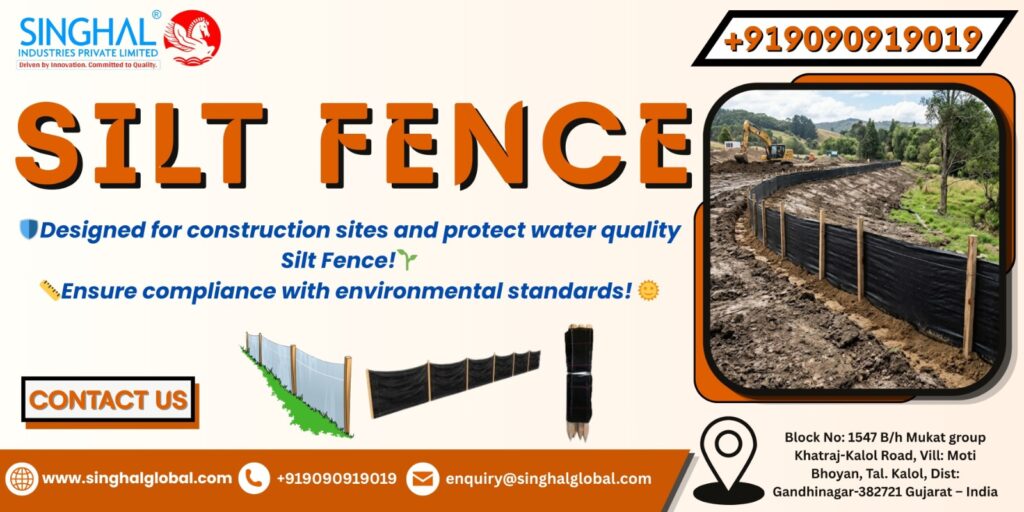
Silt fences play an insignificant yet significant part in protecting the environment by preventing soil and sediment from rushing into lakes, rivers and drains during land development. If you choose a reputable Silt fence manufacturer and install it correctly, they can be among the best economical instruments for pollution control and site compliance.
What Is a Silt Fence?
Silt fences are temporary barrier constructed of a permeable geotextile material held up by metal or wooden stakes that are placed along the surface of the ground. It is typically placed on the downslope of a disturbed or construction soil layer to stop runoff that is muddy before it exits the area.
The fabric lets water gradually flow through while catching clay, silt and other soil particles. This easy mechanism allows it to be used for road construction, building areas, landscaping projects and for infrastructure construction in areas where soil is often disturbed.
How Silt Fencing Protects the Environment
Silt fences can decrease the amount of sediment and other pollutants that enter the water bodies around them that are among the most significant environmental hazards associated with construction. When rainwater flows through newly laid soils, it transports small particles and debris that could otherwise end in ponds, drains, canals, rivers, and drains.
- Through slowing down the flow of water and filtering out sediment silt fences aid in.
- Enhancing the quality of water by reducing sediment and turbidity load in lakes and streams.
- Eliminating blockages in storm water drains and culverts and irrigation channels, which could result in local flooding.
- The importance of protecting aquatic life is that excess silt can drown fish eggs of fish, clog the gills of fish, and also cover plants’ bed.
- Limiting the spreading of attached pollutants like heavy metals, nutrients, and hydrocarbons which are often bound to soil particles.
For owners of projects, installing silt fences isn’t only regarding “being green” but also about conforming to environmental regulations and not having to pay penalties, work stoppages and reputational harm.
Role of Silt Fence Manufacturers and Pricing
Selecting the best Silt fence manufacturer is crucial since the performance of the fence is heavily dependent on the fabric’s quality weave, weave, and reinforcement. A reputable manufacturer makes use of solid geotextile (often polypropylene or polyethylene) with enough permeability to allow water to flow through while retaining sediments supported by sturdy stakes, and in some instances wires for support.
In India There are many silt fence manufacturers provide erosion control barriers to roads, infrastructure, and construction projects. They often offer custom lengths, heights, and strength of the fabric. A lot of them design fences that meet certain conditions on the site, like steep slopes or zones of heavy rainfall or water bodies.
The Silt fence price in India is dependent on:
- Fabric GSM and the type (woven or non-woven, PP/PE).
- Roll length and height are required to complete the project.
- If support wires, more robust stakes, and UV stabilized fabrics are part of the package.
- The volume of orders and the distance to the supplier, which affect the logistics cost.
Project planners typically evaluate the offers of multiple Silt fence manufacturer to ensure the cost and quality, particularly in industrial or large road projects where thousands or hundreds of meters are needed.
Why Silt Fences Are Considered Eco-Friendly
Silt fences are generally regarded as an environmentally friendly sediment control method due to their natural processes, instead of using chemicals or large structures. They slow water flow, stimulate sediment to settle and let water that is clear be able to flow through into the surroundings.
The environmental benefits they provide include:
- Temporary nature: They’re intended to be removed once the plants stabilize the soil therefore they’re not permanent disruptions to landscapes.
- The footprint of the material is less than brick or concrete barriers, with stakes and fabric instead of heavy-energy materials.
- Integration with other green measures such as mulching cutting grass, Coir logs and contour trenches, to form an overall management system for erosion.
But their environmental stewardship is contingent on the correct placement and elimination. If they are left untreated or buried, old fabrics will end up as waste in the soil, and appropriate disposal or recycling strategies are essential to the environmental management of the site.
Typical Design and Installation Considerations
For it to be effective, a silt fence should be constructed with care to the smallest details instead of “just setting up a fabric screen.” Good methods include:
- Trenching: The lower edge of the cloth is positioned in a trench, which is backfilled to prevent water from be able to flow beneath.
- Post spacing Stakes are driven in regular intervals (often approximately 1.5-3 meters from each other) to ensure that the fence remains standing even in the face of water pressure and wind.
- Affective aligning: Fences should be erected on contour lines, not within active drainage channels thus they are able to intercept sheet flow instead of acting as dams in the flow of water.
- Height selection: The majority of guidance suggests silt fences within the range of approximately 24 to 36 inches (about 3 inches) high, which can be adjusted according to slope and runoff expectations.
Silt Fence Use Cases in India
In India, rapid urbanization, road development and industrial projects cause continuous soil disturbances, which makes silt fences increasingly crucial around cities and in sensitive areas. They are typically used in:
- Construction corridors for expressways and highways.
- Metro Rail, Metro and airport development.
- Layouts for residential townships, commercial complexes, as well as warehousing.
- Canals, embankments and riverfront projects in which runoff from sediment directly affects the water bodies.
Conclusion
Regular inspections and maintenance are essential. Sediment that has accumulated should be removed prior to when it gets to around one-third or one-half the height of fabric and any splits, fallen posts, or cuts must be fixed immediately. With numerous Silt fence suppliers in states such as Gujarat along with across the nation contractors have access to an array of products that can be adapted to the local climate and budgets.
FAQ (Frequently Asked Questions)
Q1. Do silt fences help stop water pollution?
Yes. Silt fences aid in preventing water pollution by capturing soil particles as well as other contaminants in runoff prior to when they can reach close to lakes, rivers or drains. Through reducing the load of sediment as well as turbidity levels, they help to create better water quality and healthier ecosystems of aquatic fish.
Q2. What should the height of the silt fence be?
Silt fences typically can be found in the range of approximately 24 to 36 inches (2 to 3 feet) tall, which can be effective in capturing sediment, while also allowing for controlled water flow. The precise height must be chosen based on slope of the site, soil type and anticipated runoff volume.
Q3. Are fences made of silt environmentally friendly?
Silt fences are regarded as green because they offer the temporary, low-impact means to reduce sediment through permeable fabric instead of concrete or chemical treatment. If they are maintained, installed and removed properly they can significantly decrease erosion and pollution of water with only minimal disturbance in the long run.
Q4. Who are the best silt fence producers in India?
Many well-known businesses in India provide silt fences as well as products for erosion control that include established producers and exporters that are listed on B2B platforms. Buyers typically choose suppliers based on quality, reviews from customers technical support, as well as the capability to customize the fabric and size for particular projects.
Q5. Who is the largest of Exporter of silt fences ?
Multiple Indian and international companies like Singhal Industries Private Limited are export silt fences and rankings may fluctuate based on the annual market demand and. In any given time industries directory and trading platforms give current information on the top exporters based on volume and destination regions.