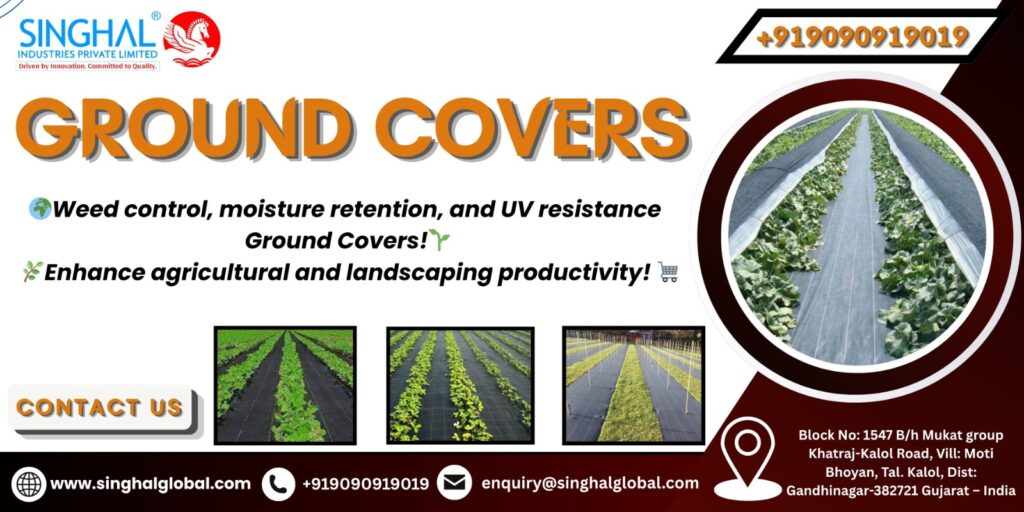
Ground covers is a practical and effective way to safeguard soil, improve the health of crops, and reduce labour costs on farms and gardening in the kitchen. When you mix traditional living ground cover or cover crops with new options like HDPE mats for protection of the ground, you ensure longer-term soil security and healthier, better-performing fields.
What Are Ground Covers?
Ground covers refer to any material or plants that are used to cover the soil instead of letting it dry. These include live cover plants, creeper plants, organic mulches such as straw, plastic sheets, and HDPE ground mats for covering. In the fields of agriculture and horticulture, ground covers are utilized to deter weed growth, stop soil erosion, and ensure the soil’s water levels surrounding crops. Farmers employ them within the rows of vegetable plants in nurseries, orchards, polyhouses, and even in landscaping projects.
Ground Covers for Soil & Crop Protection Types
There isn’t “one kind that fits all.” Different farms and gardens employ different kinds of ground covers based on the climate, budget, and how long the protection is required.
- Living Ground Covers and Cover Crops
They can be fast-growing, like clover, grasses and legumes, or other special cover crops, which are grown to improve and protect soil but not for harvest.
- They hold soil together and reduce erosion by wind and water.
- Their roots break apart soil and increase air and water movement within the root zone.
- Cover crops of legume can absorb nitrogen from the atmosphere, increasing soil fertility and decreasing the requirement to use chemical fertilizers.
- They are extensively utilized in agroecological and sustainable systems that balance productivity and longer-lasting soil health.
- Organic Mulches
Organic ground covers consist of materials such as straw grass clippings, dried leaves or manure from the farmyard applied as a layer over the soil.
- They block sunlight, so many weed seeds fail to germinate.
- When they break down they also add organic matter to the soil and enhance its structure and capacity to hold water.
But, they do degrade in time, which is why it is essential to replenish them. They can also sometimes harbor pests if taken care of properly.
- Synthetic Weed Mats and Ground Protection Mats
Modern landscaping and agriculture are increasingly using non-woven or woven plastic ground covers made of HDPE or polypropylene.
- HDPE ground mats are UV stabilized, tough, and are designed to let air and water to flow but block sunlight from reaching weeds.
- They are also used in vineyards and in high-value flower or vegetable cultivation.
Certain products are more robust mats for ground protection of ground, constructed from HDPE which is used to shield soil from traffic and heavy equipment on hard ground. They prevent soil compaction, erosion, and ruts on the soil’s root zones machines and vehicles move across fields.
Role of Ground Protection Mats in Agriculture
The mats used for protection of ground are typically often associated with construction sites, events or access roads on soft terrain, however they’re becoming increasingly crucial for farms as well.
- HDPE ground protection mats. (HDPE) mats for ground protection are very strong and have a high capacity for load bearing in addition to wear resistance which makes them ideal for tractors, harvesters, and loaded trucks.
- These mats can help prevent deep ruts, damage to roots and soil compaction in fields, orchards and other areas of plantation, especially in the dry seasons when the soil is soft.
Utilizing mats to protect the ground for areas in which machines travel repeatedly, farmers can keep the health of their soil, enhance stormwater management, and lessen pollution and runoff. This is especially beneficial in systems with high value crops, where soil damage may be more costly than the mats in the long term.
HDPE Ground Mats Manufacturers and Exporters
In India and around the world, a variety of firms manufacture HDPE ground mats as well as ground protection mats that are used for agriculture, landscape, industrial, and landscaping applications.
- Some Ground cover manufacturers specialize in weaving HDPE and ground cover mats made of PP designed for plantations, nurseries and polyhouses. They provide UV-stabilised fabric in large rolls and various GSM ranges. Other manufacturers focus on high-performance
- HDPE mats to protect the ground that are designed to handle large loads and safeguard the soil, lawns and pavements on project areas.
Singhal Industries Pvt. Ltd. for instance is the leading exporter and manufacturer of HDPE mats for ground protection as well as ground covers. It offers robust, thermoplastic-based solutions that can be used for many industrial and agricultural applications. These companies typically export to several countries, making India an important center to HDPE ground mats manufacturers and suppliers.
Conclusion
Through the integration of living mulches, organic soil and cutting-edge solutions like HDPE ground mats from well-known HDPE ground mat Suppliers farmers and cultivators can ensure soil protection, reduce the pressure on weeds, and create stronger cropping systems that can withstand the challenges of the future.
Frequently Asked Questions (FAQs)
Q1. Are they superior to mulching?
The mulching and the ground cover both provide protection to the soil, but they function in a different manner. They (like mulches or cover plants) concentrate on covering your soil over a longer period to deter weeds, preserve moisture and slow erosion. Mulching typically involves the addition of a loose layer such as straw or leaves to retain moisture and manage the weeds over a shorter time. Thus, ground cover is generally not “better,” but they are more durable and consistent and efficient, while mulching is a quicker, simpler solution.
Q2. How do I maintain the ground cover?
For the best care of your groundcovers ensure they are kept clean and in good order. For live covers, cut or trim them prior to when they become too high or begin to compete with your other crop. get rid of any weeds that have escaped through the holes. Finally, at the end of the season clean, roll and place them in a cool, dry area so that they can be reused.
Q3. Are groundcovers appropriate for organic agriculture?
Ground covers are excellent for organic farming as they help reduce erosion of soil as well as control weeds and help conserve moisture without the chemical usage. Cover crops that live enhance soil health naturally through the addition of organic material to the soil and creating soil health, and physical weed mats enable farmers to control weeds with no herbicides. This is in line with organic principles of preserving soil health and reduce chemical inputs.
Q4. What are the advantages of using ground cover?
Ground covers assist gardeners and farmers in a variety of ways. They guard the topsoil from getting washed away or removed, help reduce the growth of weeds, keep the soil moist and cooler for longer and enhance soil structure as time passes. They also decrease the cost of chemicals and labour as you will spend less time weeding or spraying. In the end, they promote healthier soils and better crop growth by requiring less effort.
Q5. Who is the largest exporter in the world of Ground Covers?
There Singhal Industries Private Limited single name that is always in the position of being “largest exporter” of ground cover mats because it can change with the passage of the duration of time, type of product and even the region. Many major exporters and manufacturers all over the world which include companies from India, China, and Europe provide HDPE and PP mats for ground covers to a variety of nations. For a precise designation or ranking and trade information or reports from industry are required.