Container liners are slowly changing the way companies transport large quantities of cargo around the world which makes shipping safer, quicker, more efficient, and affordable for a range of industries. In this article we’ll explore how these lines work and who is using them and the most recent trends and the factors to consider when selecting a Container liner manufacturer for industrial use.
What Are Container Liners and Why Do They Matter?
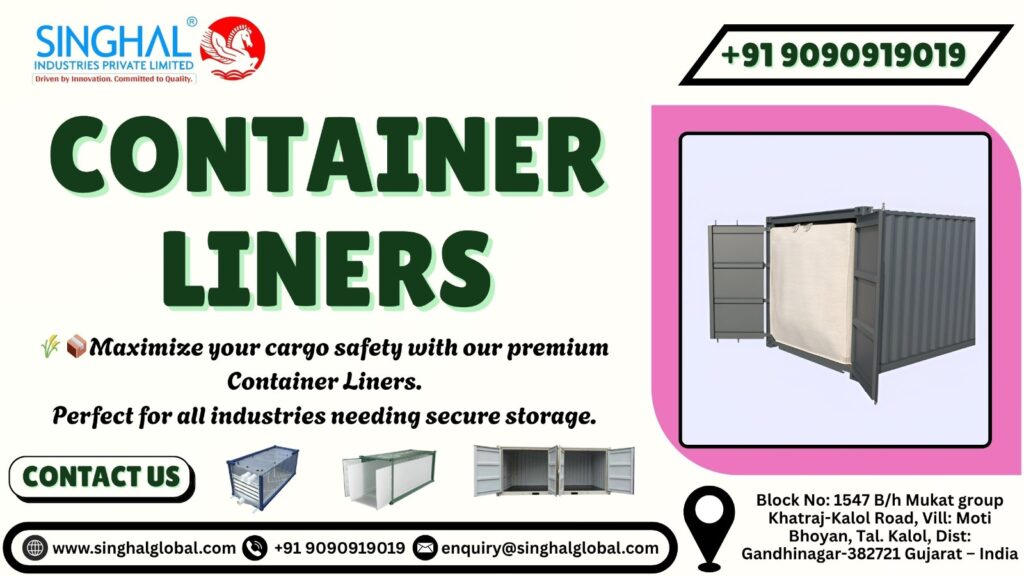
The container liner is a large, custom-designed bag that covers within a conventional transport container (usually 20 feet 30 feet 40 ft or 45 feet). Instead of packing your product in several bags or sacks, place your goods directly in this liner, transforming it into a tidy container for bulk storage that can used as a temporary container.
The liners are generally compose of strong polyethylene (PE) or polypropylene (PP) fabric that shield cargo from dust, moisture and contamination when transported over long distances. They are a favorite for dry bulk cargo since they minimize manual handling as well as speed the loading and unloading process, and significantly reduce waste from packaging.
A lot of shippers find this easy switch from bags to liner has cut down on logistics costs per ton, and also improved product safety. This is the reason demand is growing across all industrial sectors.
How Container Liners Transform Bulk Cargo Transport
Container Liners are transforming logistical logistics for bulk cargoes in many areas.
- More efficient loading In lieu of stacking thousands or hundreds of boxes, fill the entire container with an unstoppable flow of goods through conveyors, gravity and pneumatic equipment.
- Lower cost of labor: fewer workers are required the majority of activities are automated. This is an important benefit when you are an industrial liner provider that caters to ports and huge warehouses.
- Reduced loss of product Liner keeps cargo from touching walls of containers which means there’s less chance of contamination, water infiltration, and the product adhering to the surface.
- Speedier turnaround: Fast installation, quicker loading using top hatches, front and back spouts. Smooth discharge can reduce the time between loading and waiting for the container. time.
- Quality and hygiene for food chemicals, polymers and other substances containers, liners for containers create an enclosed, controlled environment which keeps the materials clean and better quality.
A common example: an exporter of plastic granules could shift from palletized bags into dry bulk container lines and immediately experience less damage, less dust and shorter loading times.
Key Applications and User Industries
Container liners are used wherever you can get free-flowing materials and require transportation in large quantities. Common industries include:
- Food and Agriculture Grains, malt sugar flour, rice pulses, as well as other food items.
- Organic fertilizers and chemicals: powders Fine chemicals, fertilizers and mineral products.
- Polymers and plastics pellets, granules compounds and resins.
- Minerals and mining: cement, fly ash, ore, as well as fine mineral powders.
Other industrial products include salt Sand, sand, and more bulk cargo that flows easily.
Dry bulk container liners exporters typically serve multiple industries simultaneously, modifying containers for food-grade use in one instance and for industrial-grade chemicals in the next.
Types, Capacity, and Technical Features
Container liners come in various styles to accommodate loading and unloading techniques. Industrial buyers usually collaborate with an industrial Container liner factory India or a multinational manufacturer to match the type of liner to their handling system.
Common Liner Configurations
- Front spout/backfill liners: Loaded at the door’s side and discharged through spouts at the opposite end, typically with the help of conveyors or pneumatic loading.
- Top fill liners: Loaded through top hatches by gravity, which is ideal for high-level silos and chutes.
- Wide mouth/full opening liners: Designed to speed up the taking and unloading of heavy materials.
The container itself is the structural support, while the liner protects and holds the cargo. That’s why seams, strength of the fabric, and anchoring loops are crucial.
Food-Grade vs Industrial-Grade Container Liners
Many buyers inquire if container liners can use for food-grade cargo. Yes, provided you choose the correct design and the appropriate certifications.
Chemical-grade industrial liners that are used for chemicals such as fertilizers, minerals, or chemicals may not require the same level of hygiene, but they should still be sturdy and water-resistant. They should also be adapted to work with abrasive and dusty substances. A reputable dry bulk container liners exporter typically offers industrial and food-grade products with a clear distinction between them to avoid cross-contamination.
Trends Shaping Container Liner Technology
The segment of container liners isn’t static. Manufacturers are constantly updating their designs and materials. Modern Dry bulk container liners exporters often highlight these changes to international buyers.
Manufacturers from India and around the world are investing in greener manufacturing environments and automated equipment to meet international standards of quality at competitive costs.
Choosing the Right Container Liner Partner
If you’re researching suppliers, it should not solely focus on cost, but reliability and quality are much more important.
The most important criteria to consider when choosing a container liner manufacturer for industrial use:
- Range of products: the capability to provide liners that can used with different sizes of container, methods for filling, and types of cargo (food chemicals, polymers, food minerals).
- Certification and quality systems for delicate and food grade products. Look for globally accepted standards such as ISO and food safety certifications.
- Capabilities to customize manufacturing facilities for container liner production is located in India using its unique design as well as manufacturing will rapidly alter sizes of liner spouts and barriers and lines to meet the exact specifications of your company.
- Experience in exports Dry bulk container Exporters must be aware of the documentation testing, global logistics and documentation to ensure that your shipment runs smoothly.
- Technical Support: The top providers will assist you with your trials, help you optimize loading and unloading methods and provide advice on storage and handling.
Conclusion
If they understand how container liners function and the qualities to look for in a provider, businesses can greatly increase the efficiency, security, And effectiveness of bulk cargo transportation. The effort required to test a shipment with a new liner style can assist you in avoiding issues that could be bigger.
Frequently Asked Questions (FAQs)
Q1. What industries make use of container liners?
Container liners are extensively used in the fields of agriculture and food (grains, malt, sugar, flour, rice), chemical fertilizers, polymers and plastics, minerals and mining, as well as other bulk industrial materials. Any industry that uses loose-flowing powders, granules, or flake-like particles in huge amounts could benefit from these.
Q2. Can containers be used for food-grade goods?
Container liners can be used to store food-grade products provided they are made of approved virgin materials and are manufactured under strict food hygiene and safety guidelines. Numerous producers supply food-grade liners to transport cargos such as cereals, sugar, and various other bulk food items.
Q3. What is the capacity of container Liners?
Container capacity is contingent on the size of the container as well as the product’s density. The majority of liners installed in 20- to 40-foot containers are able to hold between 20 and 28 tons of bulk dry cargo, based on the container’s capacity and weight.
Q4. What are the most recent innovations in container liner design?
The latest trends are improved barrier and fabric, speedier installations, the latest discharge technologies to reduce residues and to create eco-friendly, lighter designs. There’s also a trend to improve cleanliness accreditations, certifications, and customized solutions for specific sectors and products.
Q5. Who is the largest manufacturers of container liners?
The market comprises several important global and regional producers, and “largest” is a subjective term depending on location and product type, making it difficult to pinpoint one leader in the global market without certainty.
There are a few established like Singhal indutries Pvt ltd is exporters and producers from India, Europe, and North America that supply container liner services around the world and are regarded as key market players.