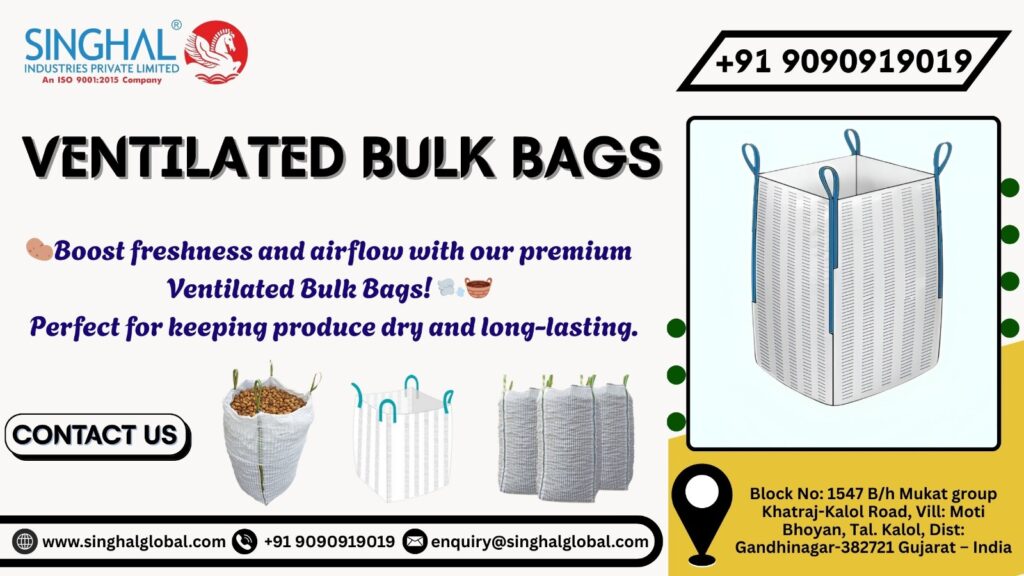
Couldn’t really be more perfect a pun, right? Ventilated bulk bags – or breathable FIBCs (flexible intermediate bulk containers), as they are also known—are the absolute stars of the present age of climate-conscious worldwide supply chains, as their central uses are stewardship of sensitive, perishable, and moisture-prone goods that make up a major part of global food losses. Yet what is ‘real science’ opening the way for so many novel solutions on markets? Why are all of these people involved in farming, production, and trade rapidly abandoning their traditional means in favor of the use of Ventilated bulk bags, and what is it that one should be apprised of before ordering from ventilated bulk bags manufacturers or comparing Ventilated bulk bags price quotes? Let’s explore the fascinating world of ventilated bulk bags through their defining attributes, use, problems, and the emotional, real-life impact they make across global supply chains.
The Scientific Principles of Ventilated Bulk Bags
It is a touching story of rightly chosen functions to meet a great need. Bulk bags are strong and functional, but for highly perishable goods, such as potatoes, onions, carrots, or garlic, they are simply not enough. Let’s say you put a wet towel in a sealed plastic bag and leave it in the sun. What happens? The towel gets stinky very quickly! Similarly, storing fresh produce in sealed non-ventilated packaging is a recipe for disaster: the moisture that accumulates turns into a breeding ground for bacteria, and before you can say it, your whole shipment is going to rot.
Ventilated bulk bags are made to use a special woven polypropylene fabric that is integrated with vent strips or panels that are evenly spaced. This tiny tweak is game-changing: the vents allow air to pass through the bag freely, whisking away moisture, excess heat, and water vapor. When humidity tries to settle and cause condensation, the design lets the products “breathe,” preventing rot, mildew, and that awful musty odor.
Saving Harvests & Hopes
Let’s head off to rural India. The monsoon rains have caused the rivers to swell, and the air is filled with the aroma of wet earth and green stalks. Farmers, after putting in weeks of hard work, have their carrots and onions ready for harvest, but if the produce is left too long in wet sacks, then the risk of losing the value of the crops is very high. The use of Ventilated bulk bags means that farmers can pick their crops even if they are wet, store them for a short period, and still be able to bring them fresh to the market after a few days or even weeks. So what is the difference? Real money—it sometimes works like a farmer’s entire year can be made or broken by the survival of his/her harvest in storage.
A Closer Look at Ventilated Bulk Bags Suppliers & Price
Just like any other thing, not all ventilated bulk bags are good, and the decision of which supplier to pick is the most important factor. When looking for Ventilated bulk bags suppliers, you will find that a handful of them are located in different parts of the globe. Indian manufacturers like Sudarshan Add Pack and Singhal Global have become household names in both local and export supply chains, providing products with ISO certifications and competitive Ventilated bulk bags price options.
Let’s be very clear: small businesses can barely afford to ignore prices, and that is why price is always on their minds. The ventilated bulk bags price depends on the fluctuations of the raw material costs, as well as the custom sizes and the quantity. Indian marketplaces have set the prices of the bags between 150 and 500 INR, averaging approximately 280 INR for a roomy FIBC bag; however, the prices do fluctuate due to the supply chain demands, international shipping, and custom printing needs. So, is there a perfect number? No—and that’s quite an honest answer, given that negotiation and volume discounts can bring the price down even more.
How Ventilated Bulk Bags Are Changing Global Logistics
It would be quite an understatement to say ventilated bulk bags have killed the problem of perishables; not only the growers’ lives have been changed, but also distributors, end consumers, and anyone who cares about food waste. A bag that lets air circulate seems simple, but for a cold storage warehouse or a cargo vessel hauling a hundred tons of produce, it’s a difference between thousands of kilograms of potatoes going mushy and arriving supermarket-fresh.
Some companies even “tweak” their bags depending on the country or type of cargo: mesh sections, extra strips, or opt for a heavier or lighter grade of woven material. It’s about flexibility and adaptation.
Conclusion
Is it a bit better to pay for reliable ventilated bulk bags than to pay for cheap bags? For a large number of people, the answer to this question is definitely yes—the slight savings from a cheap, non-certified bag can vanish very quickly if only one batch is spoiled. However, here is the paradox: some users, particularly those who are just beginning or storing non-food products, may not require the highest standard or the newest ISO certification and therefore could save ventilated bulk bags by purchasing a simpler model.
So, the next time you see a shipment freshly picked, crisp, and unspoiled, think about it: it might be the lowly, ingenious ventilated bulk bag that is quietly and relentlessly doing its job. Sometimes, simply getting a bit of fresh air can change everything.
Frequently Asked Questions (FAQ)
Q1. Are Ventilated Bulk Bags Compliant with Industry or ISO Quality Standards?
Certainly, contemporary ventilated bulk bags are built to comply with very strict standards. The primary quality gold standard is ISO 21898:2004 that specifies the performance requirements for FIBCs (including ventilated ones) and focuses on load capacity, tear resistance, UV stability, and other parameters. Most of the leading vendors do not allow a bag that has not been subjected to drop, topple, and load testing to be shipped. Usually, a single-use safety factor of 5:1 is required, which means that the bag can hold up to five times its stated capacity before it fails.
Q2. What Do People Do With Ventilated Bulk Bags When They Are Not Using Them?
It is somewhat similar to the way one would store sleeping bags: compress them into a small roll, keep them dry, and do not put heavy things on top of them for extended periods of time. The ventilated bulk bags, which are made of woven plastic, may resist mildew; however, it is still advisable to keep them off the damp concrete and protected from direct rays of the sun to prevent UV degradation.
Q3. Are These Bags Safe to Use for Food-Grade Applications?
Indeed, provided that you buy ventilated bulk bags that are explicitly marked as food-grade! These bags are manufactured in clean-room conditions, made from 100% virgin polypropylene resins, and must comply with both the global food safety standards and local FDA regulations, i.e., they are very clean and free from contaminants.
Q4. Are Ventilated Bulk Bags Allowed for Export Overseas?
Yes, certainly. The top ventilated bulk bags suppliers are more than willing to send their goods to any location in the world as long as the buyers verify the customs regulations and safety standards at the point of origin and destination.
Q5. Who is the largest Supplies of Ventilated Bulk Bags?
This question is quite difficult to answer because there is a large number of players in this industry, and it is a very competitive one. Nevertheless, Indian enterprises such as Singhal Global and Sudarshan Add Pack are considered to be the most influential market players that provide high-quality, tailor-made ventilated bulk bags to the whole world. Similarly, Kanpur Plastipack is a well-established name with a vast footprint in Asia and Africa, whereas several manufacturers in Europe and the Americas cater to the large regional clients. The “largest” vendor will vary depending on volume, contracts, and market changes, but India’s lead in the ventilated bulk bags market is very obvious.