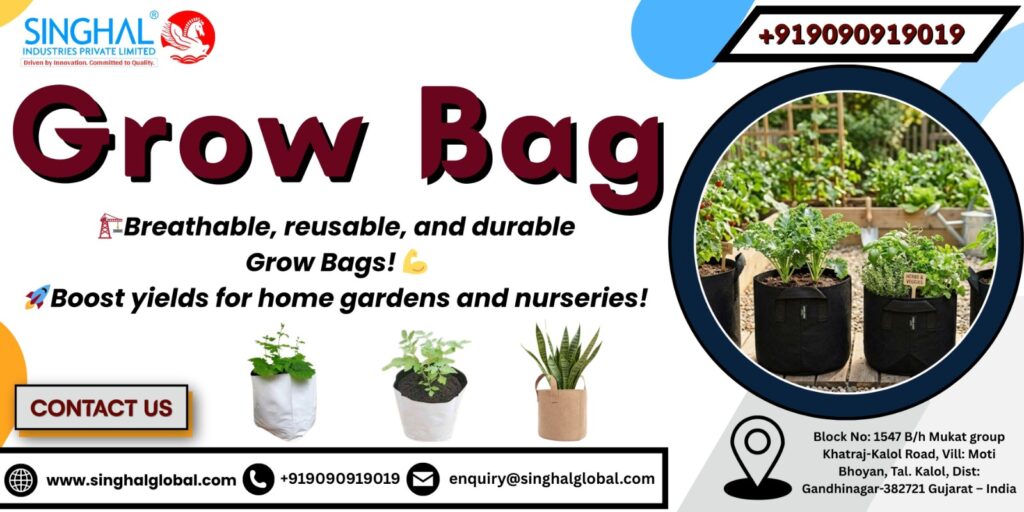
Hello fellow gardeners! If you’re sick of having to deal with root-bound planters in conventional pots, or experiencing poor drainage of your soil within your garden, growing bags could be your new most trusted companion. These simple, yet innovative containers are changing the rules for gardeners at home everywhere. In this article, we’ll be going deep into the ways that grow bags that promote healthy root development can improve your experience gardening. We’ll discuss everything from why they’re so effective for roots, to helpful tips to select the right one and also talk about the Grow bags manufacturers that offer top-quality products. If you’re growing vegetables, flowers, plants, or small trees, keep it going for this to be the beginning of a revolution in root cultivation!
Why Grow Bags Are a Root Lover’s Dream
Let’s begin with the fundamentals. Growing bags are made of fabric or porous containers which let air and water move freely throughout them. In contrast to clay or solid plastic pots, they don’t hold water or limit roots. The air-pruning effect is a savior to promote healthy root growth. As you can see, when roots touch the edges of a grow bag, they are exposed to the air. This naturally reduces their size and promotes more bushy, healthier growth. So no more circling roots and damaged plants!
I can remember the first time I tried using grow bags. I had tomato plants that would always be weak and sloppy in pots. When I changed to bags, boom, the roots were bursting with fine hairs all over the place. It’s similar to providing your plant with a breath of fresh air, literally. Research from institutions like The University of Florida backs this up: pots made of fabric improve the structure of roots by about 30% when compared to plastic. It’s not just an exaggeration; it’s scientific evidence that will make your garden flourish.
They’re very adaptable. From garden herbs to large-scale veggie patches, the grow bags for plants are able to be used everywhere. They’re light, compact, and reusable, meaning you can save space and money. And, there’s no need to worry about broken pots due to freezing winters!
The Science Behind Root Health in Grow Bags
Okay, let’s delve some more into roots. Healthy roots require three factors: oxygen, a balance of water, and enough space to grow. Traditional pots are often ineffective here as water gets sucked up in the middle, depriving roots of oxygen, or roots are squeezed. Grow bags that encourage healthy root growth can fix all of that.
Fabric material (usually recycled felt or plastic) lets excess water be drained immediately, keeping root rot out. The airflow oxygenates the soil, which boosts the activity of microbial organisms that feed roots naturally. Roots form a dense fibrous network instead of a single large taproot, resulting in more nutrients being absorbed and healthier plants in general. Consider it this way: in a pot, roots are in jail; inside a growing bag, they’re in the spa. A study I learned about at Cornell University showed plants in grow bags had 40 percent more lateral roots in just eight weeks. This is huge for yields! For larger things such as Grow bags for trees, this can be very beneficial. The ornamental or dwarf fruit trees in bags of 20-50 gallons grow strong, sturdy roots without having to dig holes.
A few tips from my experiences: add some coco coir or perlite to increase the aeration. Your roots will appreciate it by thriving.
Perfect for Veggies, Trees, and Everything In Between
One of the most exciting aspects of grow bags? They’re not fussy. For vegetables like tomatoes or peppers, 5- to 10-gallon Grow bags for plants are perfect. The roots stay healthy, and you can harvest more. I’ve pulled 20-pound spuds out of bags of spuds – it’s not a joke!
Are there any grow bags available for trees? Absolutely. For avocados, citrus, or figs with small yards, sizes 15-30 gallons are a good choice to support the root balls’ strength. They can prevent the common girdling of roots in the ground and make it easy to move trees. Manufacturers design strong-duty trees with reinforced bottoms to ensure stability.
Flowers are also fond of them – petunias cascade beautifully, without drowning. Also, for urban gardeners who live in apartments, grow bags that stack to maximize the vertical space. The best way to label them is with dates for the rotation of crops to ensure that the soil is healthy.
Selecting the Best Grow Bags from Top Manufacturers
All grow bags are not designed equal, you know that. Choose BPA-free, UV-resistant materials with handles that allow for effortless moving. Sizes range from 1 gallon for plants to 100+ for trees. Grow bags from companies such as Singhal indutries Private Limited, and the heavy-hitters from Sipl as well as Root Pouch crank out durable alternatives.
If you’re shopping for grow bags made by manufacturers, look for the breathable fabric of 200-400 gsm. Indian manufacturers are killing it with their affordable, sustainable designs – ideal for our hot conditions. Prices begin at Rs 100 for the smallest ones and go up to Rs 2000 for larger trees. Beware of cheap knockoffs as they break quickly. I’ve bought some cheap ones, and it was a disaster! The roots poked through and soil was everywhere. Use reputable Grow bags manufacturers to ensure the longest-lasting product.
Step-by-Step: Setting Up Your Grow Bag Garden
Are you ready to go? Here’s how to start using grow bags that promote healthy root growth.
- Pick your spot – full sun for most plants, partial shade for root veggies.
- Fill in with a mix of 50 percent potting soil, 30 percent compost, and 20 percent perlite. There is no garden soil; it is compacted.
- Plant deeply – bury stems to create more roots (tomatoes are a fan of this).
- Then, let the top dry. Grow bags dry quicker and should be checked daily.
- Fertilize lightly. Use organic material like worm castings once every four weeks.
- Mulch the top of the ridge to keep the moisture.
- For Grow bags for trees, you can amend them with mycorrhizal fungi that can produce super roots.
- Alternate bags as needed to ensure even wear.
My mistake from the beginning was excessively watering. Since then, I’ve been using the moisture meter; it’s a game changer!
Maintenance for Long-Term Root Success
Keep the roots going! Each spring, take out the bag, squeeze old roots, and refresh the soil. The process of “root pruning” is akin to nature and increases the vigor of your garden. For trees that grow in grow bags, the annual check-ups prevent them from circling. Cleanse with mild soap and dry thoroughly before placing in storage. The majority of them are recyclable. Use for a long time – I’ve got bags that are five years old running strong.
Conclusion
You’ve got it! Bags for growing that aid in healthy root growth are essential for any serious gardener. From tiny plants in plant grow bags to robust starters in tree grow bags, these offer huge health benefits and yields. Working with reputable grow bag manufacturers will ensure that you’re on the right track to success.
Frequently Asked Questions (FAQs)
Q1. Are they better than plastic pots?
Yes, hands down! Grow bags aid in air pruning to ensure healthier roots and better drainage, which can prevent decay and even grow. Plastic pots hold water and cause stunted roots; bags allow plants to breathe. Ideal for novices.
Q2. What size bag is the best size for your vegetables?
It depends on the vegetable: 5 gallons for herbs or lettuce, 7-10 for tomatoes/peppers, and 15+ for squash or potatoes. Match root depth – deeper for carrots. Start small if your space is tight..
Q3. Do grow bags aid the growth of roots?
Absolutely! The porous fabric triggers air pruning that results in thick fibrous roots instead of spirals. The plants absorb nutrients better, resist drought better, and produce more. Research suggests there is a 40% increase in yield.
Q4. How do you use bags to grow your garden?
Fabric bags are a good choice; fill them with a light soil mix, plant, and water well. Place in the sun. Mulch tops, fertilize every month. The plants are portable and can be moved to change seasons. Ideal for balconies or patios.
Q5. Who is the largest manufacturer of Grow bags?
In the world, brands such as Singhal industries Private Limited and Smart Pots dominate, but in India, Grow bags manufacturers such as Sipl have the upper hand with their massive production. They provide millions of dollars annually and focus on high-quality fabric.