Hazard tape might appear as a simple thing, but in event management, it is one of those little things that silently keeps thousands of people safe and organized. Just think of any event, from a music festival to a marathon race, and a couple of flashy rolls of tape can be what separates a crowd moving smoothly from a crowd of complete chaos.
Why Hazard Tape Plays a Vital Role at Events
One of the main features of hazard tape is that it is a bright, very visible tape which is used either to outline the areas that pose danger, to guide people, or to prevent access to sensitive or risky areas. At events, such kinds of tapes, along with barricades, cones, and signboards, help to create the routes and the boundaries that the crowds need to follow and respect.
As it can be quickly fixed, is not heavy, and its purpose can be easily recognized by the human eye, event personnel use it for everything from marking the backstage area to isolating the emergency zone. For organizers, it is one of the cheapest means that can be instrumental in safety and control if, for example, crowds start to grow rapidly and unexpectedly.
Real Event Scenarios
Imagine a concert held at night when the audience pushes to get closer to the stage, and in the process, someone falls over the cables that were lying on the ground. There is no doubt that if the hazard tape had been used to clearly mark the area where the cables were, people would have been warned, and the chance of such an accident happening would have been minimized. The argument here is the same for ground that is not even, temporary ramps, or areas where there is the installation of sound towers and lighting rigs.
The organizers of sports such as marathons or cycling races use long segments of barricade or hazard tape to mark the route and prevent the audience from walking onto the track. Also, at community fairs, it serves the purpose of marking off such areas as where there are generators, the corner for food gas cylinders, or staff-only storage spaces so that visitors do not inadvertently walk into places that may be dangerous or where they have no access permission.
Role in Crowd Control
The subject of crowd control is not only about stopping the crowd but also about directing it in such a way that they would willingly follow the safe route. There are several ways in which hazard tape does this:
- By outlining unambiguously the directions for people to walk through, as well as the doors through which they can enter or leave the building.
- By generating visual “no-go” zones around areas containing equipment, stages, and restricted areas.
- By illuminating the places designated for gathering in the case of an emergency or safe waiting zones.
Event safety tips usually stress the importance of carefully preparing the routes for movement, as well as separating public, staff, and vehicle zones. The smart use of hazard tape, along with pieces of floor marking or posts, can make these plans not only visible but also quite easy to follow, even in cases when people are very distracted or extremely excited.
Types, Colours, and Sizes
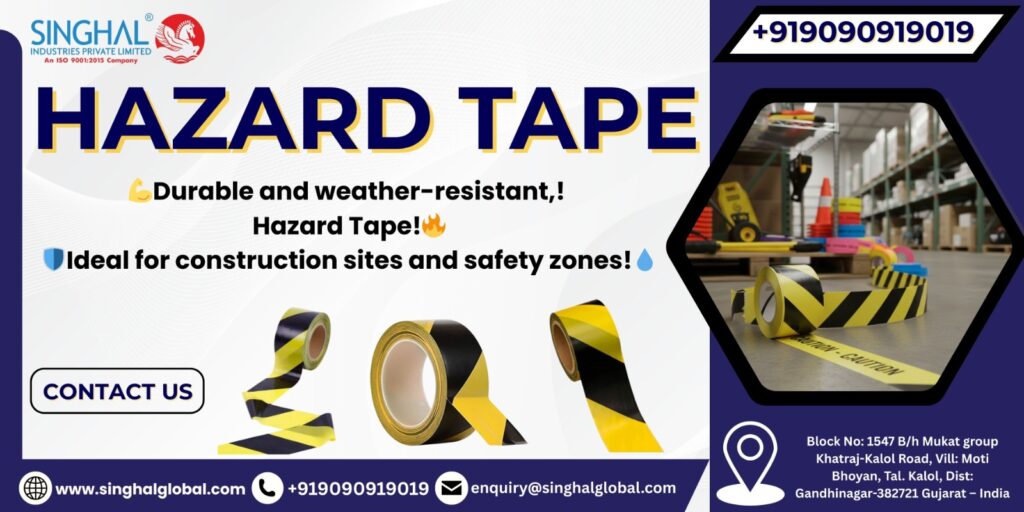
Additionally, barricade and hazard tapes may be manufactured in different types: non-adhesive barrier tape, which serves crowd control; adhesive hazard tape, which is intended for floors and edges; and even woven or heavy-duty versions for long outdoor events. Some of the most popular colors of tapes are yellow-black, which is used for general hazard; red-white for restricted or danger areas; and other color combinations for certain special meanings depending on the local standards.
There are Hazard Tape manufacturers in India and abroad that provide tapes in different widths and thicknesses, with several printing options like “CAUTION,” “DO NOT ENTER,” or even custom event branding. The organizers have the option to select rolls that are of sufficient length (mostly 50-250 meters) for covering large perimeters at low prices.
Safety Standards and Compliance
In many places, safety laws set out the way hazard tapes should be colored, patterned, and placed so that people can get the warnings very quickly. Even if the exact rules differ from one country to another, the main idea is always the same: the use of colors and patterns that are consistent and ensuring that tapes are not only clearly visible but also of a size that is proportional to the given hazard.
Event organizers are required to have their markings conform to the standards of safety that are recognized and also undertake regular checks to ensure that tapes are not in a state of damage, are not obstructed, or in the wrong place during the event. Collaborating with dependable Hazard tape suppliers in India or a reputable hazard tape manufacturer will make it more convenient to receive the products that fulfill these requirements.
Buying Hazard Tape for Events
Most event organizers are concerned with three main aspects when it comes to buying a product: quality, visibility, and cost. There is a wide variety of hazard and warning tape options available on big platforms in India, with both foreign and Indian-made rolls at different price points. While searching or negotiating, most buyers compare brands, print quality, weather resistance, and the length of the roll to get the most out of their money.
In case you are the one who is putting together a local event, you may want to specifically take a look at the Hazard tape price in Ahmedabad to figure out how much you will have to spend on the safety materials and compare the local distributors with online suppliers. Directly collaborating with well-known hazard tape suppliers in India or a bulk-producing hazard tape manufacturer can be beneficial in two ways: firstly, it can bring down the expenses, and secondly, help in maintaining the same quality throughout all the locations for large festivals or corporate events.
Conclusion
Often, event teams learn the lessons they have to learn through their experience, which is not always pleasant. For instance, when one uses very thin and low-quality tape outdoors, the tape might snap due to strong wind or sag so much that people will stumble over it. However, the use of heavy, weather-resistant barricade tape, which is also clearly printed, will ensure that the tape is visible and intact during a multi-day event.
Some simple but powerful tips include:
- Always keep extra rolls of tape at the control room or the backstage area.
- Use double-layer tape in places that are under a lot of pressure where people may push or lean.
- Let tape hold hands with the cones or poles so that it stays at eye or waist level.
- Continuously walk the venue to check the tightness of the tape or to find sections that need replacing because of damage.
When hazard tape is not seen as mere “decor” but as an integral part of a living safety system, it actually facilitates smoother safety systems and helps keep the crowd calm.
Frequently Asked Questions (FAQs)
Q1. What widths of hazard tape are commonly available?
The typical dimension of barricade and hazard tapes at events often starts from around 50 mm (2 inches) and goes up to 70 mm or even more, depending on the manufacturer. The reason why wide tapes are chosen for big venues or outdoor spaces is that they can be seen from a long distance very easily and also can draw the attention of people in a crowded environment more efficiently.
Q2. Can hazard tape prevent accidents effectively?
Hazard tape, by itself, can hardly guarantee a situation of zero accidents but definitely lessens the risk as it serves as a clear and visible warning for people and, at the same time, guides them in leaving unsafe areas. When it is used as part of an overall safety and crowd management plan, which includes barriers, signboards, and trained staff, then it can be considered a very efficient preventive measure.
Q3. Is hazard tape compliant with safety standards?
There are many products from reputable manufacturers that are built to meet the stipulated safety and color standards for communicating hazards, but strict adherence depends on selecting the correct tape and using it in the right manner. Event coordinators should seek assurance from their suppliers that the tape complies with the relevant standards and then set it up according to the established rules for placement and visibility.
Q4. Can hazard tape be used in wet areas?
Certain hazard and warning tapes are produced from materials such as PVC, LDPE, HDPE, or other similar types of plastics, which are waterproof and can be used in outdoor or damp areas. For events that are held in the rain, it is advisable to use waterproof or weather-resistant tape and make sure that the tape remains visible and securely attached even if the surface is slippery.
Q5. Who is the largest supplier of hazard tape?
Many major Indian companies play a significant role in the large-scale production and supply of both hazard and barricade tapes, and various sources that rank the most prominent companies in this industry emphasize different leaders. Instead of finding a single biggest name, it is common practice for event organizers to shortlist several suppliers of hazard tape in India and then assess them based on different factors like product range, production capacity, delivery reach, and reputation before deciding which one will be their main partner.