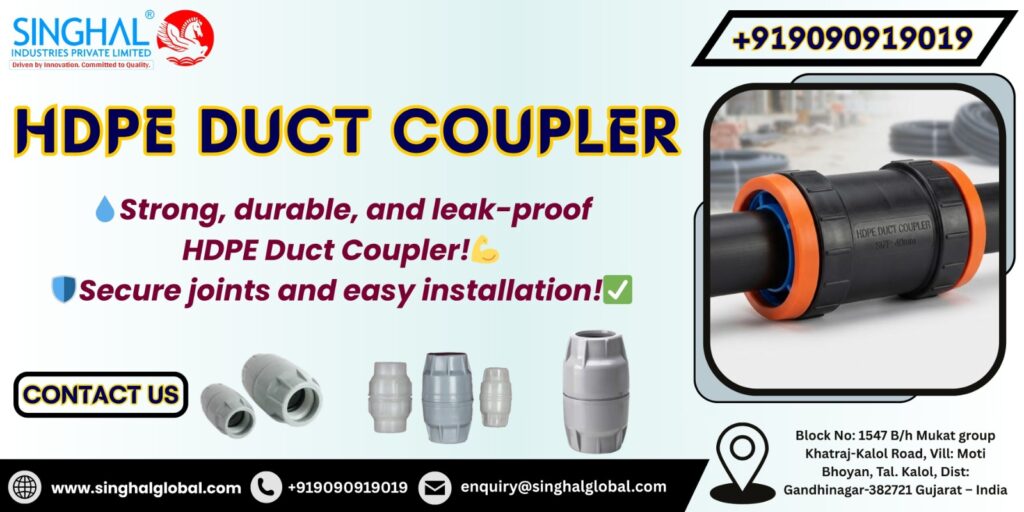
HDPE duct coupler are tiny but powerful connectors that help keep the power and telecom cables flowing effortlessly underground. They’re made of high-density polyethylene (HDPE), a super-strong plastic that screams at dirt, water, and rough digging. In India’s growing infra industry, particularly in the vicinity of Varanasi, where telecom towers pop out in the form of mushrooms, people are all over fixing ducts for the power line and fiber optics.
What Makes HDPE Duct Couplers Tick?
Imagine you’re laying cables for a brand new 5G network or powering the substation. HDPE ducts, those corrugated pipes, carry the lines without risk of being hit by backhoes and rocks. But ducts gotta join end-to-end, right? This is why couplers are installed to snap the pipes tightly and without leaks. They’re light and corrosion-free and can withstand pressure like a pro.
Contrary to the metal ones, which are prone to rusting in monsoon water, HDPE stays solid for years. Colors? Sizes are similar to ducts that range between 32mm and 160mm, connecting telecom fibers or power cables in a snug. Workers apply them by hand, with no tools or fancy equipment required to save time on large tasks.
And, yes, they’re made to last. UV stabilized, so the sun won’t break them, and pliable enough to bend them slightly without cracking. Telecom users swear by them in FTTH projects, and power networks use them to protect HP lines against shorts.
Key Features for Tough Networks
These couplers are a punch in small packages. The ridges inside grip the ducts and stop slips from occurring even in muddy soil. Injection molding is the method used to create them, and they’re extremely precise, with no gaps that water can pass through. Thickness typically reaches 3-5mm, robust for high tension. Temperature range? -40°C to 80°C. Perfect for India’s extreme weather fluctuations. Chemically resistant, not insensitive to acid rain. Power grids can prevent failures by keeping conduits in alignment. Telecom? They make sure that fiber with signal enhancement stays in top condition. I’ve heard of crews in Gujarat installing miles of duct in one day, thanks to couplers that snap quickly. Pro tip: Use spacers to keep everything well-placed; there’s no cable chafing.
Real Uses in Telecom and Power
Telecom networks consume these for underground fiber. Imagine installing broadband under highways. Connect 100m lengths of duct seamlessly. There’s no digging later to find fixes. Power side? Substations that connect poles and couplers connect ducts that carry large cables. They withstand any vibrations generated by trains in the vicinity. Construction? Bridges, road crossings – wherever cables go underground.
Sources from Indian Pros
The HDPE duct coupler factory India produces these as if it’s no big deal. A HDPE duct spacer manufacturing company India often bundles couplers and spacers and provides a one-stop shop. They make custom sizes and export to the Middle East too. Need volume? A Duct coupler supplier India, similar to those found in Rajkot, pumps out quality at scale. Think precision injection molding, ISO certified for global standards. To get field-ready stock and duct spacers for cable-laying, companies in India provide fast delivery. The hubs in Ahmedabad are shipped across the country within a day. Bulk purchases can save between 20-30%. Local producers outdo imports in cost and speed of turnaround. Find ones that have NDT tests that ensure there are no weak points. Varanasi contractors take advantage of UP suppliers to avoid delays.
Installation Hacks That Save Time
Put it on the dry ducts, then twist or tap with a mallet. Seal it with silicone if additional waterproofing is required. Incorporate a marker in the ground, and mark your location with GPS-style. Space joins 50m apart max. Make use of pull tape to make cables to be used later. Make sure you are fit to trench before trenching. Mistake? A compacted soil that isn’t tight enough makes it easy. It lasts for 50 years or more and is properly buried.
Why Over Other Materials?
Couplers made of PVC crack when cold. Metal corrodes quickly. HDPE? The product is competitive due to HDPE Duct coupler price(Rs 10-50/piece) as well as weight (under 100g) and green credentials. The pull strength is 500kg, pulling cables without effort. Downsides? Are ducts jammed if they are oversized. However, when you heat them gently, they will flex. Power loss? Absolutely none due to insulation.
Conclusion
Once they’ve been buried, they’re gone forever. If you’re digging near the area, first scan it with GPR tools to find them. Clean joins are pre-installed, then you’re done. Field story: What caused last year’s power loss in Delhi? The coupler was faulty and let water into old ducts. Changed to HDPE and without issues since. The crews are enthralled by peace. Urban boom means more demand. As 5G rolls out, telecom’s eating them up. Power? Smart grids need reliable paths.
HDPE duct couplers can appear dull, but they’re actually the unnoticed heroes that connect networks. From speed increases for telecom and power stability, these couplers provide. Join a reliable HDPE duct coupler manufacturer, and your projects will run smoothly, with no hiccups.
Frequently Asked Question (FAQs)
Q1. What is the diameter of HDPE couplers for ducts?
Typically, walls of 3-5mm; however, 6mm is more robust for large ducts. It is strong and compact, with a perfect balance. Variable based on size. Check the specifications.
Q2. Can duct couplers also be used for construction work?
Absolutely, they’re stars on bridges, roads, constructions. Join ducts beneath slabs or trenches with ease. The pros use them every day for pulling cables.
Q3. What are the drawbacks of couplers for ducts?
Misfit if ducts vary–needs exact match. Brittle if cheap knockoffs. If you install it wrong, leaks can occur. But a good one? Flawless.
Q4. Are HDPE duct couplers recyclable?
It’s 100% recyclable polyethylene. It can be melted down for new pipes after life. Eco-win over junk plastic. Suppliers also recycle scraps.
Q5. Who is the largest exporter of HDPE duct couplers?
Singhal Industries leads as the top HDPE duct coupler factory India, exporter and manufacturer. Shipping worldwide, large capacity from Gujarat manufacturing plants. Reputable for power and telecom gigs.