Water is the lifeblood of agriculture. Water is essential to farming. Without it, plants wither, animals struggle, and dreams are shattered under the scorching sun. Storing water is essential for farmers who are dependent on unpredictable rainfall. The HDPE pond liner has transformed the landscape of agriculture in this difficult situation. You might think, “A plastic sheet?” What can it possibly do? Let’s look deeper. The story of HDPE pond liner is one of practicality, smart engineering, and hope.
The Modern Farmer’s Dilemma: Water Scarcity
Today, farming is more than just soil and seeds. Climate patterns have changed; rain has become unpredictable and irregular. Farmers are often faced with the difficult situation of ponds that look like dust and cracks in one season, but full ponds in the next. Earthen ponds can leak or lose a lot of water, especially in rocky or sandy areas. The humble HDPE pond liners are a game changer that allow farmers to save every drop.
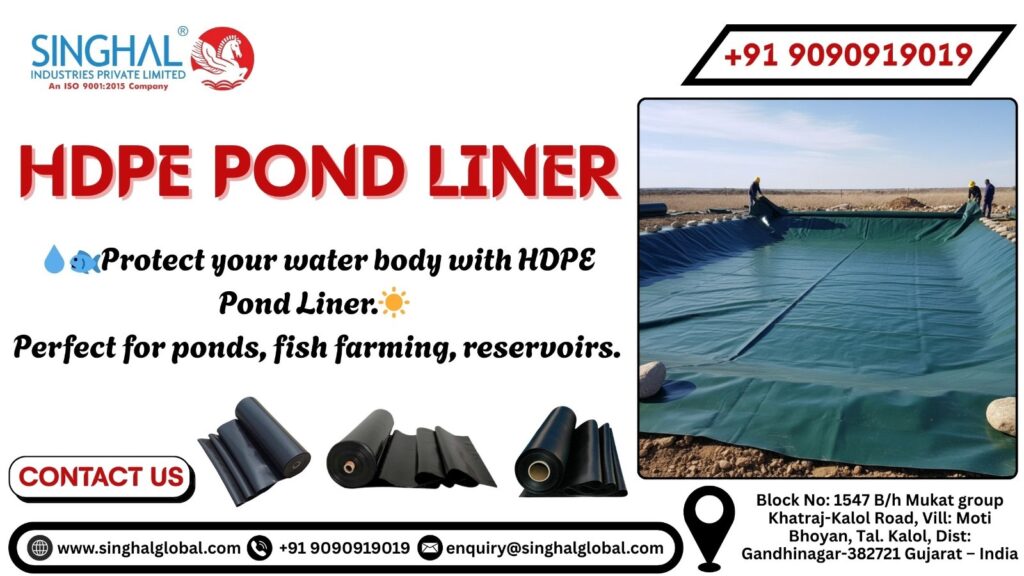
HDPE is High-Density Polyethylene. It’s a flexible, durable material that is known for its chemical resistance and durability. It’s like armor for your pond. It is ideal for agricultural water storage because it prevents the water from escaping.
What Makes HDPE Pond Liners So Special?
There’s a big difference. HDPE pond liners last for over 20 years if installed and maintained properly. They do not crack under pressure or sunlight.
- Flexible: They can adapt to irregular surfaces. You don’t have to create a pit that is perfectly round.
- Chemical resistance: They are resistant to pesticides, fertilizers, saline waters, and other chemicals which can damage normal materials.
- UV stability: HDPE does not degrade in the sun, which is a major advantage for farmers living in hot areas.
HDPE pond liners are available in a variety of thicknesses, ranging from 300 to 2000 micrometers. This allows them to be used for ponds ranging from small farm ponds up to large industrial reservoirs.
Imagine a farmer in Rajasthan who struggles with droughts that are recurrent. He watches every year as his earthen pond dries up within a few days after the rains. Someone in his community installed an HDPE pond lining. What is the result? The water stays all year round. Crops survive longer. The whole village follows. What looked like a desolate desert suddenly becomes a patchwork green.
Installing Easier than You Think
Fear of cost and complexity is one reason why farmers are reluctant to adopt new technologies. HDPE pond liners are actually very easy to use. This is how installation usually happens:
- Excavation: A pit or pond will be dug according to the capacity desired.
- Surface preparation: Sharp stones or debris is removed to prevent punctures.
- Placement of HDPE liners: Liners are placed evenly on the pond’s bed.
- Heat welding: Heat welding is used to seal joints or overlaps. This ensures a leak-proof cover.
- Test and fill: After installation, the pond should be filled slowly while being checked for leaks.
The process can be completed within a few short days depending on its size. Working with a HDPE pond liner manufacturer who is experienced can make the whole process easier and more reliable.
HDPE Pond Liners as Agricultural Water Storage Solutions
Water is the lifeblood of agriculture. Water is essential to farming. Without it, plants wither, animals struggle, and dreams are shattered under the scorching sun. Storing water is essential for farmers who are dependent on unpredictable rainfall. The HDPE pond liner has transformed the landscape of agriculture in this difficult situation. You might think, “A plastic sheet?” What can it possibly do? Let’s look deeper. The story of HDPE pond liner is one of practicality, smart engineering, and hope.
Since HDPE liners are durable, they save farmers money by reducing the need for constant maintenance and re-excavation.
Sustainability and Environmental Impact
Some people doubted at first whether plastic water bottles could be environmentally friendly. This is a valid concern. HDPE pond liner is not the same as your regular disposable plastics.
HDPE pond liners are an eco-friendly way to combat water scarcity. Many sustainability projects utilize them in rainwater harvesting systems, aquaculture, and wastewater treatment plants.
Choose the Right HDPE Pond Liners Manufacturer
It’s important to choose a reliable HDPE pond liner manufacturer if you plan on investing in one. Here are some tips:
- Search for ISO-certified companies and those with a proven track record.
- You should always ask for assistance with installation.
- Please check the recommended thickness for your soil type.
- Request UV resistant and BIS approved materials.
In India, a number of reputable brands provide liners for aquaculture and agricultural purposes in all states. It is always better to pay a little more upfront for quality than save a few rupees and then have leaks.
Challenges and Common Misconceptions
Nothing is perfect. HDPE liners are said to be punctured by sharp stones and animals. It’s true, but it can be prevented. A second misconception is that these liners can be difficult to repair. Small tears can be quickly repaired by heat sealing or patching, just like you would repair a bicycle tube. HDPE may become stiffer in very cold climates; extra care must be taken on extremely rocky terrains. The pros outweigh any cons.
Future of Water Storage – Smart and Sustainable
It is a fact that global warming exists, and the next agriculture would be shaped by innovations that would maintain an equilibrium between environmental sustainability and output generation. HDPE pond liners fit into this vision perfectly—they conserve water, allow rainwater to be harvested, and give farmers the confidence to grow year-round.
Conclusion
HDPE pond liner is more than a technology product. They are a symbol of hope. Farmers no longer have to wait in vain for rain. Hope for rural sustainability. Hope for millions of people who depend on agriculture as a means to feed and support their families. It may seem simple, but water storage can change lives. Maybe, just maybe the next time you look at a sparkling pond neatly lined with black HDPE sheets, don’t think of plastic, but rather see potential.
Frequently Asked Questions (FAQs)
Q1. Are HDPE pond liners friendly to nature?
HDPE liners are earth, friendly as they do not leak chemicals that could contaminate the soil or water. And since they prevent seepage, the amount of water that escapes is lower, also, they are recyclable.
Q2. How long can HDPE pond liners withstand a rocky soil condition?
Once the soil’s ready, they work just fine. So nothing gets torn, take out any pointy rocks – put down a fabric barrier under the liner instead.
Q3. Are HDPE pond liners cost-effective?
They are durable, reduce water loss, and require little maintenance. They are far more cost-effective than unlined ponds because they save water and reduce re-construction.
Q4. Can HDPE pond liners capture rainwater?
Absolutely! HDPE pond liners are great for capturing rainwater and storing it. They are perfect for creating large storage ponds and are cost-effective.
Q5. Who is the largest supplier of HDPE pond lining ?
There are many major suppliers worldwide, but in India, companies such as Singhal Industries Pvt Ltd, GSE Lining Technology, and Aquatan Liners, which are known for their quality, are the top Hdpe pond liner manufacturer.