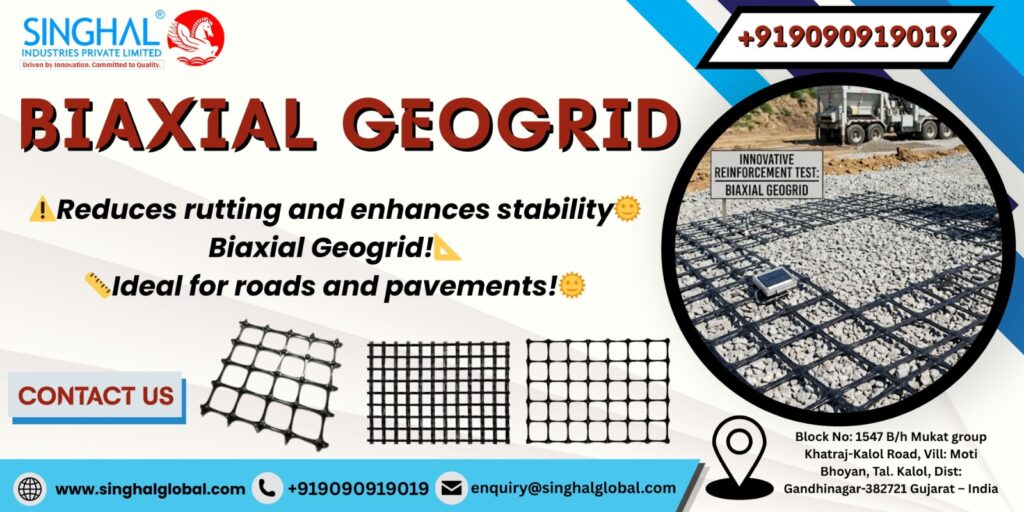
High performance biaxial geogrids are becoming the silent heroes of modern infrastructure, High-performance biaxial geogrids are becoming the unsung heroes of contemporary infrastructure projects, particularly when construction takes place on soft, wet, or otherwise poor ground. Where other materials might fail in such conditions, high-quality biaxial geogrids might allow for years of excellent performance before failure occurs.
What Is a Biaxial Geogrid?
A biaxial geogrid is a grid-shaped polymer material with ribs present in both longitudinal and transverse directions. Biaxial geogrids offer tensile strength along both axes, providing a means of distributing loads more efficiently through soft ground without the risk of rutting, settling, and shear failures.
The most common type of biaxial geogrid used by contractors is PP biaxial geogrid. PP refers to the material of which the product is made, polypropylene. The choice of material is made because of polypropylene’s resistance to chemicals and biological activity, its high tensile strength at low elongation ratios, and overall durability even when used buried underground.
But recently, there have been growing calls for biaxial geogrid India because of the efforts by the contractors to make good roads using poor soils. How then does one distinguish between a “high-performance biaxial geogrid” and an “ordinary biaxial geogrid”? The key point here is the higher tensile strength, higher efficiency at the junction, consistency in size of apertures, and strength of the material under loading.
How High Performance Biaxial Geogrids Work
To put it plainly, when vehicles pass over roads or yards, the vehicle loads exert pressure on the ground surface which then transfers the loads into the pavement base and subgrade layer. This means that if the underlying soil is poor in quality, deformation will soon start.
A high performance biaxial geogrid:
- It is interlocked with the aggregate (stones) placed above it.
- Provides a stiff composite structure.
- Distributes the load over a larger surface area of soil.
- Decreases the deformation of the subgrade.
The reason why geogrid does not allow the wheel load to penetrate deep into the subgrade is that geogrid helps distribute the load laterally. Thus, there is decreased pressure on weak subgrade soils, resulting in low settlements, no rutting, and long-lasting pavement.
PP biaxial geogrids should have high tensile strength, usually in the tens or even hundreds of kN/m, depending on the grade of the product. The junctions are also supposed to be highly resistant because there the force moves from one rib to another. Poor junctions cause poor performance as the grid becomes ineffective under heavy loads.
Uses under Tough Conditions
“Tough conditions” may be a broad phrase, but generally, in practical scenarios, it would refer to any one or more of the following:
- Very low CBR subgrade.
- High water table or fluctuating water table.
- Expansive clay or soft soil.
- Reclaimed/filled ground with varying qualities.
- High vehicular loads from heavy-duty traffic.
In such scenarios, there are numerous applications for high-performance biaxial geogrids:
- Underneath flexible pavements on roads and highways.
- For the construction of roads where the soil is poor but finances are tight.
- Underneath rail tracks to prevent fouling and settlement.
- As a base reinforcement for industrial sites, logistics parks, and harbors.
- For crane/underground work platforms.
- Underneath embankments on soft ground.
When analyzing the present scenario of Biaxial geogrid India products, there are various types of products designed to meet the requirements, right from weaker grades for minor roads and pathways up to stronger grades meant for very heavily loaded platforms. This means that the same concept of PP biaxial geogrid has been modified according to different requirements.
Influencing Factors for Biaxial Geogrid Pricing
Many internet users type “biaxial geogrid price” when searching for this product online and are shocked by its fluctuation. Why can’t we find the price of biaxial geogrid simply and directly?
- Tensile strength: Tensile strength is one of the major determining factors in pricing.
- Material: PP biaxial geogrid is popular, but other polymer materials can also be considered.
- Mesh size: Mesh size determines which type of aggregate it interlocks with.
- Roll length and width: Length and width influence the logistics fee.
- UV stabilization: UV stabilization can help prevent degradation under sunlight.
- Order quantity and distance: Order quantity and supply distance impact costs.
In India, contractors tend to make trade-offs between Biaxial geogrid price and their lifetime benefits. It is worth noting that a little bit of extra money spent on an excellent geogrid initially can result in less aggregate thickness, lower transportation costs, and much more longevity of the paved surface. In 10 to 20 years, this could translate into tremendous savings and virtually no problems at all.
Why Choose PP Biaxial Geogrid for High-Performance Applications?
But then comes the question: Why is PP biaxial geogrid such a common material used in construction, and is it always the best choice? Well, there are many reasons for its popularity:
- PP materials have high tensile strength with low strain to prevent rutting at an early stage.
- Chemically resistant in the usual soil environment.
- PP geogrid shows low creep properties over a long period of time to retain the load distribution performance.
- The lightweight and convenient to transport on-site.
- Cost-effective compared to other sophisticated polymers.
India Biaxial Geogrid Market and Manufacturers
The India biaxial geogrid market is quite lively at present. Apart from a few domestic manufacturers, there are some foreign suppliers of PP biaxial geogrid, along with other geogrid-related products. These geogrids can be used for:
- Economical rural road construction and pavers.
- Highways and state roads.
- Industry and mining structures.
- Retaining walls and slope stabilization (often used with other types of geosynthetic materials).
This variety of factors highlights the need for the consumer to look not only at the Biaxial geogrid price but also at:
- Certification (tensile strength test, junction efficiency, aperture).
- Conformity to applicable norms.
- Manufacturer’s experience in handling similar constructions.
- Technical assistance and design advice.
Established multinational firms can provide excellent technical assistance and extensive product lines, whereas specialist Indian manufacturers can offer greater flexibility or competitive pricing.
Conclusion
It is advisable that before embarking on any project, you first identify a few reputed biaxial geogrid manufacturers, compare their prices and properties, and finally discuss your project requirements with their technical experts. This would help you achieve a proper balance between strength and cost.
Frequently Asked Questions (FAQs)
Q1. Can Biaxial Geogrids be Used for Road Building?
Yes, such grids are widely employed in road building to reinforce weak soils, prevent rut formation, and decrease the required thickness of stone layers.
Q2. What is the Life Cycle of Biaxial Geogrid?
With proper installation and selection, such grids have a lifespan equal to that of a road structure itself, i.e., they can last from 20 to 30 years or even longer.
Q3. How Strong Are Biaxial Geogrids?
Strength is measured in kN/m; commonly used geogrids have a value from about 20 kN/m to more than 80 kN/m.
Q4. What Is the Load-Bearing Capacity of a Geogrid?
Geogrids increase soil bearing capacity through cooperation with aggregate materials.
Q5. Who is the largest manufacturer of Biaxial Geogrid?
In fact, there are many leading global and Indian producers of biaxial geogrids; but, rather than going for the largest manufacturer like Singhal industries private Limited, you should go for the best manufacturer based on the quality and test reports.