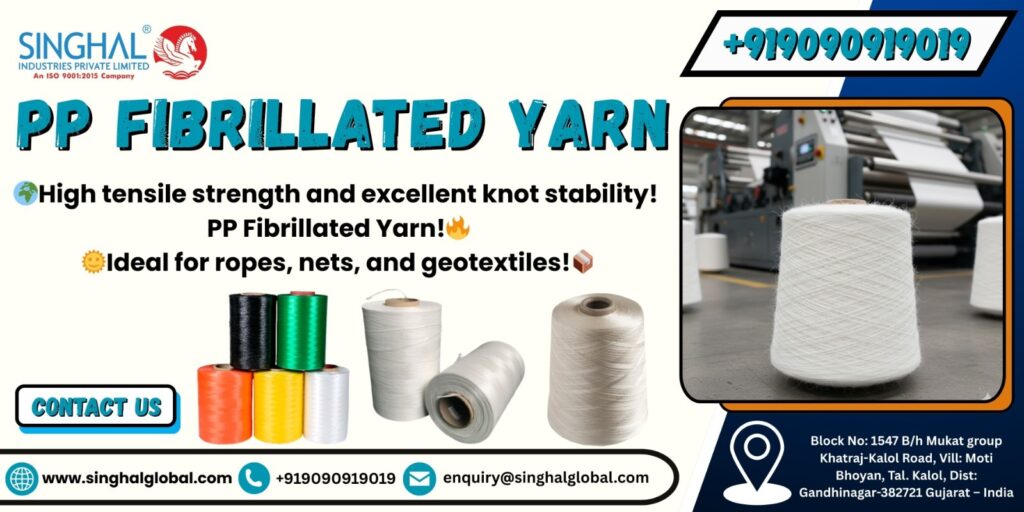
PP fibrillated thread is a versatile, tough polypropylene yarn that powers many products in our everyday lives. From woven sacks to ropes to carpets and geotextiles. Its combination of strength, lightweight, and durability makes it the preferred choice in India and around the world for industries that need reliable performance at reasonable costs.
What is PP Fibrillated Yarn?
PP fibrillated thread is made of polypropylene strips that have been stretched, then “fibrillated,” meaning they have been slit into a web of fine fibers rather than remaining as a single flat strip. This web structure increases surface area and creates tiny fibers that behave like a bundle rather than a flat tape. This unique structure provides the yarn with better grip, better bonding to fabrics, and an improved load distribution when compared to flat yarns. It looks like a fine mesh when opened up by your fingers. This mesh-like appearance is what makes the yarn so useful for different applications.
Why PP, Fibrillated Yarn is Necessary
Polypropylene boasts of various advantages such as low density, chemical resistance, and resistance to many acids and moisture. When it is converted into a fibrillated yarn, it becomes more attractive for the outdoor and heavy, duty use because of its structure. As a leading producer of fibrillated yarn India, we can say that fibrillated yarn has been a very important material that industries like packaging, agriculture and construction have been using. The ecosystem has been created by the Polypropylene yarn manufacturers comprising various products: fibrillated yarn, polypropylene filament yarn, and multifilament yarns to meet the different needs of industries.
It’s easy to underestimate the importance of plastic yarn because it is “just plastic yarn.” But in reality, it can make all the difference between a bag that breaks mid-load and one that can hold tons of material without any fuss.
How to Make PP Fibrillated Yarn
PP fibrillated yarn: PP granules are melted, then extruded to thin tapes. The tapes are stretched to improve their tensile strength and also reduce thickness. After stretching, the strips are passed through a unit of fibrillation where blades and rollers with patterns create fine cuts that form a web of filaments. The tape can then be opened up to form a mesh structure. It is then twisted into yarn packages or further processed.
Key Properties and Benefits
PP fibrillated yarn is unique because it combines properties that are rarely found in one material. It is ideal for fabrics and ropes that need to carry loads. It is resistant to friction and rough usage. It is resistant to chemicals and moisture, so it can be used in environments that are wet, dirty, or chemically exposed. It is easy to process—easy to weave, knit, or twist into various constructions.
When you compare a high-quality, fibrillated tape to a cheap, flat tape, it is easy to tell the difference. The fibrillated tape feels “alive,” grippy, and more trustworthy, while the cheaper flat one feels slick and untrustworthy. This small tactile clue can often predict how the two will behave in the field.
Applications Across Multiple Industries
PP fibrillated yarn is a real winner when you consider how many industries rely on it to perform and be safe.
Packaging and FIBC Bags
PP fibrillated thread is used widely in woven sacks, FIBC bags (jumbo bags) that transport grains, cement, chemicals, and fertilizers. The Polypropylene filament yarn has a better interlocking structure, which improves tear resistance and the distribution of heavy contents. A single bag that is torn can cause a mess in a warehouse. It could also lead to product loss and safety risks. The number of “bursting at seam” incidents drops dramatically when sacks are made from high-quality fibrillated yarn. This is a real relief for logistics teams.
Agriculture and Horticulture
PP fibrillated yarn can be used in agriculture for:
- Support twines for crops
- Trellis nets
- The baler twine is used to bundle hay and straw
The resistance of the rope to chemicals and moisture makes it perfect for greenhouses and fields. Farmers love that it isn’t as brittle and can handle rain and sun, but still remains light.
Construction and Geotextiles
Fibrillated yarn is used to make woven geotextiles and safety nets. The fibrillated fiber is used in geotextiles for soil separation, reinforcement, and filtration, particularly on road and embankment construction projects. Quality is important. It may not be immediately apparent that a slightly inferior-quality yarn will fail, but after a few years, it is noticeable. Many engineers prefer to work with trusted polypropylene manufacturers who have proper test certificates.
Carpets, Rugs, and Industrial Textiles
Fibrillated thread is used in industrial fabrics and carpet backings where toughness is preferred over softness. The strength and dimensional stability of the fiber help carpets maintain their shape, even when they are subjected to heavy foot traffic. Funny thing: People admire the softness and design of a rug, but they rarely consider the backing yarn. It is this unseen thread that keeps everything in place. This hidden hero can be a PP fibrillated yarn.
Ropes and Sports Gear
Due to its high strength-to-weight ratio and resistance to abrasion, PP fibers are used in the production of fishing nets and sports nets. The fibrillated yarn is perfect for these products because they need to be able to bend repeatedly without snapping. The yarn is used in a variety of applications, from boat mooring ropes to cricket nets. It plays an important role not only for safety but also for performance.
Manufacturers of Polypropylene Yarn and Fibrillated Yarn in India
The Fibrillated yarn India ecosystem is mature in India. Several polypropylene yarn producers produce PP filament yarn, polypropylene fibrillated yarn, and multifilament for both the domestic and export markets. Several manufacturers are specialized in yarns used for woven sacks, FIBC, and technical textiles.
Buyers often consider the following when choosing a supplier:
- Denier and strength of the persistent denier
- Colorfastness and UV stability for outdoor use
- Customization of twist, package size, and shade
- Conformity with industry standards
It is not uncommon to find a contradiction in the market. Everyone claims “premium” quality, but prices vary widely. Going for the lowest price is risky in real projects. A few percent savings on yarn could mean a lot of headaches if bags or fabrics tear.
Frequently Asked Questions (FAQs)
Q1. How is PP fibrillated yarn stronger than a simple one?
In fact, PP fibrillated yarns are stronger than flat yarns because their fibrillated structure separates the tapes into a fine strand network, which significantly improves load distribution and tearing resistance.
Q2. Can PP fibrillated yarn be used in heavy, duty areas?
Definitely, PP fibrillated yarns are the major choice for heavy, duty areas such as FIBC bags, carpet backings, ropes, and nets. The UV-stabilized, high-tenacity, and other grades have been developed specifically for outdoor and industrial applications. They are a reliable choice when failure is not an alternative.
Q3. How can PP fibrillated yarn improve fabric adhesion?
The fibrillated weave coming from the yarn creates more contact points in the fabric. Hence the mechanical interlocking of yarns and coatings is greatly enhanced by this. The strengthened bonding resulted thus in higher tear resistance, dimensional stability, and coating adhesion of woven sacks and geotextiles.
Q4. What industries commonly use PP fibrillated yarn?
Industries that use industrial textiles include carpets, ropes, sports nets, and carpets. The versatility of the fabric extends to automotive interiors, technical areas, and other areas that require durable lightweight fabrics.
Q5. Who are the largest manufacturers of fibrillated yarn?
There are many players in the global market for fibrillated fibers. India and China have significant production capacity that serves both domestic and international demand. The major producers are a variety of polypropylene and technical textile manufacturers. Trade platforms list these companies as well as other large Chinese and Indian firms.
PP fibrillated thread may not be glamorous, but it is a reliable and strong material that can be used in many industries.