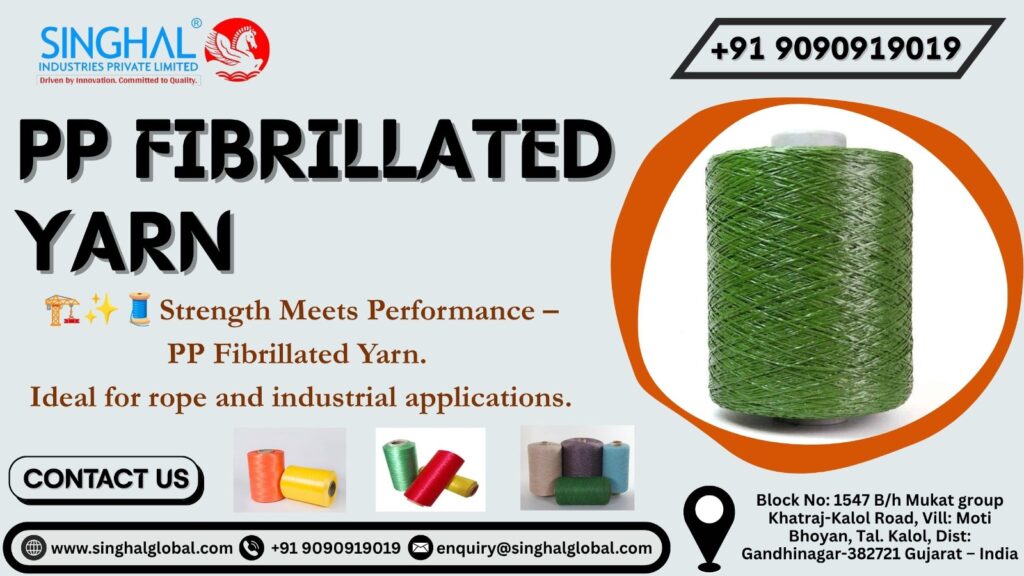
The industry of textiles keeps evolving with faster machines, better processes and fabrics that can meet particular needs. In the midst of all the fabrics that are riding the wave, PP fibrillated yarn has become an efficient and flexible solution. It’s short for polypropylene fibrillated yarn, this product combines the simplicity of a yarn with utility. It’s light, cheap and extremely versatile. In India and across the globe the manufacturers of filaments and polypropylene yarn products are increasingly utilizing fibrillated yarn to make packaging geotextiles, agricultural textiles, geotextiles as well as some household textiles. This article explains what PP fibrillated yarn really is, the process by which it’s produced and what its importance is now and how it is shaping the current production of textiles.
What exactly is PP the fibrillated yarn?
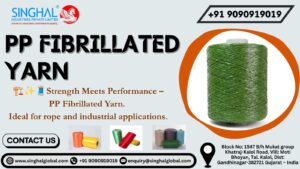
PP fibrillated yarn is created as a slit or spun polypropylene film or tape which is mechanically ripped into a net-like shape that creates tiny fibrils – tiny ribbon-like strands that are connected in intervals. These fibrils behave in a different way than seamless continuous filaments because they have a surface that is textured which increases friction and the interlocking process in the event that they are weaved or knitted. It’s a lightweight and breathable, as well as water-resistant material suitable for numerous industrial and commercial applications. Fibrillation alters a simple polypropylene tape or film into a multi-purpose yarn that has a larger surface area and gripping force.
What it is that’s being produced and why it’s important
The method of production is important because it affects the performance of the yarn. The Polypropylene filament yarn of polypropylene is created by extruding the polypropylene that is molten through spinnerets cooling the extrudate and drawing it to align on the chain of polymer. For fibrillated yarn, the manufacturers typically start with slit films or tapes derived by extrusions of polypropylene. These films are broken or mechanically fibrillated the process creates ribbon-like fibrils, and also adds texture to the surface. The amount of fibrillation, the size, and thickness affect the final properties of the film, such as strength, elongation, as well as the abrasion resistance.
Applications that transform industries
PP fibrillated yarn is able to find its way into a broad variety of uses that have increased in the last few times. For instance, in the field of packaging bags and woven sacks made of polypropylene yarns are essential for the packaging of agricultural products as well as cement and other granular materials. The texture of fibrillated yarn India increases inter-yarn friction making sturdy, tear-resistant bags which maintain their shape and protect the contents.
Why buyers and producers pick polypropylene-based yarns
The manufacturers of polypropylene yarn have highlighted the advantages of this material. Polypropylene is among the cheapest polymers to use for textile usage. It is light and has a low absorption of water and provides excellent chemical resistance. Furthermore, when it is processed in the form of fibrillated yarn or filament it can provide adequate tension strength for many industrial applications.
On the market, “fibrillated yarn India” is a term that is frequently searched that reflects the strong demand in India and a strong local manufacturing capacity. India is home to a large array of polypropylene yarn makers that supply local mills as well as international buyers. The country’s packaging and textile industries have successfully adapted to making use of polypropylene-based solutions to meet large-scale, low-cost requirements -which makes India an important player in the global fiber-related yarn production.
Performance characteristics in everyday speech
Some people are concerned that low-cost materials are of low-quality. This isn’t necessarily the case when it comes to PP fibers. It’s certainly not as robust per denier as high-tenacity polymer, however, its quality is sufficient for a variety of applications. The fibrils increase the surface area and increase friction, increasing fabrics’ mechanical interaction as well as its resisting slippage. Polypropylene filament yarns possess excellent properties for elongation and recovery which means that they can withstand stretching and bending without any immediate failure. They dry quickly and resist mildew. This is beneficial in humid and outdoor conditions.
Sustainability issues
Sustainability is a popular topic in the world of textiles, and polypropylene comes with both cons and pros. On the plus side, it is lightweight and reduces the use of energy when transporting. It’s chemically inert and may be reused where recycling and collection systems are in place. Some manufacturers offer recycling post-consumer (PCR) yarns made of polypropylene which reduce virgin polymer use.
Economic impact: Why prices and availability are important
The affordability of polypropylene yarn is a key factor in its popularity. The cost of raw materials for polypropylene tends to fluctuate in line with the global petrochemical market; however, the material is less expensive than other options. This cost advantage is reflected in lower prices for final products such as geotextiles and sacks as well as agricultural fabrics. This is essential for high-cost industries such as food packaging or construction.
The expression “Polypropylene yarn manufacturers” is pertinent to this situation. A competitive supplier base helps to keep prices low and assures availability. In India the high concentration of manufacturing companies, coupled with the strong demand for domestic goods allows for quick lead times that are competitive and a variety of order sizes. For buyers outside of India the infrastructure for exports in India and lower costs for labor can result in cost-effective sources for fibrillated yarn and other products.
Practical advice for designers and convertors
If you’re planning to use PP fibrillated yarn to be used in a task, these are a few useful things to take into consideration. Select the appropriate fiber width and fibrillation levels The tapes that are narrow with high fibrillation result in softer, more flexible fabric hands and wider tapes offer more bulk and rigidity. The yarn’s tensile and elongation properties with the anticipated load for the product like the weight of sacks for stacking or load-bearing specifications for geotextiles. Think about UV stabilization additives to be use for outdoor use and inquire from suppliers about recycled-content alternatives if sustainability is an important consideration.
Be aware of the finishing process: Calendaring and heating can affect the hand as well as the dimensional stabilities of textiles created with Fibrillated yarn India. It is important to work closely with manufacturers of polypropylene yarn or converters for smaller-scale trials prior to production runs. The success of projects is often dependent on adjusting machine settings and final steps that cater to the specificities of fibrillated yarn.
Future trends in the market and forecasts for future direction
The market demand for PP fibrillated yarn is high when cost-performance is important. The main drivers for growth are the growing demands for agriculture, the construction of infrastructure projects that require geotextiles, as well as the constant demand worldwide for low-cost packaging materials. The latest developments in polymer mixing UV stabilizers, UV blending and recycled-content feedstocks will certainly affect the next phase that will be developed for the product.
In the manufacturing aspect improved fibrillation techniques and more precise tape extrusion techniques can result in yarns with a tailored performance. We could also see more hybrid structures that combine fibrillated polypropylene and other fibers to improve mechanical properties, while reducing costs.
Conclusion
PP fibrillated yarn may not be attractive, but it is vital. It is a solution to a problem in which affordability, light weight and practical performance meet. If you’re in the field of packaging agricultural, civil engineering or any other general textile conversion the fibrillated polypropylene fiber is an efficient, flexible material selection. As manufacturers-especially Polypropylene yarn manufacturers India-continue to refine production and incorporate recycled content, fibrillated yarn will likely remain a backbone material of many industrial textile products.
Frequently Asked Questions (FAQs)
Q1. What’s PP fibrillated yarn for?
PP fibrillated yarn can be used to make knitted and woven packaging such as bags and sacks geotextiles to control erosion and drains; agriculture textiles, such as bale wraps and shade nets as well as certain indoor products such as carpets and mats backings.
Q2. What are the benefits from PP fibres?
Benefits include low price and light weight, water resistance, fast drying and the ease of processing. The fibrillated structure expands the surface areas and reduces friction enhancing the interlock of fabric and decreasing slippage. Chemically, it’s resistant, and suitable for outdoor use in the event that it is UV-stabilized.
Q3. Are PP fibrillated yarn durable and strong?
Sure, PP fibrillated yarn has excellent durability for a variety of applications, even though its Tensile strength per denier is less than other high-performance fibers such as nylon. For use in geotextiles, packaging and agricultural fabrics the toughness, elongation and resistance to moisture make it a long-lasting option.
Q4. Is PP fibrillated yarn economically priced?
Yes. Polypropylene, as a polymer, is usually cheaper than alternatives and fibrillated yarns can be a good value both in terms of material costs and in processing. For large-scale, high-cost items like geotextiles and sacks, fibrillated PP yarn is typically the most economical option.
Q5. Who is the largest exporter of PP fibrillated yarn?
Singhal industries Pvt Ltd historically has been a major exporter of polypropylene which includes various types that are make from polypropylene. India however is also a major exporter and producer, particularly in markets that require price competition and supply in the region.