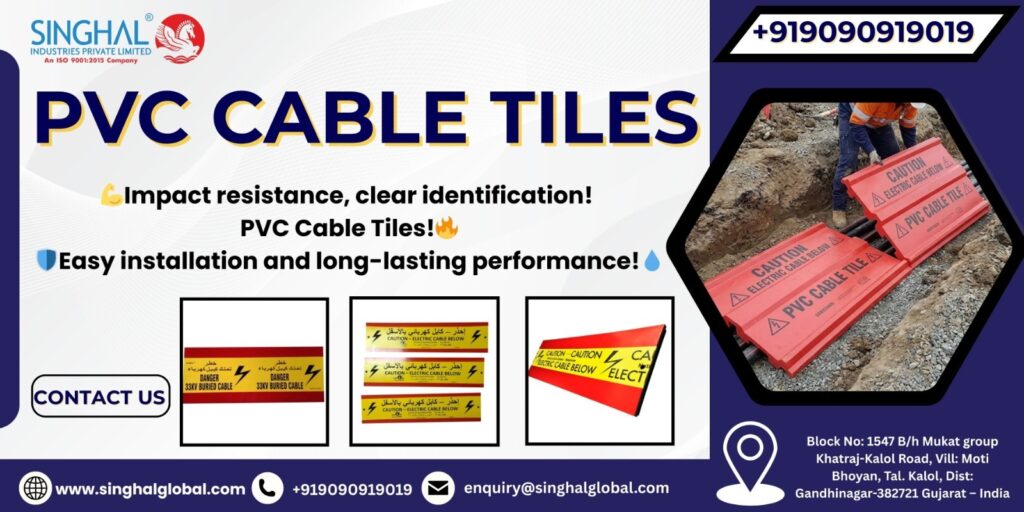
Hey, everyone! Ever wondered how these huge electrical systems in factories or cities stay secure from the chaos surrounding them? It’s like cars speeding through, heavy machinery breaking down, or just walking around in a normal way. This is the place where PVC cable tile enter the picture. These tiny things are the untold heroes of protecting electrical infrastructure. They’re made from durable PVC material that is designed to protect underground cables from harm. In this post, we’re exploring the reasons PVC cable tiles can be a game changer and how they function, and the reasons to consider the option for the next time you’re working on a project. Also, we’ll throw in real-world advice and must-know questions at the close of the article.
Let’s Get Started with the Fundamentals
PVC is the abbreviation for polyvinyl chloride, which is a highly durable plastic that’s impervious to chemical, water wear, and tear. Cable tiles are flat tiles that you put over your buried cables. Consider them an extra layer of protection to protect your cables. These tiles aren’t just there for display; they also stop accidental digging and crushing caused by loads and protect you from rodents or the harsh elements. In India, which has an infrastructure that is flourishing with highways, metro projects, and smart cities, tiles are appearing all over the place.
Why PVC Cable Tiles Beat Traditional Protection Methods
Let’s imagine this: You’re putting power lines underneath an active road. Concrete slabs or covers made of metal? They’re heavy, costly, and difficult to set up. PVC cable tiles? As light as a feather, easy to join, and much cheaper over the longer term. They are available in standard sizes, such as 250mm x 150mm or larger custom sizes, with bright yellow tops for maximum visibility. The yellow hue shouts “Caution: cables below!” to machines and workers.
The biggest benefit is the load-bearing capacity. They can carry up to 5 tones of load per square meter. This is perfect for industrial floors or roads. They’re also non-conductive, meaning there’s no chance of a shock when you’re doing maintenance. Furthermore, they’re UV stabilized, which means they won’t crack in the scorching heat of India. They are tested by the manufacturers against standards such as IS 14927 to ensure they will last for 20-30 years underground.
The Growing Demand in India’s Electrical Sector
India’s electrical infrastructure is expanding. With initiatives such as the Revamped Distribution Sector Scheme (RDSS) and the goal to achieve 500 GW of renewable energy by 2030, underground cable is the only way to go. The aerial wires can be dirty and susceptible to interruptions caused by birds or storms. PVC cable tiles are secure and reliable.
Consider urban areas such as Mumbai and Delhi. Metro expansions have buried miles of high-voltage cables every day. Factory owners located in Gujarat and Tamil Nadu use them for internal protection of wiring. Even telecom giants such as Jio or Airtel recommend these products for fiber optic cables. The sales have exploded. The demand for cable protection is estimated at Rs 5000 crore each year, according to reports from the industry.
If you’re looking for the highest quality, search for a reliable PVC cable tile manufacturer India. The locals make tiles specifically for Indian conditions. Think monsoon-proof, heat-resistant. They’re not just producing tiles; they’re engineers who are ensuring safety.
Installation Guide: Step-by-Step for Beginners
Are you concerned about achieving the right result? Don’t be. Here’s a quick, foolproof method:
- Plan the trench: Then dig 0.75-1 meter deep, large enough to accommodate cables and 150mm of bedding sand.
- Lay Cables: Connect data or power cables with appropriate spacing; then add a sand layer.
- Warning Layer: The red warning tape that is 150mm higher than cables.
- Tile It Up: Install tiles by snapping them together over the trench. Overlap edges by 50mm.
- Backfill: Cover with concrete or soil and compact well.
- Mark Surfaces: Add the surface markers to be used in the future.
Pro tip: When you have high traffic spots, it is recommended to double-layer the tiles. It takes 10 extra minutes but saves headaches later. DIYers have messed this up by not using the tape. This can lead to unintentional lines and expensive digs!
Applications Across Industries
The key is versatility. PVC cable tiles aren’t only to be used for electricity.
- Power Distribution: Keeping lines of LT/HT in substations as well as streets.
- Telecom: Fiber optics – Data centers or broadband for rural areas.
- Railways: Signaling cables along tracks.
- Airports/Ports: Apron lighting and runway.
- Renewables: Solar farm DC cables.
In industrial areas, they shine. Facilities that have forklift traffic place motor cables beneath floors. These tiles are used to prevent crushing. Hospitals rely on them for backup generator lines, which ensure an uninterrupted supply of power.
The export market is hot as well. One of the leading PVC cable tile suppliers India exports to the Middle East, Africa, and Southeast Asia. Why Indian tiles are in line with international standards such as BS 771 for only half the Euro cost. Countries that are building new grids appreciate the price.
Maintenance and Longevity Tips
Once installed, they’re pretty much set-it-and-forget-it. However, you should check them every five years:
- Examine for cracks that have been uncovered from major diggings.
- Check that your prints are legible.
- Repair damaged parts quickly – simply lift and switch.
If properly used, you can anticipate 25 years or more. Less expensive than repairs to cable problems, which can be costly!
Challenges and Solutions in Hot Climates Like India
The Indian weather can be brutal. The monsoons flood trenches, and the summers cause plastics to warp. Solution? Pick tiles with an IP67 rating for water-tightness. Anti-UV additives help prevent yellowing.
Another issue is the rodents. PVC is chew-resistant. However, you can pair it with rodent-resistant sand to provide added security. Cost The initial investment is rewarded. A 1-km trench will save you the equivalent of Rs 2-3 lakh over covers made of metal.
Conclusion
Smart tiles for looking ahead, that incorporate RFID chips that track your location. Sensors embedded into the cables detect cable faults. Eco-PVC made from recycled materials. India’s PLI scheme encourages local manufacturing, lowering prices by 20 percent. In 2030, you can expect 80 percent of the urban cable to make use of tiles. Get ahead now!
Frequently Asked Questions (FAQs)
Q1. Are there electrical cables that can be used with PVC cable tiles?
Absolutely! Their use is limited to power cables up to 33kV. PVC is non-conducting and they pass Indian standards of electrical protection.
Q2. Can telecom cables be covered by PVC cable tiles?
Yes, excellently to fiber optics and copper telecommunications. They can bend and withstand digs, and do not lose signal.
Q3. Is PVC cable tiling custom printable?
Sure thing! The leading manufacturers have bespoke prints such as company logos, voltage ratings, or multilingual warnings. Just specify during order.
Q4. Is PVC cable tiles applicable in industrial locations?
100% yes. They deal with loads in the factories, warehouses, and plants with forklifts, chemicals as well as vibrations.
Q5. What is the largest exporter of PVC Cable Tiles?
India is a leader in the world and is the world’s top PVC Cable Tile exporter. Indian companies, particularly Singhal Industries Pvt Ltd in Gujarat, export millions of meters annually to more than 50 countries.