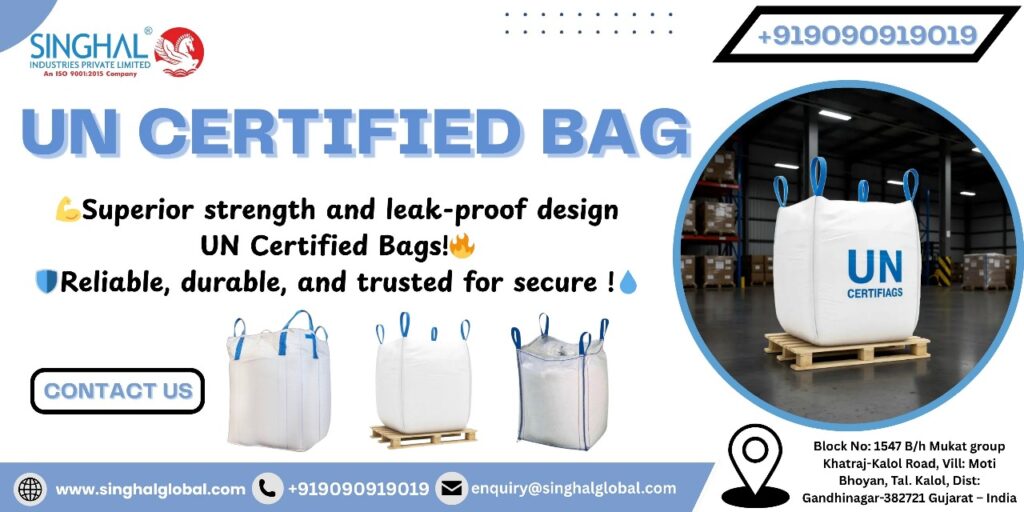
Over the past couple of occurrences, sustainability has ceased to be a buzzword to become a requirement of business firms globally. Industrial packaging is one sector that is undergoing a massive transformation. It is now focusing on green solutions, which do not only attain the environmental goals, but also ensure the utmost standards of safety. Here UN Certified Bags and in this case UN FIBC (Flexible Intermediate Bulk Container) bags are taking center stage.
These bags aren’t simply bulk containers for heavy-duty shipping and are meticulously designed to comply with international standards set in the United Nations for transporting dangerous items. They are also more sustainable in future other than their technological capabilities. They provide business with a safe and environmental friendly method of transporting their products either hazardous chemicals, pharmaceuticals, minerals or grains without damaging the environment.
The Rise of UN Certified Bags in the Sustainability Movement
When sustainability and safety meet, the result can be transformative. UN Certified bags are put into rigorous testing to ensure they can withstand extreme impacts as low as drops to pressure stacking. Nevertheless, what makes them more appealing to the businesses that are considering innovating is the increased concern with eco-friendly manufacturing practices and materials.
A lot of UN FIBC bags manufacturers are considering biodegradable and recyclable materials, less energy manufacturing, and bag designs that can be reused to meet the goals of global climate. UN FIBC bags in India has seen a promising increase, not just because of the needs for industrial exports but also because of the rising demand for products that reflect the lifestyles of the modern consumer.
Businesses have begun to work on behalf of suppliers prepared to think outside the box and innovate. They recognize that packaging solutions must do more than just keep the product in its original form; it must also reduce its impact on the environment.
Why UN Certified Bags Matter in a Greener World
Packaging is typically an initial point of interaction between a product’s packaging and its environment. It’s often the very first item that ends in the trash. This is particularly true in bulk packaging situations, where tons of packaging materials are shipped across continents in single-use packaging.
Yet, UN Certified Bags—particularly UN FIBC versions—change the dynamic. Their durable construction permits reuse in controlled environments, as well as their integration with recycling programs allows them to last beyond the contents of a single package. This change not only lowers the cost for businesses but additionally keeps tonnes of packaging from industrial use from garbage dumps.
In my interactions with logistics professionals, I’ve discovered that the use of UN Certified Bags has reduced the amount of packaging used. In one instance, an organization that transported powdered chemicals could reuse the identical UN FIBC bag for five consecutive shipments, without having to compromise the safety requirements. In terms of money, this could result in substantial savings, especially when UN FIBC bags price tends to be more expensive than bulk bags that are used for regular shipments because of the certification cost. The investment in upfront costs will pay off in terms of longevity and durability as well as conformity.
The Balance Act: Sustainability vs. Cost.
Green packaging is not so easily available. One of the biggest shortcomings of the boardroom and one of the most debated is the cost. For small firms, this may seem intimidating. However, we must consider the bigger picture.
The bags are durable and reusable multiple times, which reduces the initial cost. Compliance: Failure to comply with UN standards for hazardous products could lead to severe fines as well as reputational harm. Sustainable attraction: A greater number of consumers would want to buy products of companies that are environmentally friendly. Companies in the modern day are no longer just selling products, they are selling values and friendly, safe packaging is a part and parcel of a communicative process of selling these values.
Innovation to Converge with the Tradition of a Greener Future
We now live in an era when innovation is not merely a matter of making things efficient and cheap, but also making them more approachable to our world. UN Certified Bags are such a change. The future might introduce such smart capabilities as RFID chips to monitor bag usage and sensors detecting contamination, and green manufacturing plants which are dedicated to secure packaging.
As it applies to India, specifically, there is a blend between the tradition and modernization in the production process. The ancient weaving techniques followed in the rural societies are usually integrated with the new machinery to deliver the robust green, environmentally friendly fabrics to serve in the construction of the FIBC. It’s a wonderful synergy between technology and tradition that’s pushing UN Certified packaging toward its greener future.
Conclusion
The new age of UN Certified bag packaging is not the era of being best compliant, it is a era of ensuring a safer, healthier and more responsible society. The progress in material and design has seen UN FIBC bags being not only environmentally friendly, but also extremely durable, with firms in India leading the pack. Though it might be true that the price of the UN FIBC bags can be higher than the common ones, the saving after the time and also the guarantee of the benefits of safety and environment can be more important than the price.
Bags that are UN certified are more than merely important in the world that is more sustainable. They are a statement of purpose of companies to defend not only their products, but also the environment. With the growing need of sustainable solutions, those businesses that will use these bags will be on the leading edge, gain trust with their customers and provide a difference in a sustainable future.
Frequently Asked Questions (FAQs)
Q1. Is it possible to reuse UN Certified Bags?
In many instances, they can be reused in many transport cycles, provided they’re inspected and verified to be safe for use. However, their use is contingent on the kind of material that is transported as well as the condition of the bag following every delivery.
Q2. How can I keep my UN Certified Bags safely?
Keep them in a dry location free of the sun’s rays and humidity. Make sure they are not buried to avoid contamination. Also, make sure that they’re folded correctly to prevent stress on the fabric.
Q3. What is the difference between UN Certified Bags and regular bulk bags?
They comply with strict UN standards for the transportation of dangerous items, which are tested to determine their durability, resistance, and protection. Bulk bags that are not designed for bulk do not have the safety and compliance certificates.
Q4. What is the reason I require UN Certified Bags for my product?
If your product is categorized as hazardous goods or is required to comply with international transport regulations, UN Certified Bags are mandatory for safe and legal transport.
Q5. Who is the largest supplier for UN Certified bags?
India hosts several major suppliers. They are mainly found within Gujarat and Tamil Nadu, and they offer international markets and are among the biggest exporters of UN Certified Bags in the world.