If you’re into the fish farming industry, you understand how every little decision, from the source of water to the selection of feed, will affect the success of your venture. One thing that frequently goes unnoticed is the liner of the pond. It’s the silent base of the whole system. Without a sturdy liner, there would be no water, no fish, and definitely no business. Recently, one brand has begun to stand out more than others: the RPE liner for ponds. If you’re rolling your eyes and think it’s just another flimsy material, pause. It’s important to know about this, particularly if you’re dreaming of constructing a sturdy, eco-friendly, sustainable, and economical fish farm. Let’s explore the reasons RPE liner ponds are among the most under-appreciated champions of the new aquaculture.
Understanding the Basics: What Exactly Is RPE?
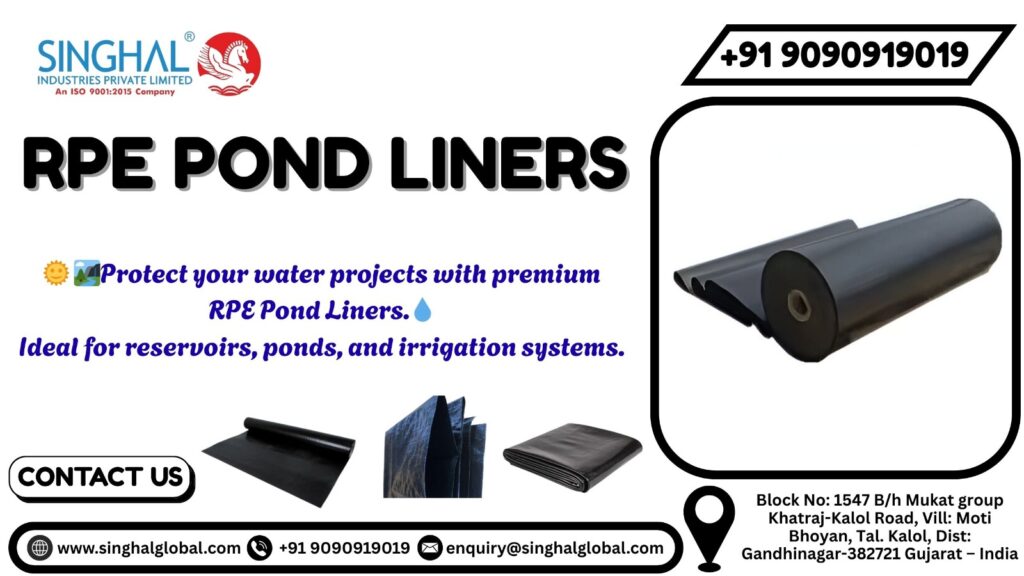
RPE is a shorthand for Reinforced Polyethylene, which is a material that blends strength and flexibility in a manner unlike any other. From a first impression, it’s not like other plastic liners. The secret to its success lies in its multi-layered structure. Imagine a two-layer sheet of polyethylene with a center grid of reinforcing. This grid makes it so durable and allows it to be lightweight and flexible.
RPE was initially used for industrial containment—reservoirs for water, oil fields, as well as mining. In the end, fish farmers realized that the same technology used to contain strong substances and huge-scale storage of water could handle the demands of raising a large number of fish healthily. My friend, Rajesh, switched from a traditional rubber liner to RPE in the past two years. He told me it completely changed his business. He said, “It was like moving from a fragile paper boat to a ship made of steel.” This could be overstating the situation, but I could feel the joy in his eyes as he described how much simpler maintenance was now.
Why Fish Farmers Are Choosing RPE Pond Liners
Strength That Outlasts the Competition
In the world of fish farming, ponds undergo lots of UV radiation, changing ground, changes in the weather, as well as small animals that dig in the pond’s edges. Liner types like PVC and EPDM tend to break or break down over time. An RPE-based pond liner, in contrast, is designed to take on punctures, abrasions, or even stretching. It’s like the reliable friend who doesn’t complain regardless of how tough the situation turns. Some companies claim that RPE liners can last more than 20 years, with very little maintenance. Based on what I’ve seen, it’s not only a marketing gimmick.
A Winner in Flexibility and Weight
This is the area where RPE truly shines. Despite its durability, it’s also light—up to a third its weight compared to rubber liners. It means less hassle in transportation, less hassle in installation, and less expense. For ponds with irregular designs, installers won’t need to contend with rigid sheets or fret about wrinkles that could cause leaks. I was once able to help a local cooperative set up an RPE pond liner for their fish farm community. The liner was neatly folded, and four volunteers completed laying it out in just half the time. If it had been a tough rubber liner, we’d need massive lifting equipment and much more patience.
Excellent Environmental Compatibility
Fish farmers are extremely concerned about the water’s quality. Toxic residues and off-gassing caused by materials could be silent killers. Fortunately, RPE liners are fully non-toxic, which means they will not cause harm to the water or aquatic life. There aren’t any chemicals or additives that are harmful, making RPE liners a perfect fit for conventional as well as organic fishing. If someone inquired about whether the RPE liner would be able to leach chemicals, I can remember recalling my backyard Koi pond. I had put in an RPE liner three years before. The water is still fresh and clear, and my koi thrive. This was enough evidence for me, and my wallet is happy too.
UV and Weather Resistant
The sun is among the main causes of degradation in the majority of pond liners, particularly ones that are exposed towards the edges. RPE’s UV resistance stops it from becoming hard or losing its strength over time. It doesn’t matter if you’re farming in the dry regions of Rajasthan or the coastal areas that are humid in Kerala; this liner is durable. Additionally, if you are operating in areas that are colder, don’t fret because RPE can withstand the extreme temperatures of freezing and thawing without breaking. The flexibility of RPE allows it to expand and contract in response to weather conditions, ensuring your pond stays in good form.
Easier Repairs and Customization
Let’s be real: no liner is impervious to destruction. However, when minor accidents occur, like a rock getting through or a large object falling into the RPE liner, it can be repaired quickly with patch kits. It doesn’t require special adhesives or tools. Even an average farmer with a basic level of DIY expertise is able to fix the problem in the span of a couple of minutes. Another overlooked benefit is the ability to customize. RPE liners can be made in specific sizes, thicknesses, and designs based on your pond design. That’s what has helped many fish farmers move away from stocked rolls to custom-sized RPE pond liners.
What About RPE Pond Liners Price?
Let’s tackle the question that everyone has: what is the RPE pond liners price for pond liner? Comparatively against PVC, RPE might seem somewhat more expensive initially. However, once you consider the durability, lower installation costs, as well as less maintenance and a longer-lasting lifespan, in reality, it’s more affordable. On average:
- Small-scale ponds with moderate prices beginning at Rs. 80-120 per square meter.
- Large industrial ponds: prices differ depending on the size (0.75mm to 1.5mm) and features that are custom.
However, choosing an established supplier can make an enormous difference. Low-quality RPE typically feels thin and doesn’t have the grid of reinforcement that determines its quality. Always request specifications and warranty information prior to buying.
Peace of Mind for Farmers
If you’ve ever constructed a pond, you’re aware that it’s not only about the cost of the pond, but also about the emotional investment. The water level falling slowly or witnessing the slightest tear could be devastating. I’ve seen farmers try to fix leaks with different methods of repair, including the use of tarpaulin sheets and cement paste!
RPE liner systems provide tranquility. Once installed, you won’t need to worry about leaks that happen suddenly or cracked edges. It’s time to focus on feeding your fish and the growth of your business instead of fighting battles with maintenance every couple of months.
Conclusion
If you’re considering building your first fish pond, or if your existing one is causing you trouble with leaks or tears, perhaps it’s time to stop patching the problems and begin investing in sustainability. The RPE liner for your pond could be the foundation you trust that will help your aquaculture goals run smoothly, literally.
Frequently Asked Questions (FAQs)
Q1. Do the RPE liners come in sizes that can be customized?
Absolutely, you can have customized sizes. A majority of suppliers offer fabrication services that allow them to weld panels to the exact dimensions you supply. This means less work on-site and a perfect match for your unique pond.
Q2. Are RPE lines flexible enough for unusual pond shapes?
Yes they are. RPE is innately flexible, which means it can be molded beautifully to uneven pond bottoms or sides. If you’re working with a curving embankment or a stepped layout for a pond it can easily adapt.
Q3. Can RPE liners withstand freezing or extreme temperatures?
In fact, they are able to. RPE keeps its integrity even under intense thermal stress. It’s resistant to cracking even in cold winters, and it doesn’t flex during summer’s extreme heat. This is one reason it is used worldwide all the way from Canadian farms and even Indian tanks for shrimp.
Q4. Is the liner suitable for use in natural or organic ponds?
Absolutely. RPE liners are food safe and are non-toxic. They do not release harmful chemicals into the water. They are ideal for biofloc systems, natural ponds and aquaculture installations that promote organic certification.
Q5. Who is the largest supplier of RPE Pond liner?
There are numerous reputable brands around the world but in India suppliers such as Singhal Industries, EPIC Ponds as well as GSE Environmental are among the top brands. It is recommended to look for suppliers that provide a good warranty, installation support and after-sales service prior to making bulk purchases.