UN approved bags are unspoken heroes in the high-risk world of pharmaceutical and chemical shipping. They’re designed to deal with anything from corrosive powders to drug substances that are sensitive without issue. They’re tested rigorously to international standards, making sure that dangerous products don’t turn a trip into a catastrophe. But, let’s ask a question: do they really warrant the additional cost or is it just an excessive bureaucratic burden.
What Makes UN Certified Bags an Important Factor in the Game?
UN certification isn’t just a rubber stamp; it’s an arduous series of lab tests that prove that bags can handle drops, stacks of pressure, and vibrations without leaking hazardous materials. Imagine this: bags stuffed to capacity dropped from heights of 2 to 3 meters, based on the group that packs them before being stacked with tonnes of pressure. They are able to pass with a 6:1 security factor. When you load it to 1000kg, it can handle 6000kg when tested. This is the UN-certified bags Recommendations on the Transport of Dangerous Goods, frequently updated for the current chaos.
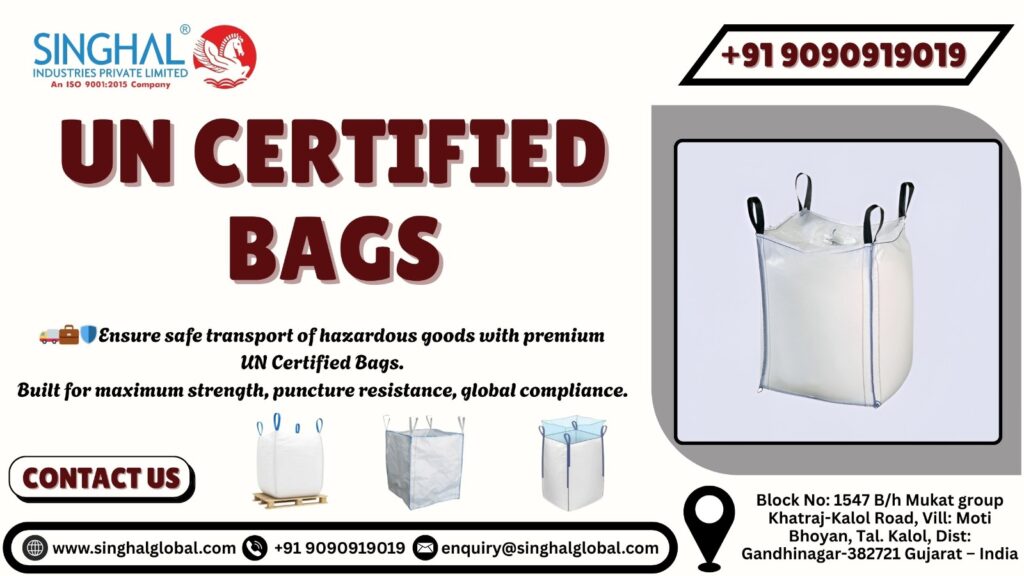
Chemicals such as solvents or acids need this since one drop can contaminate water, soil, and even air. Pharma Active ingredients cannot be trusted to handle reactions or contamination during the process. Some industries complain about their costs, but one incident that is prevented can save millions. It makes you think, isn’t it The bags, which are often FIBCs, are marked by UN symbols, code numbers for example 13H2 (coated weaving plastic) and the maximum gross mass that can be used for quick checking compliance.
The factories in India produce them mixing affordability and quality. Bulk bags that are approved by the UN. India Hubs located in Gujarat and Maharashtra are in compliance with ISO along with UN specifications and are exporting all over the world.
Specific to Chemical Powerhouses
Chemical companies package fertilizers, dyes, and polymers – substances that could burn or destroy metal. Bags that are certified by the UN-approved bulk bags supplier India are now equipped with sifting seams as well as moisture barriers and static control. Type C bags absorb electrical energy for flammables, while Type D blocks it naturally. Coated polypropylene rips off the corrosive elements, and liners provide an additional shield.
UN-certified bags for chemical packaging exporter India export into the EU, US, and Middle East reaching IMDG for sea cargo or IATA in the air. Baffles keep shape under sway, spouts discharge cleanly. Have you ever seen bags burst and bulge? It’s not like these – U-panels or circular weaves evenly distribute weight. Pricing starts at $15-40 per unit for large quantities, but the value? Incredible when customs wave the customs officer through.
Pitfall: Don’t use liners when mixing powders, and sifting occurs. The best option is to pair with the inner bags that have been tested together. What is the reason for India? Expertise in labor, PP abundance – exports rise each year.
Pharmaceutical’s Strict Standards Met
Pharmaceuticals crank up demands – sterility, no particulates, GMP vibes. UN-certified FIBC bags for pharmaceutical packaging India make use of food-grade materials with low-static fabric, as well as clear liners to safeguard APIs and excipients. Hazardous? PG II/III ratings cover a lot of pharmaceutical hazmats, including specific solvents.
These bags can handle between 500 and 2000kg. They fold flat to store while unfolding sturdy. Customized prints? Barcodes, batch numbers, even the sterility icon. Contrary to what you might think: Bulk is a risk for pharma that is obsessed with purity. However, verified UN bags save 40% more than small drums. Is it smart or shady? Tests show clever drop, stack, and all are passed.
Indian pharmaceutical giants depend on local suppliers to get quick turnarounds and export their products to global markets. Monsoon-proof coatings? It’s a standard today. Question: Does certification expire? Design requirements require retests each time they change; however, stock lasts for years if properly stored.
Distinguishing Types and Specifications
UN bags classify under the 13H series for flexible plastics.
- 13H1: Woven PP, no coating/liner – basic, non-haz.
- 13H2: Coated for resistance to moisture and sift.
- 13H3/H4: Linered versions flexible and rigid inner.
Static Types are: A (none) (no energy), B (low energy), C (conductive), D (dissipative). Packaging Groups: Y/Z to indicate medium/low risk (FIBCs skip high/X). SWL 500-1500kg typical and max. 3000 kg gross. Fabric? 200gsm+ PP, loops break at 8x SWL. Technologies like UV additives for outdoor waiting durations. India specifications align with international standards mesh 12×12, coated or uncoated options. Bulk bags that are UN-approved. India provides prints in four colors and customized lifts.
Installing and Handling Hacks
Fill slowly to prevent dust and ground Type C regularly. Use form-fit liners, no air pockets. Maximum stacking per marking – typically 5 high. Discharge? Vibrators, clamps for spigots to flow. Reuse? Examine for cuts and cleanse thoroughly. Pharma requires single-use frequently. Transport? Palletize, label bold. Common error: overfill and invalidates certificate. Logistics gain: Bags weigh 2-5kg empty, and cutting drums cost. Recycling PP: Eco-friendly.
Budget Breakdowns and Return on Investment Realism
Premium over standard – 25-60% more. But what about fines? $100k+, plus recalls. Insurance drops 15-20%. Bulk from bags that are UN-certified for exporters of chemical packaging India? $10-25/meter equivalent. Lifespan? 1-5 trips, if in good shape. Storage: Dry, cool – an indefinite shelf. Local vs. global: India undercuts China prices more quickly than Asia/Africa.
Real-life Lessons and Cases
Chemical accident 2024: A bag that is not UN did not pass the test of drop in crash and caused $2 million in environmental damage. UN version? Intact. Pharma FDA-approved, FDA-approved run with zero contam claims.
Conclusion
Layer liners to protect against corrosion inhibitors. GPS-track pallets. Annual design audits. Regs: UNECE biennial tweaks, DGFT India enforces. Counterfeits? You can’t beat DoC. Future: Sensor-embedded bags? Pharma game-changer. UN certified bags provide security to prevent chem/pharma chaos. The UN-certified bag exporter India to exporters are crucial.
Frequently Asked Questions (FAQs )
Q1. What is UN Certification in Packaging?
Your bag is lab-proofed to withstand the worst of transport – falls (1.2m PGII) and stacks (3x height) as well as vibrations. 6:1 ratio, specifically marked for hazardous classes.
Q2. Are UN-Certified bags required in International Shipping?
Yes for dangerous goods under IMDG/IATA/DOT. Most of the time, it’s not a requirement, but exports require it or face the consequences. Cargo class decides.
Q3. What is the weight capacity of bags with UN-Certified Certification?
500-2000kg SWL standard, net up to 3000kg. Tested 6x over – 1000kg bag evidence 6000kg. Specs per marking.
Q4. What are the different types of Bags that are UN-Certified?
13H1-5: Woven/coated/liner PP. Static A/B/C/D. PG A/B/C/D for FIBCs. Baffled, panel styles. There are endless options!
Q5. Who is the largest exporter of UN Certified Bags?
Worldwide, Bulk Corp or Singhal Industries Pvt Ltd have a huge scale. India Gujarat powerful powerhouses such as Umasree and Paradise top the charts. Who’s 1 Statistics change yearly.