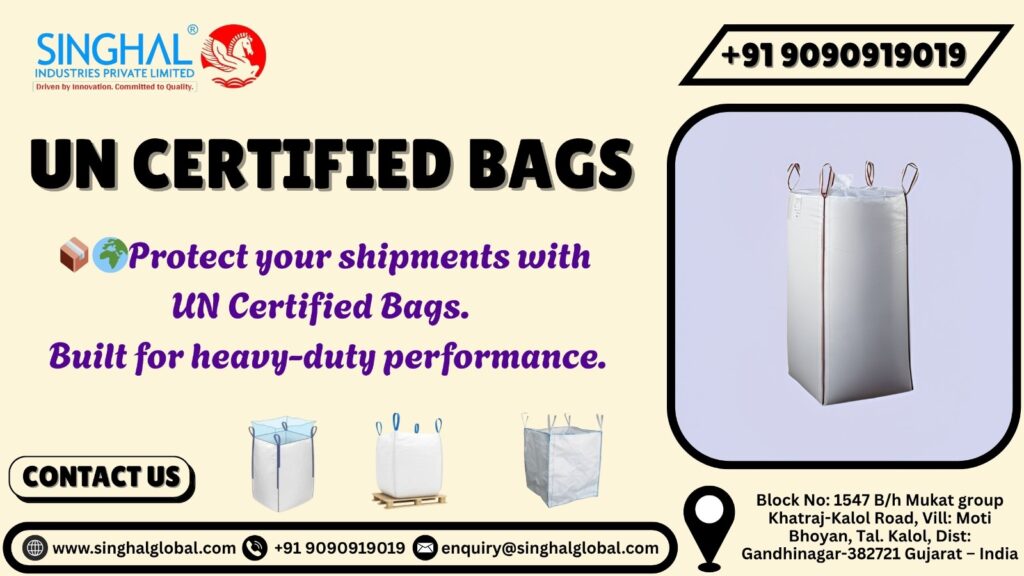
Where cargo is concerned which is potentially explosive, toxic, or otherwise hazardous, no compromise is allowed in terms of packing. In such cases, the UN certified bags take over as the true saviors, designed and manufactured to carry hazardous materials smoothly. These are not ordinary bags; rather, they are subjected to stringent tests and approved by UN standards to ensure the safe transport of the cargo.
Why UN Bags Matter Big Time
Imagine loading your ship or truck with harmful chemicals, and one bag breaks open. The city is in ruins, surely? UN certified bags eliminate those concerns. They’re made from extremely strong polypropylene, woven into other high-performance fabrics that bounce off vibrations, impacts, and even pressure from stacking. Industries such as mining, chemicals and pharmaceuticals swear by these fabrics because they comply with global regulations–no fines, and no rejection of shipping at borders. They’re also cost-effective as well; one bag can carry up to a ton and reduces the need for smaller containers and the associated labor hassles.
They are reliable and durable. They guard against spills, leaks or explosions that could harm workers or destroy the environmental environment. For companies located in India exporting internationally, using Un certified bags for chemical packaging exporter India high-quality means a smooth journey across the oceans of all ports. This isn’t just about packing, it’s peace of mind.
How Testing Makes Them Bulletproof
To get the UN stamp isn’t an easy task. The bags must pass through some tough tests. The highest lift test? They can lift a load up to the sky without tears. Drop test? Then smashed from high places to see if it seams’ durability. Tests of stacking pile them into a brick-like pile, showing that they don’t squish under the weight. Vibration, righting and tear tests complete the test by mimicking traffic bumps as well as rough handling. Only those who survive are certified. and are tagged with UN codes indicating the group of packing (I for high risk II and III less and III less).
This process is rigorous and ensures that they’re safe for rail, sea, road or air in accordance with rules such as IMDG and DOT. Un fibc bags manufacturers are aware of this and design each one to be tested by independent labs. That’s why they’re trusted to handle anything from flammable liquids to toxic solids.
Key Features That Set Them Apart
UN bags don’t come in one size that fits all. They’re a customizable beast. There are options for baffle designs to maintain shape even when filled or liner bags in to ensure there are no leaks. The safety factors are 5:1 or 6:1, which means they will hold far higher than the maximum capacity before breaking, which is crucial for hazards. Spouts that allow easy fill/discharge as well as loops to hold cranes and even seams that are sift-proof stop dust from escaping.
Durability? They are resistant to UV rays and moisture and temperatures ranging from low temperatures to scorching. They can be stacked up to five feet tall in warehouses, thereby saving space. Chemical packers’ outer coatings stop corrosion.
India’s Role in Global Supply
India is a thriving country manufacturing top-quality UN bags for all over the world. Bag manufacturers for UNFIBC have the upper hand by using local PP resin and international technology for quality that is affordable. Locations such as Gujarat and beyond house giants that export into Europe, US, Middle East, and beyond. Think of the seamless conformity to ADR and IMDG.
Why India? Costs are low, skilled workers and a speedy turnaround. UN accepted bulk bags from India companies ship quickly and often with certificates in hand. They’re growing as more exporters make the switch to using old-fashioned drums that are rusty or cracked. Chemical giants adore it as one bag replaces 50 small drums, reducing costs for logistics by 30-40%.
Check out the way these bags can transform your the ops:
- Less expensive than steel IBCs for one-way journeys.
- Eco-friendly-recyclable PP cuts waste.
- Weight reduction means lower cost of freight.
- Agrochem, Pharma and even batteries that are leaking.
Real-World Stories
One chemical company located in Mumbai has switched to UN bags following an incident of spills with regular FIBCs. The bags were a success, no leaks and shipping cleared customs in just 24 hours. A mining operation in Rajasthan put them up six feet high in the monsoon season, and there was not a single drop. Exporters are raving about getting around EU rejections that cost thousands before.
Statistics don’t lie. The global hazmat industry grew 15% in the last year, increasing the demand. Un certified bags exporter India experts have reported 25% growth in repeat business. It’s simple–reliability sells.
Picking the Right Supplier
Do not buy any bags. Check with your supplier. Choose ISO-certified brands with labs in-house. Check test reports, not promises. The best suppliers provide samples and quick prototyping and rapid. Un certified bags supplier India with export histories. Avoid fakes with no genuine UN marks.
A tip to follow: match the type of bag to the items you have. Group I requires the thickest walls. Group III may be less heavy. Take into account the SWL (safe work loads) as well as the SF (safety aspect). Un fibc bags Manufacturers who are worth their salt will give you a hand free.
Conclusion
Making the switch into UN approved bags doesn’t only make sense, it’s crucial in 2026’s strict rules world. With the Trump administration demanding stricter rules for hazmat after the election the compliance requirement is unavoidable. India’s suppliers are mastering it by combining prices with high-quality.
Frequently Asked Questions (FAQs)
Q1. What are the standards for testing in UN bags?
UN bags have to pass a variety of tests according to the Orange Book: top lift (full load hoisted) and drops (from 1.5m) as well as stacking (pressure for days) as well as vibrating (road simulation) as well as righting (upright after tipping) and tear. They must pass with 95% of filling with the actual material approved by labs such as Indian Institute of Packaging.
Q2. Are UN certified bags mandatory by law?
For hazardous products that fall under UN model regulations which were adopted from IMO, DOT, ADR. Do you ship without these? Expect fines and seizures as high as millions, or even jail time in serious instances. Non-hazmat? It’s an option, but it’s smart to have liability.
Q3. How durable are UN approved bags?
For extreme conditions UV-resistant that lasts up to two years in the outdoors and waterproof coatings. Temperatures between -20 and 80 degrees Celsius. Safety factor 5:1+ is overload-proof. Lifespan? 5-10 uses if handled right, but one-way common for hazmat.
Q4. Do UN approved bags be placed on top of each other?
Absolutely, certified for it. Tests on stacking prove they can take 3-4 times the height pressure for hours. Baffles stay in shape; maximum typically 5 high, based on the load. Great for tight warehouses.
Q5. Who is the largest manufacturer of UN Certified Bags?
It’s difficult to pinpoint the one “largest,” but in India the companies such as Singhal Industries Pvt Ltd have the most export-oriented businesses. In the world, they are ranked high with huge capacities. Check production statistics to meet your needs.