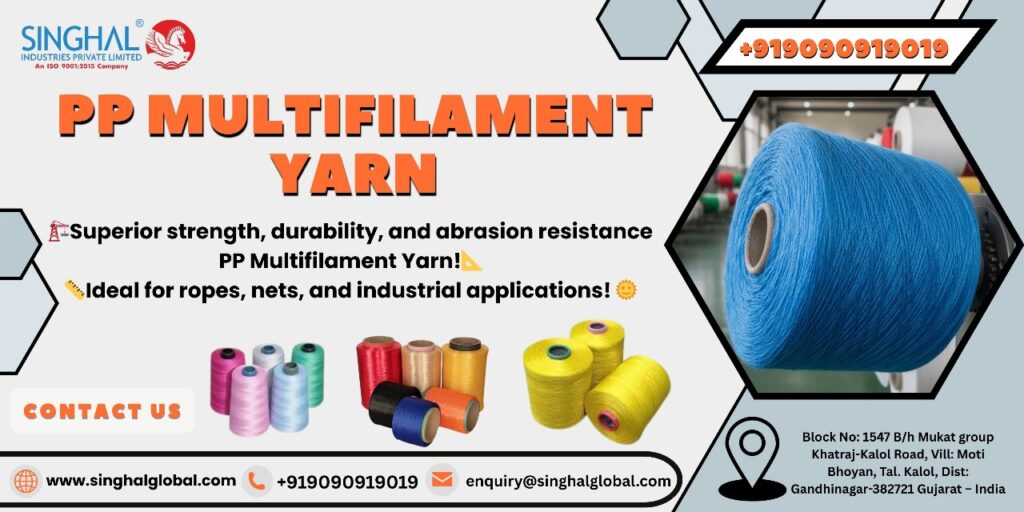
In the midst of walking through an industrial warehouse, it’s pretty much out of the question to see that real power which is holding much of the world together is not the flashy machines but the stuff like PP multifilament yarn. One can hardly believe the great strength of this single thread by just a glance. Nevertheless, the material is quite innovative, practical, and sometimes even artistically when closely looked at. If you ask any industrial fabric expert, they will definitely confirm that a quiet force such as polypropylene multifilament yarn is playing a major role in modern industry and it is not very apparent but it is the one that is managing almost everything from agriculture to adventure sports.
What Is PP Multifilament Yarn?
PP multifilament yarn is an industrial yarn formed by twisting together several extremely fine filaments of polypropylene fiber. The resulting yarn is strong but also very flexible, light in weight, and resistant to quite a range of chemicals and weather conditions. Polypropylene, in particular, is a very popular one in the manufacturing industry; it is loved for its strength and cheapness of production.
Some people ask if Multifilament yarn price is worth the money while considering other alternatives available in the market. That is a reasonable question and worthy of thorough investigation. However, the discussion about the numbers can wait until we have figured out the reason for the existence of this material.
Why Polypropylene? A Material Born for Tough Jobs
Polypropylene is a thermoplastic polymer, and in layman’s terms, this means it is a plastic that can be melted and reshaped over and over again. This characteristic makes the yarn very versatile – think of ropes that are resistant to rot and mildew, geotextiles that can withstand the pressure of tons of soil, or even the straps of your favorite backpack. Even if you are not in a sector that utilizes it, most probably you are in contact with something made of Polypropylene multifilament yarn almost every day.
Here is a strange contradiction: polypropylene, for all its power, is extremely light. That is the one thing that both manufacturers and end users are fond of. Have you ever tried carrying a rope made of natural fibers across a farm yard, or lifting a regular tarpaulin in a rainstorm? Then you know from experience how much “lightweight” can really mean “life-saving”.
Industrial Applications: From Farms to Freeways
So, what are the places where this super-strong, lightweight yarn is being used? The answer is almost everywhere where industrial fabrics are used:
- Agriculture: The materials that are used in making rope, nets, and bale twines resistant to rot and that don’t crack easily. Have you ever seen a hay bale tied with neon-colored twine? The most probable thing is that it’s polypropylene multifilament yarn.
- Geotextiles: Highways that you are driving on may be lying on a layer of fabric made from PP multifilament yarn, which is used for soil stabilization and drainage.
- Packaging: The most common materials of flexible bulk bags or FIBCs, also known as “big bags,” are yarns like this that make the bags strong and light in weight.
- Transport & Cargo: The strength and stretchability of these fibers are the main reasons for the stability of straps, slings, and tie-downs.
- Sports & Outdoors: The success (and your safety) of parachutes, climbing ropes, and even tents can be attributed to yarns similar to these.
There is something ironic about it—industrial materials are typically depicted as being lifeless, unemotional, and far-off. However, when you dig beneath the surface, the mere thought of that geotextile stabilizing a road makes you realize: somebody’s travel becomes easier, somebody’s house becomes drier, and all this is because of a simple thread.
The Price of Strength: Multifilament Yarn Price Factors
So, let us discuss the Multifilament yarn price which people are pretending not to see. This is the point where things become somewhat complicated because the answer to “how much?” depends on a whole bunch of factors. The costs of raw materials, the price of oil (as polypropylene is a product of the petroleum industry), variables in the supply chain, and even some weather events can have an impact on the final price. Now, bring into the equation the grade of the polypropylene, the technology that is being used, and the demand in the market, and you will understand why the prices vary.
Nevertheless, most of the professionals are in agreement that when you take into account factors like lifespan, low maintenance, and wide utility, polypropylene multifilament yarn is cheaper than natural fibers in the long run. Is it flawless? No. But, it’s difficult to dispute something that is around for a longer time, is resistant to the elements, and is relatively easy on your wallet.
How PP Multifilament Yarn Changes Lives
A disaster relief team in Southeast Asia is the perfect example. After such a catastrophe, people from the area scramble to put up shelters and distribute necessary items. During these times, using shelter materials and ropes made from strong, waterproof, and lightweight PP multifilament yarn is not just a way of life—it can make a difference in going from disorder to safety. A tent that doesn’t sag, a rope that doesn’t break, a bulk bag without holes. These are real, human values that come with such industrial breakthroughs.
What about an ambitious farmer from Australia who decided to use polypropylene bale twines? Being tired of the breakage and rot during the wet seasons, she risked taking a chance on PP multifilament yarn. Initially, the multifilament yarn cost was a little bit higher, but the money that was saved thanks to reduced wastage and lower replacement costs became her source of funding for buying modern machinery. Hence, they now talk about how her anticipation changed the whole region’s way of packaging and storage.
The Future of Strong & Flexible Fabrics
What will come next after we look at how far industrial fabrics have progressed? There are plenty of innovations in the pipeline, such as better UV protection, recycled content blends, and advances in spinning technology that make polypropylene multifilament yarn even more versatile. Also, there is research into “smart yarns” that could help a user know the overloading of a net or the fraying of a strap. It is somewhat bewildering to think that in the future, a thing as simple as yarn might possess a certain form of intelligence.
Conclusion
One may easily commend polypropylene multifilament yarn for being strong and flexible. Still, in a world that is gaining awareness of plastic waste, should its magnificent use still be at an acceptable environmental cost? The response might, as it is very often the case in life, be in a balance. Use polypropylene where it mainly assists in the avoidance of more significant waste, take natural fibers when it is possible, and keep innovating for a time when strength and sustainability will be able to coexist.
So, the following time when you are walking past a construction site or see a cargo tarp waving in the wind, think of the material science marvel beneath those fibers. It is not only fabric—it is a part of the world’s invisible infrastructure that is doing the heavy work silently, thus granting us the ability to go on with our lives.
Frequently Asked Questions (FAQs)
Q1. What Industries Are the Most Users of PP Multifilament Yarn?
PP multifilament yarn is an interesting concept that technically works in a wide variety of industries. The largest users are agri-industry (ropes, nets, twines), construction (geotextiles, reinforcement mesh), transportation (cargo slings, securing straps), marine (fishing nets, mooring lines), and even the sports and leisure industry (paragliding equipment, camping gear).
Q2. Is PP Multifilament Yarn of a Low Weight?
Yes, exactly! Its low density is one of its main attractions that make it significantly lighter than a number of natural or synthetic alternatives. Simply put, ropes, slings, and nets fabricated from PP yarn are more convenient to handle, transport, and install, which is a terrific benefit in the industries where the tempo of work and manpower are of great importance.
Q3. How Long Can PP Multifilament Yarn Stand Against UV Rays?
This is the point where sometimes different views are expressed, and that is why this review is a midpoint view: PP multifilament yarn can stay quite a while under the sun as UV stabilizers are included in the material during production. Nevertheless, in the very long term – let’s say years of continuous direct exposure – even the toughest yarns will ultimately corrode and become brittle. So a good, usable suggestion would be: If it’s constantly out there, then UV-treated versions should be selected and replacement should be anticipated.
Q4. Is PP Multifilament Yarn Possible to Be Dyed Different Colors?
Certainly! Actually, the yarn can be made in various bright colors which are very resistant to fading, due to the fact that the color masterbatches are mixed right into the fibers during production.
Q5. Who is the largest Suppliers of PP Multifilament Yarn?
The major part of the most prominent names on the globe scale come from the Asian continent—India and China, in particular. The front-line manufacturers are the ones like Singhal Industries Limited (India), Indorama Ventures (Thailand), and a couple of specialized producers from China.