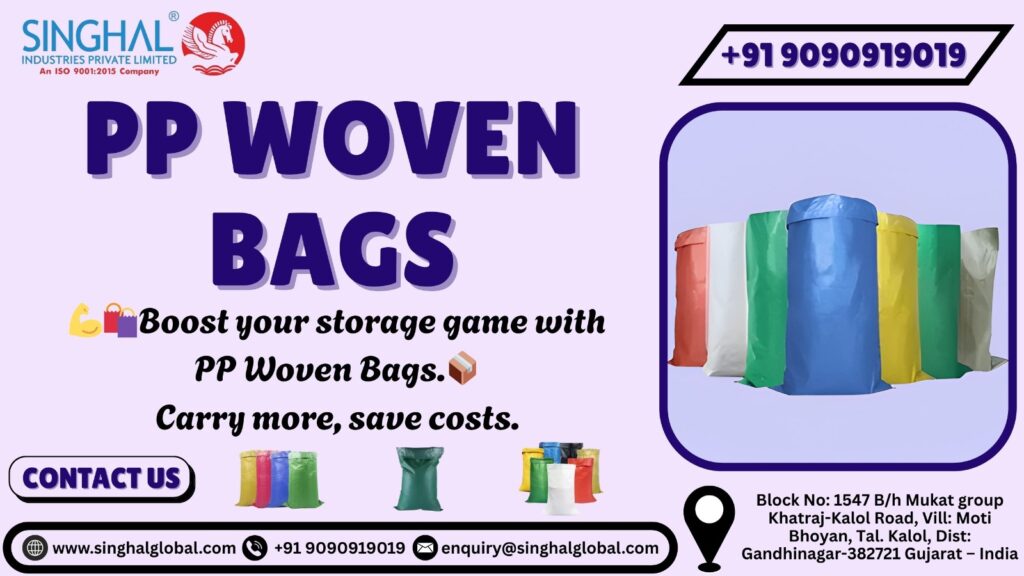
Hey, everyone! If you’re involved in the farming industry or working with bulk items like fertilizer or grains, you’ve probably heard of PP woven bags. These sturdy bags are all over the world of agriculture and packaging. They’re made of polypropylene and are extremely durable, light, and help keep your items free of pests and moisture. In this article, we’ll be exploring the reasons Plastic woven bags are the most popular option for grain packaging and fertilizer. We’ll go over everything from the process of making them to their advantages and then throw in some frequently asked questions to help you answer the most frequently asked questions. Keep reading; this is going to be a lengthy, informative study!
A farmer in rural India is loading sacks of urea fertilizer or fresh wheat harvest. Without a secure packaging system, this important cargo can be destroyed through rodents, rain, or even rough handling. This is where PP woven bags shine. They’re more than just bags; they’re like armored protection to safeguard your goods. PP stands for polypropylene. It’s an incredibly flexible plastic that is woven into sheets that resemble fabric. PP woven bag makers use the latest technology for extrusion and weaving to ensure that each bag can carry heavy loads without tearing.
What Makes PP Woven Bags So Special?
We’ll break this down in a simple way. The Polypropylene woven bags are tiny plastic pellets that are melted into thin strips and then connected on huge weaving looms. It’s similar to making a massive industrial basket made of plastic threads. This process of weaving gives them extraordinary tensile strength. Think of it as the bag’s muscular strength.
To package fertilizer, these bags are an absolute lifesaver. Fertilizers such as DAP, potash, or urea are typically hygroscopic. This means they absorb moisture and clump up. The plastic bags block humidity, ensuring that the contents remain dry and fluid. There’s no more sticky mess to clean up in storage or transport!
Grains are similar to grains in that corn, wheat, and rice are staples that require protection from insects, dust, and spills. PP woven bags are durable and breathable, allowing air circulation, which helps prevent mold and stop pests in their tracks. In places such as Varanasi in India, where monsoons strike the hardest, farmers swear by these bags. It’s been my experience to see fields in which jute bags were a failure; however, the ones made of PP last without a hiccup.
One thing to note? They’re greener than you thought. Polypropylene can be recycled, and many PP producers of woven bags employ recycled materials. Additionally, they weigh less than traditional bags, which means they use less fuel. A typical 50kg bag could weigh between 100 and 150 grams. This is effective!
But wait, there’s more. The customization options are huge. Bags are available in sizes from 10kg up to 100kg, and with different logos, colors, or maybe UV protection for storage outdoors. In grain packaging, anti-slip coatings prevent sliding during stacking. For fertilizers, the liners provide an additional barrier to moisture.
The Manufacturing Magic Behind PP Woven Bags
Have you ever wondered how PP woven bag manufacturers achieve this feat? It begins in factories full of machines. Polypropylene granules are pushed through an extruder and transformed into flat tapes. These tapes are stretched, then heated before being woven into tubes on circular looms. They’re then cut, printed, and stitched. Boom! You have a bag!
The top PP woven bag Manufacturers employ high-quality PP resin to ensure greater longevity. In India, regions such as Gujarat and Tamil Nadu are hubs for this. They manufacture millions of bags every year and export the products to Asia, Africa, and beyond. Quality checks are stringent, including burst strength tests, drop tests, and even seam pull tests. A quality bag can withstand up to 250% of the recommended load.
Bags for fertilizer typically come with BOPP printing, which produces bright labels that display NPK ratios or brands. Bags for grain may come with valve ports to make filling easy. And do you know what? Some now include micro-perforations for air circulation, which is ideal for organic grain that requires to “breathe.”
The challenges are there, for sure. As with all plastics, UV exposure could alter their properties over time; however, stabilized PP solves this. They’re also affordable, around 20-30% less expensive than paper bags of similar strength. In the long run, they can save costs due to a reduction in loss.
Why Fertilizer Packaging Loves PP Woven Bags
The fertilizer industry relies heavily on these bags. India alone makes use of more than 500,000 tons of fertilizer each year, and it is packed into plastic bags. Why? They’re rodent-resistant and dustproof. Jute bags? They degrade in humid conditions. Plastic bags make fun of this.
Use urea bags in white, 50kg with large print. They can be neatly placed in godowns and can withstand forklift handling. Spillage? It’s not that much, thanks to sturdy gussets. When it comes to supply chains that span from facilities such as IFFCO to shops in the village, they cut down on losses by 15 to 20 percent.
In terms of environmental impact, while plastic bags take scratches, PP bags are reusable. Farmers fill them up with manure or seeds. Recycling plants recycle old ones into new pipes or bags. In contrast to single-use plastics, these are designed to last for a long time.
Grain Packaging: A Perfect Fit for PP Woven Bags
Grains are heavier and more difficult to transport. Polypropylene woven bags can handle 25 to 100kg easily and have seams that are sift-proof. They protect rice from breakage, while for maize, they will not crush.
In international commerce, FIBC (big bags) models can hold tons of cargo for shipping. For local use, conventional sacks are the norm. The ability to breathe is crucial because grains create heat after harvest. PP fabric lets moisture escape slowly, avoiding condensation.
Then, as in India, FCI warehouses stack them up to 10 stories high. Anti-static versions help prevent blasts of smoke in factories. Custom printing shows harvest dates and variety, like “Basmati 370.”
The benefits are numerous: lightweight reduces the load on trucks (more bags per journey) and is recyclable (90 percent material recovery) and printed to create branding. A Punjab miller I spoke to said they made the switch to HDPE in favor of PP and noticed 10 percent less damage to the grain.
Advantages Over Other Packaging Options
Why choose jute over paper? Jute sucks up water, tears easily, and draws insects. Paper’s strength is diminished in rain. PP triumphs with respect to strength-to-weight.
Multi-wall paper bags: PP is cheaper long-term and completely waterproof. HDPE bags? Similar to HDPE; however, PP is more tightly woven to ensure more efficient load distribution.
The data backs it up. A study by ICAR found that PP bags hold 98% of their grain quality after 6 months, in contrast to 85 percent for jute.
Sustainability angle: Contemporary PP producers of woven bags use water-based printing, solar power, and even water. Certain manufacturers add biodegradable additives to aid in more rapid breakdown.
Market Trends and Future of PP Woven Bags
The market’s booming! The global PP market for woven sacks is expected to reach $1 billion in 2028. This is due to agricultural growth. India has the highest production.
Fashions of the moment: Bags with smart technology equipped with RFID to track, nano-coatings that self-clean, and eco-PP made from sugarcane. Plastic bans? Manufacturers are able to adapt using biodegradable mixes. In Varanasi, local companies provide UP farmers, mixing tradition with modern technology.
Conclusion
Plastic woven bags aren’t just for packaging; they’re also a smart investment for grain and fertilizer pros. Flexible, durable, and affordable, they secure your life. No matter if you’re a farmer from Delhi or trading in Mumbai, switch to them and experience the impact. If you’re in the process of sourcing bags, talk to reliable PP woven bag manufacturers. They’ll customize their bags to meet your requirements.
Frequently Asked Questions (FAQs)
Q1. Can PP bags woven into a bag be custom printed?
Yes, absolutely! PP woven bag makers use gravure printing or flexo printing for designs, specifications, or even barcodes. It’s weatherproof, durable, and long-lasting, ideal for branding grains or fertilizers.
Q2. Are PP bags made of woven material appropriate for use in agriculture?
Totally! They’re perfect for fertilizers, seeds, and grains. They are pest-resistant, waterproof, and stackable—agriculture’s best friend.
Q3. Can PP woven bags be used for cement packaging?
Certainly! Many do! Their strong burst strength can handle 50kg cement bags and resist dust and abrasion while transporting.
Q4. What is the capacity for weight of a PP woven bag?
The typical weight is 10-100kg for the standard versions. For heavy-duty models, they can reach 200kg. It depends upon GSM (grams per square meter); 70-120 GSM is typical.
Q5. Who is the largest manufacturer of PP woven bags?
Globally, companies such as Singhal Industries Pvt Ltd (India) and Europe lead. Within India, Jumbo Bag Ltd and other companies dominate with huge production.