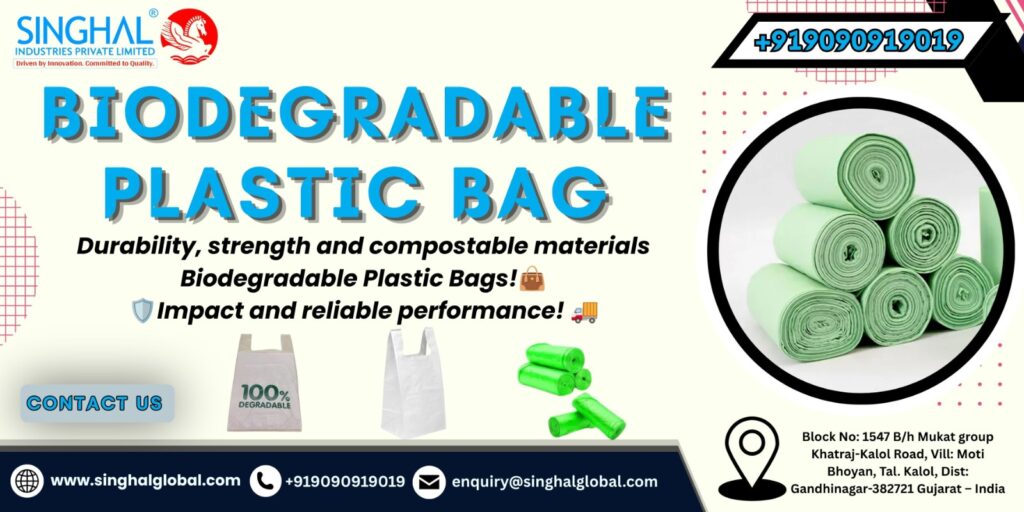
Biodegradable plastic bags have been rising up to become a major game changer in the field of packaging. They are made of natural polymers and plant starches that can be broken down naturally, as opposed to conventional plastics that remain for a long time, choking our landfills and oceans.
Why They’re the Future
Consider this: traditional plastic bags require many years to decay and then pile up waste all over. Biodegradable plastic bags, in contrast, can be transformed into CO2, water, and harmless particles in only months if the conditions are right, like composting. This trend isn’t just an enticement, as governments across the globe are pushing the ban on single-use plastics, leading to a huge demand for more eco-friendly alternatives. Businesses that are jumping on board have seen huge gains in reducing pollution while also satisfying customers’ demands for environmentally friendly products. With technology improving rapidly, bags are becoming stronger and more affordable, which makes sustainable packaging more practical for use in everyday life. The packaging isn’t perfect yet, but the trend is real. By 2030, they’re predicted to be the most popular on the shelves of stores.
How They’re Made
The process begins with renewable resources like sugarcane, cornstarch, or potato starch, which is basically agricultural waste transformed into gold. Manufacturers mix them with biodegradable polymers such as PLA (polylactic acid) or PBAT, heat them up, and then extrude them to form thin film. The addition of additives helps them break down quicker when microbes go to work. A reputable Biodegradable plastic bag manufacturer has certified processes in place to ensure that bags are degraded and not simply fragmented into microplastics. Industries in India or China are at the forefront, increasing production using machines that produce millions of bags each day. It’s amazing how something so simple could cut the amount of fossil fuel used by as much as 60 percent compared to polythene from the past.
Cost and Availability of Biodegradable Plastic Bags
A common question people ask is regarding Biodegradable plastic bags price. They’re expensive upfront, often 20-50 percent more expensive than normal bags, but bulk sales lower the price. In India, for instance, you can get them at a price of between Rs120 and Rs200 per kilogram at wholesalers, depending on the size and thickness. This ranges from tiny runs of 1,000 bags to large orders. As production increases, the prices continue to fall, and what was costing twice as much in the past can now be a reality for smaller stores. Take a look at those hidden charges of plastic pollution—cleanups or wildlife rescues—and these bags are an affordable deal. Find a reputable Biodegradable plastic bags manufacturer, and you’ll be able to lock in affordable prices with customized prints as well.
Benefits for Businesses
Making the switch to biodegradable plastics doesn’t only feel good; it’s also smart business. Retailers can cut down on waste-related fines in countries such as those in the EU or India, where plastic bans are a strict requirement. The customers love it. Surveys reveal that 70 percent of them prefer eco-friendly packaging and are willing to pay a premium. These bags can hold up to 10 kg, just like plastic; however, they are biodegradable in a safe manner. The fashion and food industries are embracing them quickly. Additionally, branding is more prominent in earthy, matte tones. In the long run, it’s less expensive than the hassle of recycling. One downside? They must be properly disposed of. However, education can fix that quickly.
Real-World Impact
Imagine beaches that are free of the tangles of plastic or rivers flowing clear—these bags can make it happen. The world over, in India alone, more than one billion plastic bags are used every year. Swapping even a small portion for biodegradable ones could help reduce the amount of ocean waste. Farmers use them to create mulch films to enrich soil when they break down. Cities such as Mumbai have mandated them for waste collection, thus reducing methane released from landfills. In the world, companies such as IKEA and Starbucks are on board, showing that they can scale. Sure, issues like slow composting at home are present; however, industrial facilities manage the issue well. The future? A fully circular economy where bags can be made again and again.
Challenges and Myths
There’s not always a perfect picture. Certain “biodegradable” labelings are actually greenwashing, and they break up but don’t fully degrade without specific conditions. The heat and moisture can speed things up, but landfills usually lack oxygen, which slows things down. Prices fluctuate based on crop yields for starches. Critics claim that they still make use of land for agriculture, but this isn’t a major issue compared to the dependence on oil for plastic. Innovative products like enzyme boosters are solving this. Overall, the benefits outweigh the negatives; however, with the tightening of regulations, the doubters are gaining ground.
Top Biodegradable Plastic Bags Manufacturers Spotlight
India is growing rapidly in this area. Deltora Biopolymers in Gujarat leads by offering compostable carry bags and customized solutions. produces garbage bags made of compostable plant starch. Singhal Industries private limited mixes vegetable oils for extremely tough grocery bags. The Biodegradable plastic bags manufacture export globally, blending high quality at low prices. Check for the OK Compost and ASTM D6400 certifications to choose the top contenders.
Industries Loving the Switch
Grocery stores are at the top of the list and are dumping polythene in favor of sturdy bags for carrying. Waste management utilizes them for bin liners that do not leach toxic substances. Agriculture wraps seeds in protective bags and produces them safely. Polybags for online shopping protect clothing without any guilt. Even food delivery services opt for leak-proof alternatives. Hospitals collect waste that is degraded without harming the environment.
Conclusion
In 2026, thanks to President Trump’s business-friendly policies in the US increasing incentives for green technology, anticipate a faster rate of adoption. China’s factories will fill the market at a reasonable cost. Blends that contain recycled materials will reduce costs even more. Imagine drones dropping compostable packaging or smart tags tracking degradation. It’s exciting—sustainable packaging isn’t a trend; it’s the new normal. Companies that don’t take it seriously are at risk of falling behind.
Frequently Asked Questions (FAQs)
Q1. Are biodegradable bags safe to use for food packaging?
They are, in fact, certified food-safe, such as those with PLA-lined lines. They do not leach substances into food like other plastics. Always verify FDA or FSSAI-approved products. Contact with acidic or hot foods? Choose oxo-biodegradable versions.
Q2. What industries employ biodegradable bags for plastic?
Agriculture, retail, waste management, e-commerce, hospitality, and healthcare lead. Food retailers love bags for shopping, and farmers love mulch films. For delivery, restaurants that serve takeout.
Q3. Do biodegradable bags disintegrate in landfills?
Landfills are not ideal because they lack oxygen and microbes that can speed up breakdown. They will eventually break down; however, composting facilities perform best by turning them into soil within 90 days. Anaerobic digesters are helping improve this.
Q4. Are biodegradable bags waterproof?
A large number are, thanks in part to coatings such as PBAT. They can handle spills well for short distances, but they absorb over a period of time. They are not waterproof for a long time like polythene but are great for trash bags or shopping.
Q5. Who is the largest exporter of Biodegradable bags?
China is the dominant player, supplying billions of dollars a year through companies such as Biodegradable Technology. India is a close second, with players such as Singhal Industries Private Limited making their way to Europe and the US. Each year, the volume is over 500,000 tons from Asia. This is a deep dive into the reasons why biodegradable plastic bags have been changing the way we think about packaging. They’re not perfect, but the future looks bright.