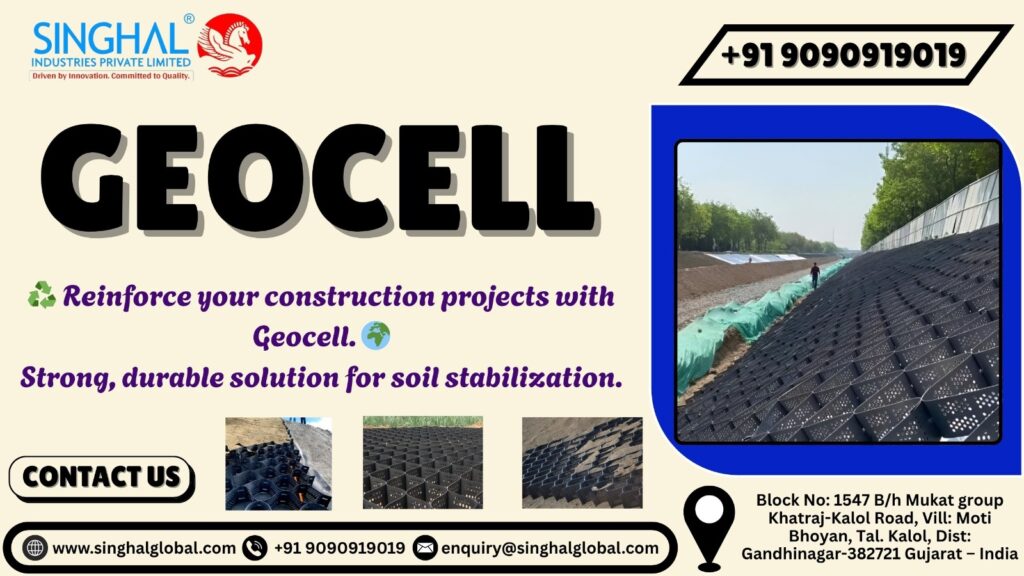
Geocell technology is revolutionizing how we construct things that are tough on the planet, yet kind to it. The honeycomb-like grids made of recycled plastics keep dirt in position, ensuring that roads, walls, slopes, and walls last longer and do not waste resources. It’s an effective solution to the unpredictable weather of India and the increasing population.
What exactly is Geocell?
Imagine a geocell as an enormous 3D net, typically made of HDPE plastic. You build on the ground and cover it with gravel, dirt, or whatever. It was initially used by the military to create quick roads over muddy ground and is now used everywhere in civil construction. Cells are between 50mm to 200mm high that are joined together to ensure they don’t break apart.
When it comes to sustainable building, it reduces the need for digging into the ground or transporting gravel in excess, which means fewer trucks and less fuel. This means less clutter. Geocell manufacturers in India are popping up quickly and producing grids that can withstand the monsoons and summer heat without cracking. It’s as easy as unrolling this flat on the ground, tying it up, making it full, then compacting it. Boom, you have a stable base.
There’s no magic here, but it’s close. Poor soil? It’s no problem; it turns soil that is weak into a powerful load-bearing beast. Eco-angle? Utilizes local fill so you’re not transporting materials across the country and reducing carbon.
Why It’s a Game-Changer for Roads
Roads drain a lot of money and earth. Geocell in road construction solutions spreads weight evenly, meaning there are no puddles after one rainy season. Spread it over the foundation layer, fill it with aggregate that is cheap, and then your road will be able to shrug off heavy trucks.
The highways in India, such as those huge NH projects, utilize huge amounts of it. Are you aware of the Kedarnath reconstruction? Geocells that were airlifted in stabilized the pathway over poor soil. It reduces costs by 30-50% as well. Thinner layers are what you need. And how about maintenance? A lot less, considering that it combats erosion and rutting.
For smaller events, Geocell driveway India setups are ideal for farms and homes. They don’t sink or get flooded even when SUVs roll over. Green plus: permeable so rainwater soaks into the soil but isn’t overflowing streets.
Soil Erosion Problem?
Erosion can be a problem on slopes, as hills fall away and rivers form a slick. Geocell helps to stop soil erosion by encasing it into honeycombs. The roots grow through holes which bind everything together. On slopes, it stretches the ground like terraces, keeping back landslides.
In embankments and canals, geocells line the sides, keeping banks from being chewed by water. I’ve witnessed projects where unprotected dirt disappeared in the course of a season, but geocell spots remain in place for a long time. Sustainable? Yes, the soil is on site and there are no imports required.
There are rivers in India like the Ganga that are flooded every year. Geocell blocks them up for cheap and also green.
Eco-Friendly Perks All Around
Sustainability isn’t a buzzword; it’s a fact. Geocells made from recycled HDPE mean that plastic waste has another chance to live instead of ending up in landfills. The lighter constructions cut down on emissions from transport. The longer lifespan means less maintenance—think 20-30 years as opposed to 5-10 years for plain gravel.
Water management shines. Let rain percolate and recharge groundwater. No more dusty roads to kick up pollutants. In urban areas, Geocell driveway India alternatives can help green parking spaces with grass-filled cells that appear like lawns.
In terms of cost, the initial investment may seem a bit expensive; however, the savings over the life of the project are massive. The government is pushing green infra credits as well.
Real-World Wins in India
Strata Geosystems nailed highways with their StrataWeb, which is able to withstand quakes and floods. Ocean Global pumps out geocells for ports and rails. In the case of the Kedarnath temple road, Geocells over the low CBR soil ensured the safety of pilgrims.
Farmers make use of it for terraced fields or ponds. No more washouts that kill yields. Airports? Runway bases remain firm beneath jets. Geocell manufacturers in India, similar to those found in Delhi-NCR, provide nationwide with custom sizes and strengths.
A unique story of the driveway of a village in Punjab changed from a gravel pit to a smooth road. Kids can bike now without bouncing. Small size, big impact.
Installation Basics (Easy Peasy)
Prep ground level. Unroll geocell (comes collapsed, expands 8x). Secure edges using pins or stakes. Layer cells, 6-12 inches in thickness. Compact using a roller. Cover with asphalt or gravel.
Mistakes? Do not overfill or skimp on compaction. Puddles appear. Geocell driveways are ideal for India, with 150mm height guidelines for cars. The slopes require steeper walls and a finer fill.
Pushing Boundaries in Design
Innovative twists include perforated designs to improve drainage and colored options to enhance landscaping. Geogrids are a hybrid for massive loads. In Geocell driveways, India grass-infills are permeable roads—cars can drive on meadows.
Challenges Quality of welding is important. Cheap ones break. However, the top Geocell manufacturers in India are masterful at it. The future is bio-based plastics that are making them even stronger.
India’s Boom Time
In the wake of Bharatmala and Smart Cities, demand is growing exponentially. Geocell is a road-building technology that reduces budgets by 20-40 percent. Exports Indian companies ship to Southeast Asia, Africa, and India cheaply. Local win: Varanasi riverbanks could use it in lieu of flooding. Farmers can easily terrace hills. Factory jobs too; lots of factories hire.
Conclusion
Source certified – IS Standard 14887. Test soil CBR first. For Geocell driveway India, 356x150mm size fits most. Negotiate MOQ for discounts. Place the unit on a flat surface, far from sunlight.
Geocell isn’t a fad. It is durable; it eliminates waste—true sustainability. Roads last, and the earth heals. In India, it’s transforming from the villages to the highways. Get some; your project will be grateful to you.
Frequently Asked Questions (FAQs)
Q1. What is the price of geocells in India?
Prices are between Rs 40 and 100 per square meter. This is based on the height as well as HDPE quality. A 4x6m Geocell driveway India might run Rs 10,000-20,000 total installed. The bulk supply from geocell manufacturers in India is available. Check IndiaMART for bargains. More grippy for bumps on roads to Rs 80/sq.m.
Q2. Can geocell be used in road construction?
Totally. Geocell in road construction strengthens subgrade and reduces base thickness by half. It is used on roads, routes for rural areas, and even airports. It spreads loads, fights ruts, and is perfect for soft soils. The Indian NH projects rely on it.
Q3. How can geocell stop soil erosion?
The honeycomb holds soil particles, preventing them from sliding downhill. Perforations permit water to drain slowly, and there is no flow. When slopes are steep, they restrict the vertical filling too. Roots knit it stronger over time. It beats concrete walls for being inexpensive and green.
Q4. What exactly is HDPE geocell?
HDPE geocell is a High-Density Polyethylene version—tough anti-UV plastic grids. Flexible once installed, and rigid after filling. It is ideal for walls and roads that can withstand temperatures from -40°C up to 80°C. The majority of Geocell manufacturers in India make use of it. It is durable and recyclable.
Q5. Who is the largest manufacturers of geocell?
There is no crown king; however, Ocean Non Wovens, Strata, and Singhal Industries Private Limited have the top position in India with huge production for infrastructure. Ocean Global claims the top spot in terms of quantity. They also export in a manner that is consistent with global standards. You can check their projects for evidence.