Hey there, folks! Think about it, you have a classy-looking home theater system to wire up or making some sort of high technology device in your garage. Something strong, lightweight, and dependable is required to put all those buzzing circuits and sensitive electronics. That is where the superheroes ABS plastic sheets come in. These bad boys are produced using Acrylonitrile Butadiene Styrene – it is a mouthful alright, but no big deal, I will break it down. They find their way into every electrical and electronic enclosure since they meet this optimal compromise: they hit the break or take a hit well, they do not cost the fortune, and can be used in all types of designs.
I’ve witnessed it in person. My buddy has a small electronic repair shop in Varanasi and is adamant about using ABS sheets for custom enclosures. Once, a client’s control panel for industrial use was damaged during transport, and there were dents all over the aluminum version. But what about the ABS one? Not even a scratch. This made me think: what is the reason we play with heavier metals while plastic does better? But is it flawless? It’s not, but nothing is. Let’s get into the reasons why ABS sheets of plastic are the most popular choice for enclosures, and we’ll go over some actual examples as well as some contradictions that could shock you.
What Exactly Are the ABS Plastic Sheets?
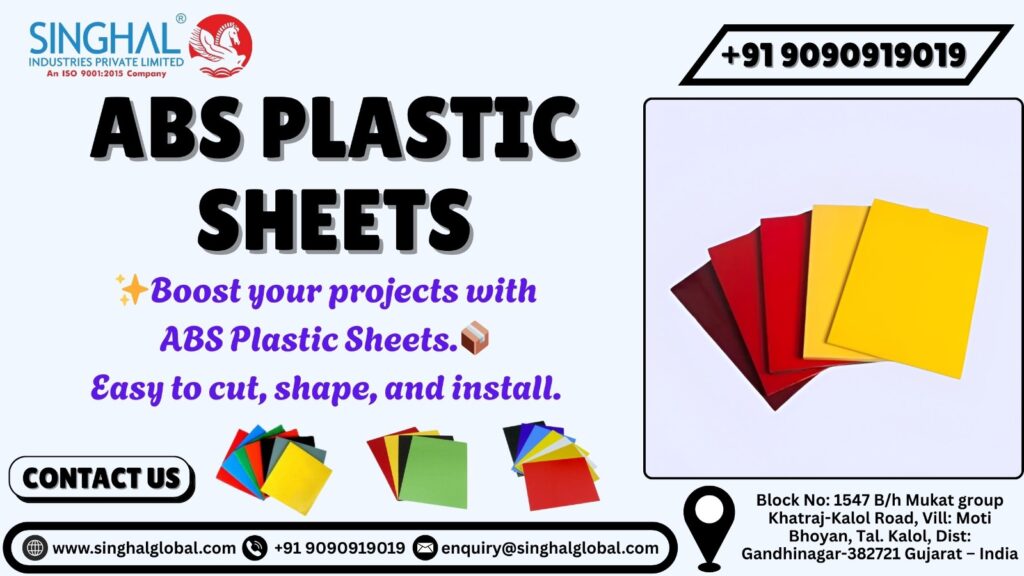
The basics are first. ABS plastic sheet is a thermoplastic that has been extruded or molded from the ABS compound that I mentioned. Acrylonitrile offers the chemical resistance and hardness it needs; Butadiene increases its toughness (think impact resistance), while styrene renders it shiny and simple to work with. Sheets are available in thicknesses of 1 millimeter up to 10 millimeters or higher, and widths of up to 2 meters, ideal to cut into panels or boxes.
Nowadays, ABS sheets manufacturers churn sheets across the globe, but the quality of these sheets varies widely. A reliable plastic sheet producer examines the durability, UV stability, flame resistance, and electrical insulation, which are essential for enclosures. In India, firms such as Supreme Industries or local players in Gujarat are producing millions of square feet each year. However, is bigger always better? Sometimes, small Abs sheets Manufacturers are able to meet custom-made orders more quickly and with that personal touch you won’t receive from big companies.
Why Choose ABS to Make Electrical Enclosures?
Electrical enclosures shield PCBs, switches, wires, and other equipment that is resistant to dust, water, or even shocks. Plastic sheets made of ABS shine in this case. They’re great insulators. Electricity is able to flow right through them. No corrosion like aluminum in humid Varanasi summers. Also, ABS is lightweight – a one square meter ABS panel weighs just 5 kg as opposed to fifteen kilograms for steel. It is less expensive to ship and install.
There’s a paradox here: ABS isn’t the toughest available. Polycarbonate can withstand impacts more easily, but ABS is the winner in terms of price and machinability. Why? In electronics, it’s rare to fall over server racks. For everyday devices like router boxes and power supplies, ABS is the best choice. Personal experience: I constructed an enclosure for drone controllers from ABS scraps. It escaped crashes that would have cracked the acrylic. I felt invincible!
A Real-Life Treasure
The year 2023 saw a Mumbai factory fire traced back to inadequate enclosures. Following that, a Plastic sheets manufacturer increased production of ABS that was FR-grade. Enclosures now are able to pass the 960°C glow wire test. Saves lives, folks. Have you ever wondered if your home’s fuse box is safe? Examine the label.
The Key Characteristics Which Make ABS Ideal
Let’s delve into specifications. Impact strength? The Izod test shows 200-400 J/m. It does not drop without cracking. Tensile strength is around 40-50 MPa; flex modulus is 2-2.5 GPa. Electrical? Dielectric strength over 15 kV/mm. IP ratings as high as IP66 if sealed, dust-tight, and waterproof. The temperature range is -40°C to 80°C continuously. Fine for most indoor electronics, but outdoors? UV degradation causes it to turn yellow with time. There is a conflict of opinion: some suggest that stabilizers are needed for sunlight exposure, but others argue that it’s not worth the effort in the long run. I’ve tried both, and stabilization lasts twice as long in Rajasthan temperatures.
Chemical resistance rocks are used against acids, oils, and even ketones; however, they can frighten it. Hygiene benefit: non-porous, easy to clean medical electronic equipment. Human error moment: I’ve made ABS without annealing. Warped like crazy. Tips: Heat to 80 degrees Celsius before cutting to relieve stress.
Manufacturing and Customization by ABS Sheets Manufacturers
ABS sheets manufactured by manufacturers employ extrusion. They melt pellets and push them through dies to then cool down on the rollers. Calendered sheets have that smooth surface. The top Plastic sheets manufacturer such as Sabic or Styron provide embossed, textured, or conductive grades to aid in EMI shielding. Customization? Laser cut, CNC route, vacuum form. For enclosures, thermoform ABS into shells, heat, and drape over molds completed. Costs less than injection molds for prototypes.
Local angle: Uttar Pradesh has blooming Abs sheets Manufacturers close to Noida. They supply Foxconn factories for the assembly of iPhones. Rapid turnaround, competitive pricing. But quality control? Spotty occasionally. I ordered samples. One batch was filled with bubbles, which destroyed my work. I contacted them and received no-cost replacements. It’s a good way to build character, isn’t it?
Ever question global vs local? Exports to China are inexpensive, but delays in customs can cause delays to deadlines. Take a trip to India to speed up your time.
Applications Based on Real-World Electrical and Electronics
Enclosures galore! Consumers: TV set-top boxes and UPS units, as well as gaming consoles. All utilize ABS to give them a sleek appearance and security. Industrial: PLC cabinets, motor controls, metering panels. ABS with latches, hinges, modular magic. Renewables: inverters for solar and wind turbine control. ABS is lightweight. ABS reduces the cost of installation. Automotive electronic components: ECU housings, battery packs. Vibration-proof.
The opposite is true: ABS is great for low-voltage (<1000V). However, what about high-voltage? Epoxies or ceramics are the best. Horses are a good choice for training.
Pros, Cons, and When to Avoid ABS
- Pros:
- Affordable: Rs 150-300/sqm.
- Simple to make.
- Beautiful aesthetics. Paintable and colorable.
- Recyclable.
- Cons:
- Brittle below -20°C.
- Poor UV outdoors.
- Flammable with no additions.
- Avoid in the event of extreme temperatures (>100°C) or continuous stretching and FDA food contact (needs special grade).
Opinion: Overhyped? Nah, versatile king.
Installation and Maintenance Tips
- Cut using a jigsaw and fine-tooth blade.
- Drill slowly, backing up material.
- Seal by using silicone.
- Attach with screws. Self-tap the edges.
Conclusion
Bio-based ABS coming soon – with a sustainable twist. Nano-fillers for smarter properties. 5G enclosures? Conductive ABS to shield. It’s an exciting time. But can it replace metals completely? I doubt it. Hybrids rule. The wrapping up of ABS plastic sheets made by reliable ABS sheet manufacturers and plastic sheets producers are game changers for enclosures. They combine toughness, comfort, and intelligence.
Frequently Asked Questions (FAQs)
Q1. Are ABS plastic sheets durable?
Super durable for daily knocks. Tests of impact prove that it can withstand more drops than many plastics. But extreme abuse? Use reinforcements in conjunction with them. In my tests, they have outlasted PVC in the heat cycle.
Q2. Are ABS sheets machined easily?
Absolutely! It cuts as smooth on CNC routers, saws, and saws. Chips don’t have gum tools. Cool them properly to stop melting. I’ve made a lot of items.
Q3. Are ABS sheets suitable for indoor use?
Perfect for indoor use. It’s not rusty, and has a steady temperature. Electronics adore them. Outdoors? You need a UV coat. Indoors are the best, but.
Q4. Are ABS sheets colorable?
Yes, pigments mix during the manufacturing process. You can choose any Pantone shade. Matte, gloss – it’s your choice. Makes enclosures pop!
Q5. Who is the largest manufacturer of ABS plastic sheets?
A tough choice – giants like INEOS Styrolution, SABIC, or Lotte Chemical dominate globally. For India, Singhal Industries Pvt Ltd leads. The region is the key factor; verify the volume. Local heroes also matter!