Terrace gardens and green roofs are popular ways to create greenery, cut down on temperatures, and enhance the air quality of cities such as Lucknow or other Indian cities. However, any rooftop garden faces one major issue in managing water without causing damage to the structure. That’s where drainage systems are a good solution. These plastic panels that are lightweight can be placed on top of the roofing slab and soil leaving an open area that allows water to flow away while securing the waterproofing beneath. With the correct drainage cell, you could transform a flat area into an attractive, secure and durable garden.
What Is a Drainage Cell?
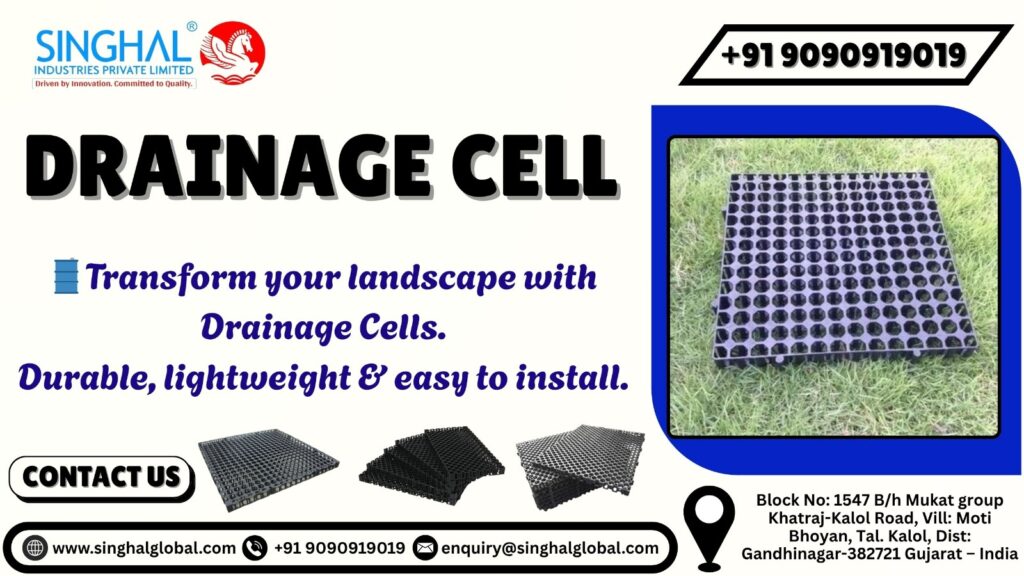
The drainage mat (also known as a drain cell (also known as a drainage mat) is a plastic grid panel that is made of materials like HDPE and PP. It is erected directly on top of the membrane that is waterproof on the roof or terrace prior to the geotextile filter as well as soil layer. The honeycomb or cup-like shape that the cell’s cells form creates an indefinite “void” which:
- Recuperates excess water quickly.
- Let it flow towards the designated drainage points.
- Stops water from accumulating onto the roofing.
Since drainage cells are light and modular, they’re more manageable than conventional gravel layers, however, they can still hold the same load in soil as well as plants.
Why Use Drainage Cells on Green Roofs?
For green roofs and terrace gardens, the most pressing issues are water retention, root penetration, as well as structural loads. Drainage cells can solve all three problems in one.
- Enhance drainage efficiency and stop flooding that can damage plants and cause damage to the building.
- Maintain a uniform root zone, so that plants remain healthy and your system will last longer.
In Indian cities that experience heavy monsoon rains, a properly installed drainage cell layer could be an important difference between a lush roof garden and a spongy, moldy eyesore.
Drainage Cell Price and Cost Factors
If you are planning to build the design of a terrace or green roof garden the Drainage Cell Price is among the most important factors to consider. The cost is usually stated by square feet or square and is based on a variety of variables:
- Material (HDPE vs PP, PP recycled in comparison to virgin).
- Panel thickness/height (commonly 20 millimeters, 30 millimeters, or 40 millimeters).
- Compressive strength (higher-load cells cost more).
- The size of the panel as well as whether it is an already-attached geotextile.
- The quantity of the order (bulk purchases generally lower the cost by unit).
For instance in India there are simple PP drainage cells that cost Rs18 to Rs25 per square foot however, higher-quality HDPE panels might be more expensive, particularly in the case of high-traffic areas such as parks with green flooring. For large projects, choosing the right drainage cell price-to-performance ratio is more important than simply going for the cheapest option.
Selecting an Appropriate Drainage Cell Maker
The quality of drainage cells used in green roofs and terraces is crucial since poorly designed drainage cells may cave in due to the load exerted on them, restrict water flow, or deteriorate faster when exposed to Indian sun and rainfall. For this reason, selecting a credible maker of drainage cells is important.
In India There are several Drainage cell manufacturers and Drain cell manufacturers specialize in the production of panels for:
- Rooftop gardens
- Landscaping
- Parking decks
- Basements and walls for retaining
Reputable manufacturers usually:
- Make use of HDPE as well as high-impact PP for durability that lasts.
- Panels with large void ratios (often 90-95 percent) to increase drainage and storage of water.
- Provide clear load-bearing information (compressive capacity in ton per square inch).
- Provide technical support and installation guidance for different project types.
Working directly with reputable Drain cell manufacturers Additionally, you can get customized colors, sizes or even logos for commercial projects of a large size.
Conclusion
When it comes to installing a garden on the terrace or green roof in India, you can never ignore the importance of the drainage cell, because not only does it aid in water retention, but also it protects the building and makes the construction cost-effective. If you compare the Drainage Cell Price and its material quality, then you will be able to choose one that will serve you for a long time. Whether you buy it from local vendors or the renowned Drainage cell Suppliers across the country, you’ll be able to have a great-looking garden and protect your roof structure at the same time.
Frequently Asked Questions (FAQs)
Q1. What is the major difference in HDPE as well as PP drain cells?
The primary difference is in the properties of the material and their application. HDPE drainage cells are typically thicker, more robust and extremely resistant to UV and chemical degradation, which makes them suitable for high-load areas such as industrial roofing or parking decks. The PP (polypropylene) cells however are lighter and typically constructed of recycled material making them affordable and environmentally friendly for common rooftops for residential gardens or terraces. Both are durable, but HDPE usually offers higher compressive strength and longer life in harsh conditions.
Q2. Are drainage cells recyclable?
The majority of modern drainage panels are made out of recycled plastics, such as HDPE as well as PP. When the time comes to replace a roof or terrace system they can be taken off and delivered to recycling facilities that are suitable instead of being disposed of in landfill. This also fits well with sustainable building practices and green-building certifications, which is a big plus for eco-conscious projects in India.
Q3. What is the duration of the life cycle for the draining cells?
The highest-quality drainage system has a long life of use, from 30 to 50 years, and, under favorable conditions, up to 100 years according to some producers’ claims. It should be mentioned that these cells have about the same life cycle as other types of geosynthetics. Their lifetime depends greatly on whether regular inspection is held and mechanical damages are avoided.
Q4. What benefits does modular drainage cells have?
Modular draining panels are prefabricated panels made of plastic, which are locked in order to create the installation quickly and without any dirt. Their pros are:
- Easy and fast installation; no more dragging and laying large amounts of stones.
- Constant draining capacity and void ratio across the whole surface area.
- Lower stress of the building because of replacement of the stone layer by a plastic matrix.
- Greater protection for the waterproofing membrane and root barrier.
- Designed in advance and simplified flow path compared to loose rocks.
Modular draining systems are preferable in terraces of commercial and private buildings.
Q5. Who is the largest supplier of Drainage Cell?
In India the position of the biggest manufacturer in the world of Drainage Cell is shared among a handful of large drain cell manufacturers as well as geosynthetic firms that are nationwide. Some of these companies are large in their production capacity and numerous product line (including HDPE and PP drainage cells of various sizes) and export capabilities and export capabilities. These companies are usually highlighted as leading drainage cell Signal Industries Private Limited is manufacturers and key suppliers for large infrastructure, commercial buildings, and green-roof projects across the country.