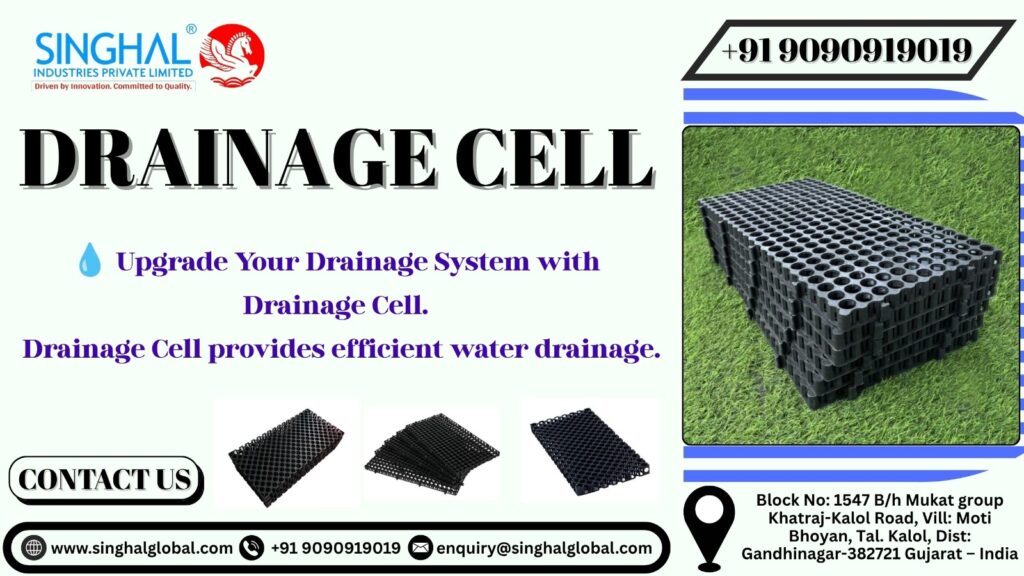
Drainage cells are a viable solution. The lightweight, modular panels create a clean area for drainage between it and its dirt, screed, paving or landscape layer. Water flows through the space towards an outlet drainage pipe, a storage tank or recharge mechanism.
What Are Drainage Cells?
Drainage cells are modular structures usually made of tough plastic materials. Their open-cell design creates channels in which water can move. They are erected over slabs with waterproofing, on foundation walls and behind walls for retaining or beneath landscaping areas.
Geotextile fabrics are usually set above the drainage cell. The fabric lets water move through but also stops soil particles from getting in and blocking drainage channels.
For landscaping projects that are large, customers should choose a reputable Modular Drainage cell manufacturer for landscaping projects India who can offer specific specifications for technical requirements, consistent product quality and the right panel strength.
Why Foundations Need Proper Drainage
The water surrounding a foundation could seem harmless but it could create grave problems. If water is not able to be escaped, it builds pressure up against concrete slabs, walls joints, and membranes for waterproofing.
Insufficient drainage could result in:
- Basement leakage
- Floors and walls that are damp
- Waterproofing membrane damage
- Odour and a bad smell
- The erosion of soil close to the foundation
- Cracks and dents around joints
- More expensive repair and maintenance costs
Still, installation quality matters. A well-designed drainage cell will not resolve a blockage in the outlet or a poorly designed slope. The entire system needs to be designed correctly.
How Drainage Cells Protect Foundations
Reducing Hydrostatic Pressure
Drainage cells provide an unending route for water to move out of the foundation. This decreases pressure on walls in basements, retaining walls as well as underground structure.
Low pressure means less stress on membranes for waterproofing and joints for construction.
Protecting Waterproofing Membranes
When backfilling, stones, soil or construction debris could cause a hole in a waterproofing membrane. Drainage cells add a barrier in between the membrane soil.
This can help reduce physical damages during construction and for the duration of the structure.
Preventing Waterlogging
In the terrace gardens, landscapes on podiums and planter boxes, water can accumulate in the soil following heavy rain or irrigation. The excess water could damage the roots of plants and increase the burden upon the concrete slab.
Reducing Structural Load
A thick layer of drainage gravel can significantly increase the weight of the roof or a podium. Drainage cells made of plastic are light and use less material.
They are ideal for balconies, green roofs and terraces, as well as elevated gardens as well as commercial landscaping projects.
Drainage Cells for Landscaping Projects
Modern homes often have garden terraces as well as roof gardens, lawns, planter areas and terraces that are landscaped. These are features that enhance the appearance and value of the property but also pose drainage issues.
If soil is laid directly on the slab with waterproofing there is a chance that water will remain in the slab. This can cause damage to plants, leakage and membrane degrading.
The most common landscape drainage systems comprises:
- Structural slab
- Membrane to waterproof water
- Protective layer
- Cells for drainage
- Geotextile filter fabric
- Medium that is growing
- Turf or plants
A dependable Modular drainage cell manufacturer for landscaping projects India can assist contractors to select the right panel based on the soil’s depth, load, and flow needs.
The cheapest panel isn’t always the best choice. In the event that the cell’s structure is weakened under the pressure of paving or soil drainage performance is reduced. The strength of the product should be checked prior to purchasing bulk quantities.
Drainage Cells for Rainwater Harvesting
Drainage cells also aid in rainwater harvesting as well as groundwater recharge systems. They are able to collect and redirect rainwater towards perforated pipes, reservoirs for recharge, pits or chambers for collection.
A well-chosen Drainage cell India can be utilized under terrace gardens, landscaping podiums, areas paved, and on other surfaces that require rainwater to be controlled.
The cell that drains water primarily serves as an outlet. It doesn’t fully remove or purify the water. Geotextile layers as well as filtrates, traps for sediment and treatment systems could be needed depending on the way the water collected will be utilized.
This is an important aspect. Both filtration and drainage are interconnected however they are different things.
Importance of Load-Bearing Capacity
Different applications result in different pressure levels in drainage channels. A roof garden can be a reservoir for soil, plants, water, and maintenance personnel. A podium space can accommodate furniture, paving blocks and regular pedestrians.
For more demanding requirements, customers should choose a High load bearing Drainage cell supplier Gujarat that can provide detailed technical information.
Specifications that are important include
- Compressive strength
- Size and thickness of the panel
- Capacity of water flow
- Raw material type
- Chemical resistance
- Limits of load that are recommended
- Installation guidelines
- Test reports for the product
Utilizing a drainage device with low strength when it is loaded with heavy loads can result in crushing uneven surfaces, decreased water flow, and even waterproofing damages.
Conclusion
Drainage cells are an essential component of the modern foundation protection systems for foundation protection. They assist in controlling the flow of water, decrease the pressure on membranes for waterproofing, and are a light alternative to the traditional drainage layers.
Frequently Asked Questions
Q1. What can a drainage cell be used to do?
The drainage cell is use to remove extra water from the walls of basements and terraces, podiums, planters, green roofs, and other landscaped areas. It provides an everlasting drainage area and protects waterproofing membranes.
Q2. What are the advantages of draining cells?
Drainage cells lower the pressure of hydrostatics, preventing flooding, safeguard against waterproofing and reduce structural load and facilitate faster installation with layers of drainage gravel that are heavy.
Q3. Where can you find drainage systems in construction?
They are employed for basement walls and retaining walls, roofing gardens, foundations planter boxes, podium landscaping, parking decks, tunnels and sports fields. They also serve as water harvesting and rainwater collection systems.
Q4. How do drainage cells improve waterproofing?
Drainage cells direct water away from the membrane and decrease the pressure of water that is continuous. They also shield the membrane from stones, soil and backfilling-related damage.