If you have ever thought of changing your rooftop or terrace into a green haven, then know that you are not the only one. As the cities expand and green areas decrease, people are finding the solution to their need for nature on their rooftops. But here is the problem: how to make a rooftop garden work without the below structure getting damaged?
Drainage cells are the answer to that question. These small, light plastic pieces are the main changes in the way we create safe, beautiful, and productive urban gardens. No matter if you are a citizen of a large metro city or a small town, these small grids are the key to making your terrace greener not only in the sense of appearance but also in reality.
What Are Drainage Cells, Really?
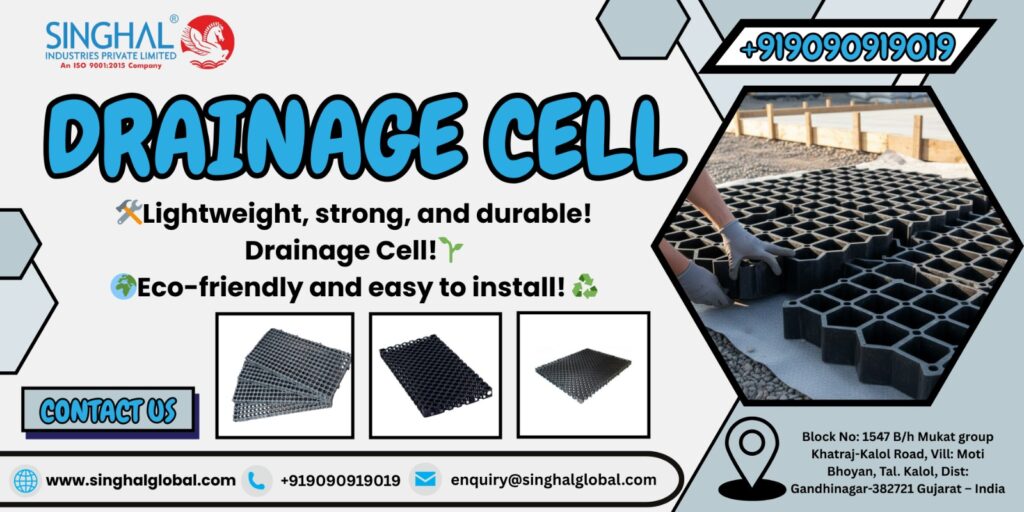
To start with a simple example, a drainage cell is a plastic modular panel that is placed under the soil or garden bed to absorb excess water quickly. One should think of these as the “airways” of a terrace garden. They maintain tiny air spaces under the soil where liquid can travel without any difficulty, thus preventing the ground from getting soaked.
If, for example, disastrous waterproofing situations that happened on your terrace during the last season of heavy rains are fresh in your memory, you definitely understand the damage caused by bad drainage. Water that is trapped in the ground pushes through concrete, causes fracture of the structure, and spoils paints. This is the point where drainage cells not only make the situation better but also more attractive to people—they both help gardeners and homeowners by redirecting water out of their realm.
Why Urban Gardens Need Smart Drainage
Imagine it is the monsoon season and your terrace garden cannot contain your pride but decides to give it too much love from the clouds. The soil becomes mushy, the roots choke in lack of oxygen, and the spread of fungi is increased if there is no adequate drainage system. Soon enough instead of a green haven, there is a swampy disaster.
Implementing such a scenario with a proper drainage cell layer changes everything. Panels not only guide the water letting it escape to predefined outlets but also hold enough water to keep roots hydrated. What is the outcome then? They get healthier, waterproofing lasts for a longer time, and there are a lot less troubles.
Good drainage is an unacknowledged champion in every garden that succeeds. Landscape architects will tell you the same—it is the only step you are not allowed to skip.
The Secret Architecture Under Your Plants
After you have finished your garden installation, drainage cells are not visible as they quietly provide the support framework for every robust, eco-friendly terrace or rooftop garden.
They operate in the following manner:
- The first step is waterproofing, then a drainage cells layer is installed all over the area.
- On top of that, a geotextile filter is fitted covering the whole surface to stop soil from going into the drainage path.
- Garden soil or growing medium is added over it.
Basically, by installing this kind of setup, water is able to circulate under the plants freely, hence avoiding the most common causes of plant diseases and leaks that are structural in nature while the soil is kept fresh. Pretty brilliant, isn’t it?
Benefits of Using Drainage Cells in Terrace Gardens
If you are wondering why architects and gardeners are opting for Drainage cells in India, here are the main reasons, and some of them might be unexpected to you.
- Effective Water Management: By using drainage cells, water can move to the proper place without any problems. The roots do not sit in stagnant water, and no waterlogging occurs. As a result of this, soil oxygenation is improved, roots become stronger, and there are fewer problems with pests.
- Structural Protection: One of the main reasons why concrete structures deteriorate is water that accumulates around them. The cracks, the peeling of the paint, and the rusting of the rebar are among the problems caused by it. The use of a good drainage system with cells not only prolongs the life of the terrace but makes it safer as well.
- Lightweight Yet Strong: Drainage cells, even though they are light and small, are very strong. The majority of the drain cell producers make them able to resist heavy soil, foot traffic, and even potted trees for the rooftop setups, thus putting them under heavy load is not a problem for them.
- Sustainability and Reusability: Generally, the material used for making drainage cells is either recycled plastic or polypropylene. Cells last for quite a long time, they are resistant to chemicals, and they can even be reused if a garden design is changed. They are much better in terms of environmental impact compared to traditional gravel drainage systems which are quite heavy and difficult to replace, and thus, better regarding the environment.
- Cost-Effective and Low Maintenance: This is something that most people are not aware of. It is believed that the new age drainage solutions come at a high price. The prices have gradually dropped due to the competition among drainage cell manufacturers and Drain cell Suppliers. When you take into consideration the savings that come with the reduction of waterproofing repairs and the growth of healthy plants, it is really a good investment.
Choosing the Right Drainage Cell Supplier or Manufacturer
Large scale projects such as commercial green roofs are mostly dependent on the reputed Drainage cell manufacturers who can ensure the quality and availability of the product in bulk. It is not always a matter of selecting the cheapest option; reliability is more important. A brand like SIPL, for instance, is recognized as a reliable provider not only within India but across the world.
The Bigger Picture: Sustainability and Climate Resilience
Rooftop gardens are not just attractive; they help to make the cities more livable. Fresh air, coolness, and the handling of the rainwater during the heavy storms are just some of the benefits of the plants. However, in order for these benefits to be provided, a strong drainage system is a must.
By installing long-lasting drainage cells instead of the old heavy methods like stone or gravel layers, the structural weight on the rooftop is reduced, and less raw materials are used. This means: fewer trucks carrying gravel up buildings, less dust, less waste—basically, all the things that make a building green, well, greener.
It is really quite interesting, isn’t it, how one small thing like a plastic cell can help us go in the direction of sustainable urban living?
Conclusion
It’s not just a trend of turning terraces into green spaces but a silent revolution. However, to create those gardens in a sustainable way, you need smart materials that are built to last. And drainage cells are exactly that invention.
They are powerful, eco-friendly, and do their work quietly—thus, improving the living conditions both of plants and people. The size of the garden, be it your small home garden or a big commercial terrace, doesn’t really matter; the foundation is what counts the most, and in that foundation, the lowly drainage cell is working its wonders day in and day out.
Frequently Asked Questions (FAQs)
Q1. Can they be used in terrace gardens?
Yes, drainage cells are the best choice when it comes to terrace gardens, podium landscapes, and planters. These cells help in the proper drainage of water and, thus, save the concrete slab from getting spoiled due to moisture.
Q2. Do drainage cells improve soil health?
Definitely! They make the roots of the plants grow strong since the plants get sufficient water and air. Also, by stopping the soil from getting too hard and water from staying in one place, they make the soil even more natural.
Q3. Do drainage cells support heavy loads?
Yes, the majority of drainage cells sold by trustworthy manufacturers of drain cells are constructed in a way that they can carry heavy weights, thus, they can be used for most of the commercial projects with the large planters or footpaths.
Q4. Can they be used for green roofs?
Sure thing. Green roofs wouldn’t be complete without drainage cells as they are the ones who carry the excess water, lessen the weight on the walls of the building, and safeguard the roots while allowing them to grow freely.
Q5. Who is the largest exporter of drain cells?
Many companies globally are leading the way, but SIPL is considered one of the biggest exporters and most reliable drain cell manufacturers. They provide the product to several countries, and at the same time, maintain the standards of quality and take care of the environment.