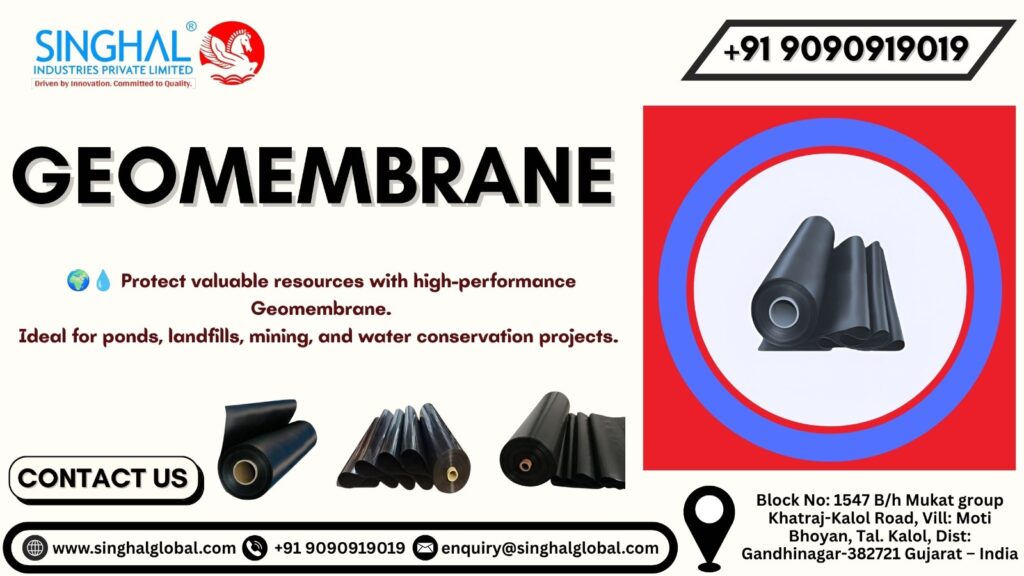
HDPE geomembranes are robust, durable barriers that will keep gases and liquids secure for a long time. The sheets, made of high-density polyethylene, are able to withstand harsh conditions for projects such as landfills, ponds, and mining sites.
What Makes HDPE Geomembranes Special?
The HDPE geomembrane sheets are extremely robust and flexible, making them ideal for demanding jobs. They withstand UV rays and punctures far better than other liner materials. With thicknesses ranging from 0.5 mm and up, the liners will last between 20 and 100 years without breaking down. There is no better sealant for wastewater or water. Factories make them into smooth or textured designs smooth for flat ponds and textured for slopes that slide. They’re safe for food, which means no worries about the storage of drinking water. India is home to many geomembrane manufacturers churning these out for local requirements.
Think of a massive landfill. Without HDPE, noxious leachate is absorbed into the soil, which can harm the soil and river. Put on an HDPE piece, then weld the seams tightly, and boom—99.9 percent leak-proof. It’s like encasing your project in tough plastic armor that is unbreakable. Prices start at a low level too. HDPE geomembrane sheets range from $0.50 up to $3.50 for a square meter, depending on the quality.
Everyday Uses That Prove Their Power
They are a real-world asset. Farmers utilize them to create fish ponds that hold the water in place. No more dry beds after rain stops. In the mining industry, they hold harmful slurries that stop pollution from expanding. Cities line the sewage lagoons using them to ensure that they comply with environmental regulations.
HDPE is a favorite of aquaculture farms in coastal regions. HDPE sheets can handle waves and saltwater without breaking. Reservoirs are also covered, which reduces evaporation to a quarter. Even dry areas like Rajasthan make use of them to conserve every drop. Geomembrane sheet prices drop for large rolls, which makes it a good choice for farms with large numbers of animals.
Imagine the Ghats of Varanasi being lined with lakes to guard against monsoon flooding. The local Geomembrane manufacturers in India supply quick solutions here, avoiding import delays. The project that was completed in Uttar Pradesh cut water loss by 90 percent after installation.
Installation isn’t rocket science, but it’s important to follow the correct procedure. Clean the surface and lay the sheets over each other by 10 percent, and then weld using heated air guns. Professionals test seams using vacuum boxes to ensure that there are no leaks. Do not cut corners, or you’ll be paying for later repairs.
Why HDPE Beats Other Options
Compare HDPE with PVC or EPDM liners. PVC deteriorates faster in the sun—10 years max. EPDM is more expensive and breaks easily when slammed against sharp rocks. HDPE? It’s funny stuff. The higher strength-to-weight ratio means less material is needed for the same task.
Chemical resistance is a huge issue. Acids, oils, and even radioactive waste—HDPE Geomembranes snuffs it out. UV protection lets it stay in the sun without turning yellow. Recycled versions save cash at $0.28/m², but virgin HDPE lasts longer, cutting lifetime costs.
In India, temperatures can reach 45°C. HDPE can handle temperatures up to 80°C with no problem. Textured HDPE grips soil 25 percent better on slopes, avoiding slides. Conductive types detect leaks quickly through electric tests. This is why it’s the most popular choice for landfills in this area.
Prices differ based on specifications. Smooth 1 mm? 0.50-1.50/m². Do you want a more textured 2 mm? Up to 3.50. Bulk purchases reduce that. Medium-sized projects save 15. In the installation: 0.75-$6.50 total per meter.
Picking the Right HDPE for Your Project
The thickness of the water is crucial. The ponds require 1 mm, while landfills require 1.5-2 mm to prevent puncture damage. Make sure to check GRI-GM13’s standards for virgin resin; no fillers. A density of 0.94 g/cm³ guarantees flexibility without weak spots.
What is the type of surface? Smooth slides that are easy to walk on flat surfaces. The texture is perfect for hilly terrain. Small jobs are paid a premium—$1-3.50/m² for less than 1000 m². Scale up, and prices drop. Always request samples from suppliers. Test the strength of your weld on your own.
Local factors matter. In monsoon-prone zones, get more dense against rocks and roots. Fish farms require the use of UV-stable black sheets. Geomembrane sheets made of HDPE from Indian makers usually beat imported ones on delivery and are the key to urgent digs.
Maintenance is not too high. Cleanse every year and inspect seams. Lifespan is 50 to 100 years when submerged with 20-30 minutes of exposure. One pond in Gujarat is 15 years old, still in perfect condition. This is long-lasting protection that’s simple and clear.
Installing Tips and Tricks from the Pros
Begin with site preparation—level dirt, take away rocks larger than 5 cm. Lay geotextile underneath for cushion. Unroll sheets, cover 5-10%, and weld at 400-500 degrees Celsius. Double seams to ensure security. Test every 100 m using the pressure of air. Attach edges to trenches. For ponds, drape over berms loose for settling. Slopes? Use plates or J-hooks. A team of four covers 500 m² every day. Rain? Cover with tarps; welding fails.
The most common mistake is skipping anchors. Winds lift edges, and water sneaks in. Make trenches deep. Another reason is poor welding on filthy sheets. Clean with alcohol first. Installers who are certified will save you headaches.
Post-installation, monitor with leak surveys. Drones are now able to spot problems cheaply. The early fix helps keep the warranty in place. Make smart investments in quality right from the beginning.
The Indian Edge in HDPE Supply
Geomembrane producers in India, such as Singhal Industries Private Limited, create top-quality sheets. They are aware of local soil and weather conditions and tailor their products accordingly. Exports are also available, but local prices are often high: between Rs 90 and 150/m².
Why should you choose local? Fast shipping—no port delays. Customs duties jack imports by 20%. Factories located in Gujarat and Rajasthan are near big users. Custom-made rolls reduce waste. One Delhi project reduced the cost by 30% when it came to going Indian.
Quality matches global standards. ISO accredited, GRI tested. Virgin resin made by Reliance. Certain add anti-rodent technology to farms. Geomembrane sheet prices stay steady here, with no dollar swings. Shop Singhal Industries Private Limited for deals, but verify specs.
Sustainability benefits include recycled HDPE from the waste of plants. Green credits for eco-friendly projects. The government pushes for liners to Jal Jeevan—a boom time for makers. Your project is safe, and our planet is a little better off.
Conclusion
Punctures can be a problem for people. HDPE Geomembranes is durable, but it’s best to cover it with soil or geotextile. Roots? Use barriers. Cold snaps cause it to be stiff at or above 5 degrees C. Heat? Not a problem. The welding process fails if the gear is not working. Make sure the crew is properly trained. Seams are weak connections. Don’t build them. The vast areas require field testing. Sparks fly if you don’t pay attention.
Cost creeps up with the thickness. The balance of budget with risk. Smaller for temporary ponds but thick for forever landfills. The ROI is long-term and lasts for a long time. Repairs can eliminate savings. Regulations tighten. IS codes demand certified sheets. Purchase traceable batches. Audits are easy to pass with documents. Make sure your money is secure for the future.
Frequently asked questions (FAQs)
Q1. Can geomembranes stop the seepage of water completely?
The answer is yes—99.9 percent effective when put in place properly. It’s not 100%, however, HDPE’s permeability falls below 10 cm/s. A proper seam and testing make it unbeatable for ponds as well as landfills.
Q2. What sizes of rolls are available?
Widths from 4-8 m, lengths as long as 150 m. Custom cuts are also available. Large rolls can cut seams and make it easier to work faster. Indian manufacturers offer the standard of 6 m x 100 m for all tasks.
Q3. What is the price of a geomembrane/square millimeter?
Geomembrane sheet prices range from 0.50-3.50/m², which is equivalent to Rs 90-250 locally. The sheet is thinner, cheaper, and bulk less. Installation adds 0.25-3. Factor project size for the best deals.
Q4. Can a geomembrane’s design be modified?
In totality—thickness, texture, color, and even conductivity strips. Geomembrane manufacturing companies in India create fast. Specifications like anti-UV or fish-safe can be requested.
Q5. Who is the largest manufacture of HDPE Geomembranes?
in India, Singhal industries Pvt ltd Global top the list with huge output. They are the main suppliers of mega-projects throughout the country. HDPE geomembranes deliver unbeatable strength, turning risky sites safe. From cost to installation, they are a good fit for India’s ever-growing requirements. Choose quality, and you’ll be grateful in the years to come.